

What is trekking? Put simply, it is walking for several days in a row through wild country, stage by stage, sleeping along the way, without ever needing to climb. You don’t have to be a mountaineer or own technical gear. What you do need is the right route, a few weeks of preparation and a well-packed bag. This guide covers all three, using the same yardsticks mountain professionals use, plus what is worth knowing if your first trek is in Morocco.
Trekking is a multi-day journey on foot through mountains, desert, coastline or other natural terrain, on trails and tracks that don’t call for climbing or mountaineering skills. It differs from hiking in length and effort, and from mountaineering because you never need ropes. To judge a route, look at the daily walking hours, the total ascent and the terrain, not just the distance. Give yourself six to eight weeks to get fit and, if you’ll sleep above roughly 2,500 m, climb slowly.
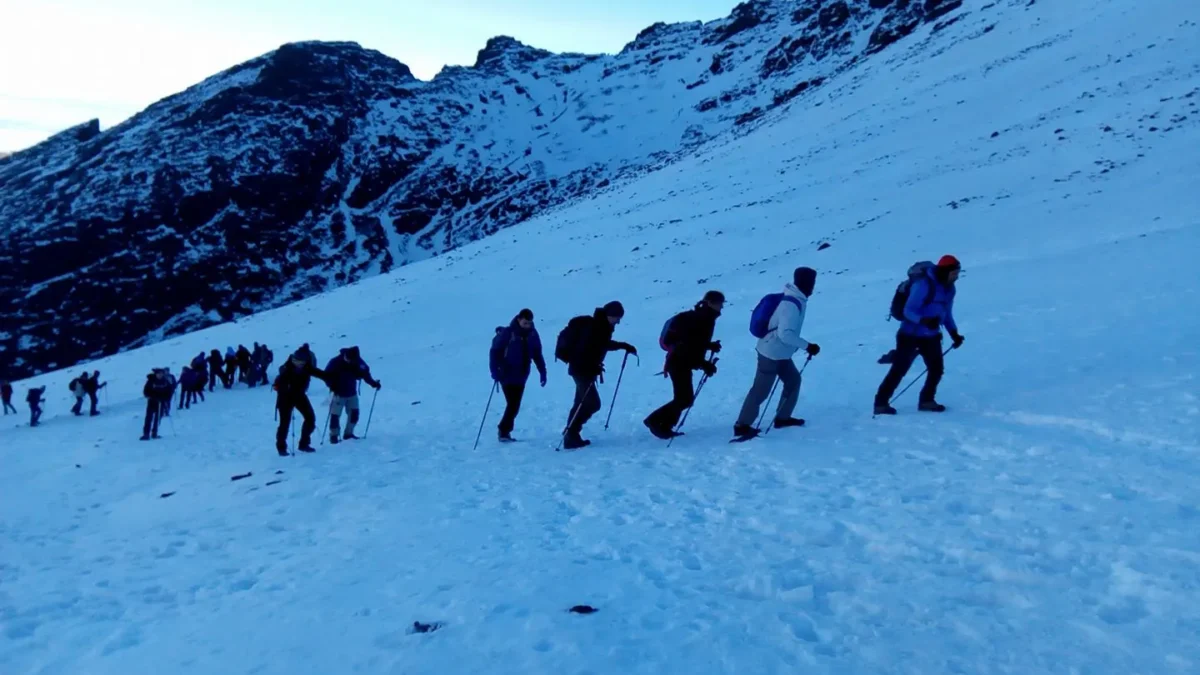
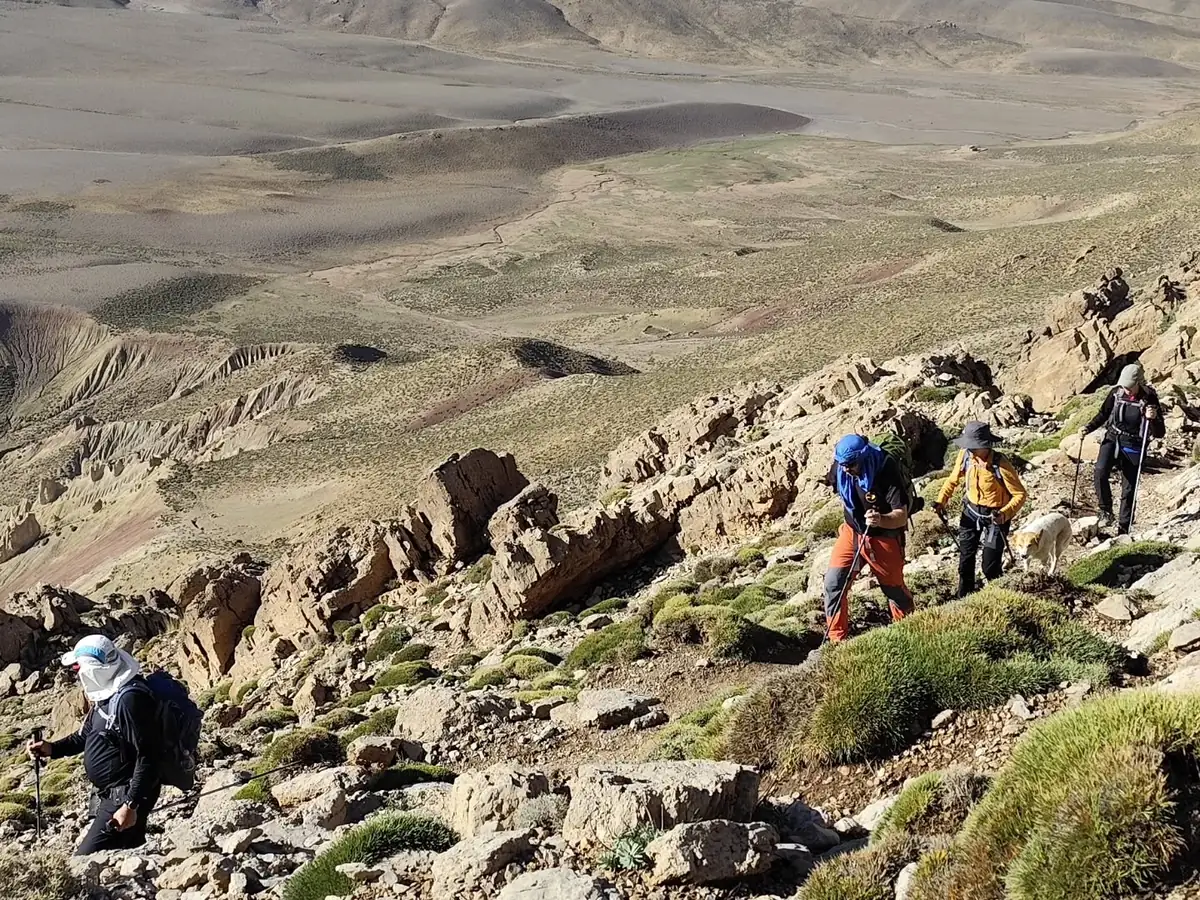
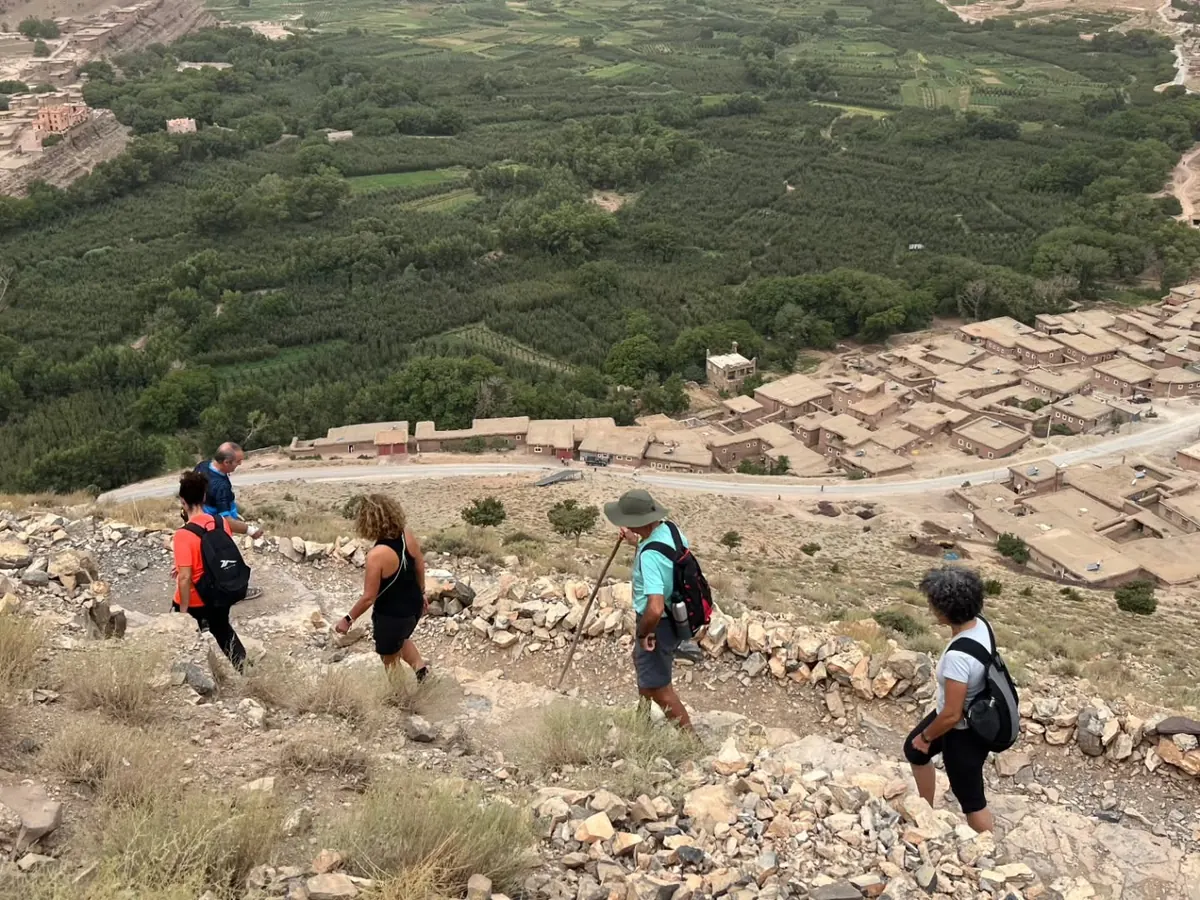
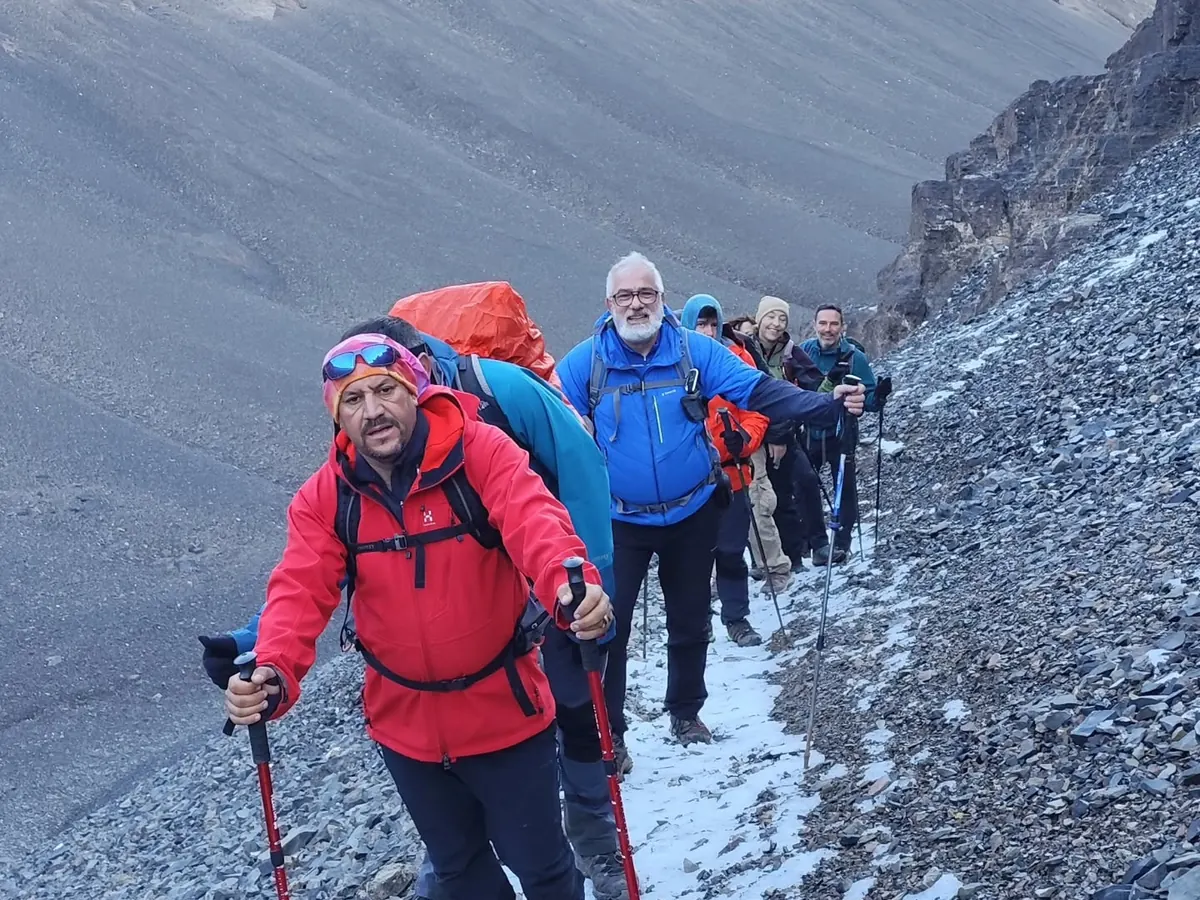
PhotosAll photos in this guide are by Mustapha AIT ISHA, a nature and mountain guide licensed by the Moroccan Ministry of Tourism (licence GEN 321), and were taken on his treks with travellers.
What is trekking, and where does the word come from?
English borrowed the word from Afrikaans, where a trek was a long, slow journey made in stages. Today, when someone says they are going trekking, they almost always mean the same thing: several days on foot, a destination or loop to complete, and nights away from home.
It isn’t about altitude or speed. A trek can follow a valley, cross a range, trace a coastline or wind through dunes. What defines it is the way you travel:
- Several days in a row. Tiredness builds up, so daily pace and overnight recovery matter as much as fitness.
- A route in stages. Either a traverse from one point to another, or a circuit back to where you started.
- Natural, walkable terrain. Footpaths, mule tracks and trails between villages, with no sections that force you to climb.
- Nights on the route. In a mountain hut, a local guesthouse or a camp.
Trekking vs hiking: what’s the difference (and where mountaineering begins)
Sports and health lecturers at the Open University of Catalonia sum it up neatly: hiking usually means shorter outings of a day or a few days on marked paths, while trekking is a longer journey, a week or more, of moderate to high difficulty and not always on a waymarked trail. They also point out that the line is getting blurrier: some waymarked paths are tough, and some routes lasting weeks are still called hikes.
There is a lesser-known definition that is very practical, and it comes from Moroccan law. Law 05-12, which regulates tour guiding, describes the work of a nature and mountain guide as taking visitors on excursions and walks through mountains, deserts and other natural areas, on foot, with pack animals or by vehicle, on tracks, trails and paths that can be travelled without climbing, mountaineering or skiing techniques. It is, in short, the best definition of trekking we know: going wherever you can walk.
- Done on foot
- Needs technique and kit
- A nature guide’s terrain
- WalkA few hours in easy surroundings, no special preparation.
- HikingA day or a few days on defined, often waymarked paths.
- TrekkingSeveral days in stages, nights on the route and more physical effort. No climbing.
- Summit hikesClimbing a peak on mountain terrain. As long as you get up on foot, it is still trekking ground.
- MountaineeringRopes, climbing, glaciers or technical snow. This needs specific training.
A handy rule: the day you need your hands to move forward, not just to steady yourself for a second, you have left trekking behind.
How hard is a trek? Read the numbers, not the miles
Distance on its own says very little. Ten kilometres on a flat track has nothing in common with ten kilometres climbing and descending a thousand metres on a stony slope. That is why many European mountain bodies grade routes on several factors at once. In Spain, for instance, routes are often rated with the MIDE system, recommended by the Spanish Mountain Sports Federation and used in the official trail guides of Spain’s Ministry of Agriculture. It scores four things from 1 to 5:
- Environment · how exposed the terrain is
- 1 not free of risk · 3 several risk factors · 5 many risk factors.
- Route finding · navigation
- 1 clear paths and junctions · 3 you need to read landforms and compass directions · 5 navigation broken by obstacles.
- Terrain · underfoot
- 2 mule tracks · 3 stepped paths or uneven ground · 5 you need your hands to make progress.
- Effort · hours of actual walking
- 2 1 to 3 hours · 3 3 to 6 hours · 4 6 to 10 hours · 5 over 10 hours.
Of all the figures on a route card, total ascent is the one people underestimate most. Cumulative elevation gain is the sum of every climb in the day, not the difference between start and finish: a stage can begin and end at the same height and still hide several hundred metres of uphill.
- If a trek has no grading, ask for the same data yourself: walking hours per day, ascent and descent, terrain type, highest point and the altitude of each night.
- Look at the hardest day, not the average. Five easy days with one very demanding stage add up to a demanding trek.
Types of trekking
By route
A traverse runs from one point to another and gives you the feeling of having crossed a whole region. A circuit loops back to the start and keeps logistics simple. Some treks use a fixed camp instead, with several nights in one place and out-and-back day stages.
By landscape
Morocco packs almost every kind of trekking into a small area. The High Atlas has Toubkal, at 4,167 m the highest peak in North Africa, and other ranges such as M’Goun; our Atlas Mountains trekking guide compares them. Further south, the Jbel Saghro is dry and mineral. In the desert you walk between dunes, palm groves and stony plains, as we explain in our guide to Sahara desert trekking. On the Atlantic coast you follow the ocean, with the tides as walking companions, which we cover in Morocco Atlantic coast hiking.
By logistics
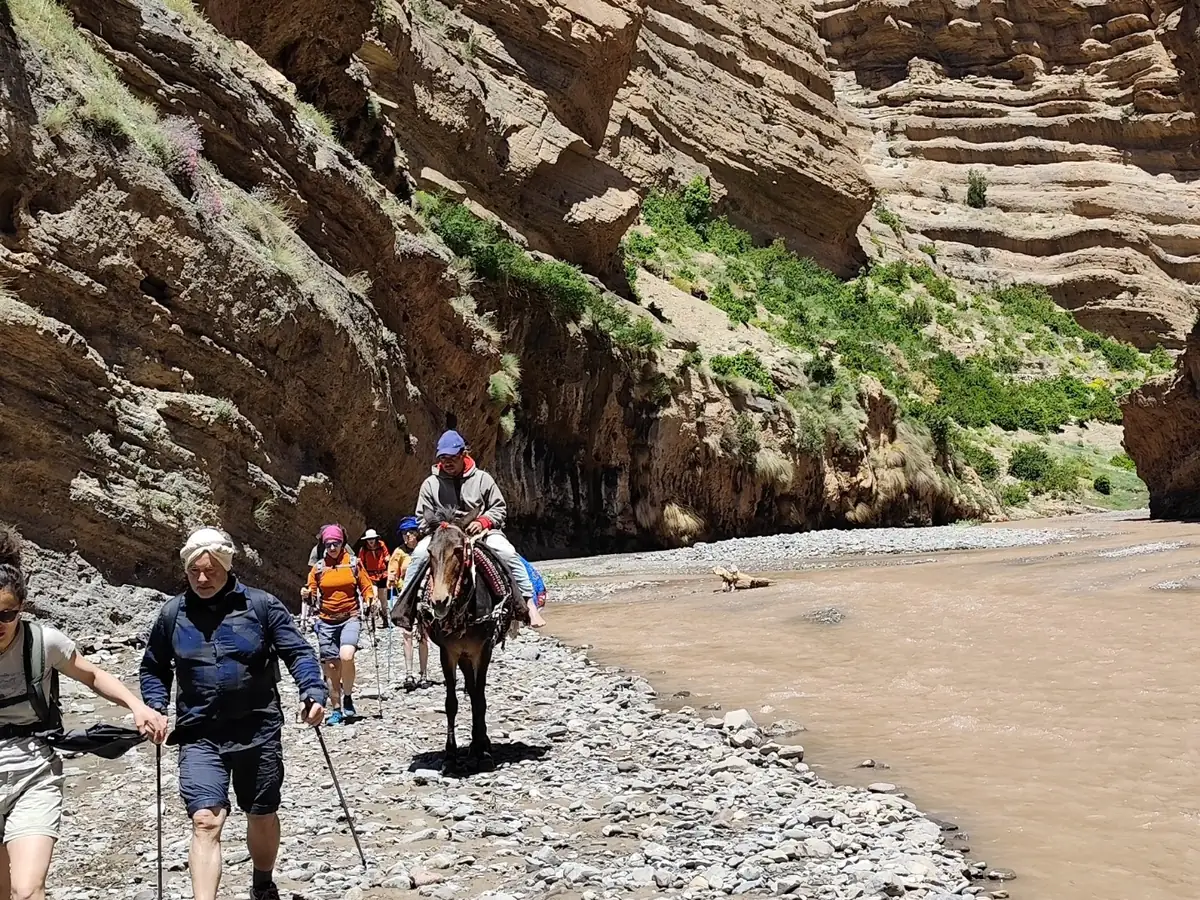
On a self-supported trek you carry everything yourself: tent, food and clothes, and the pack always feels heavier than it did at the start. On a supported trek, the main luggage travels separately, by pack animal or vehicle depending on the route, and you walk with just a daypack. The difference in your legs is huge, and for a first trek it is usually the sensible choice.
Trekking at altitude: what you should know
Altitude doesn’t care how fit you are. According to the CDC Yellow Book, any unacclimatised traveller sleeping at around 2,450 m or higher can get altitude sickness, and training and fitness don’t reduce that risk. Symptoms feel like a hangover: a headache with loss of appetite, dizziness, fatigue or nausea. They usually start two to twelve hours after arrival, often during the first night.
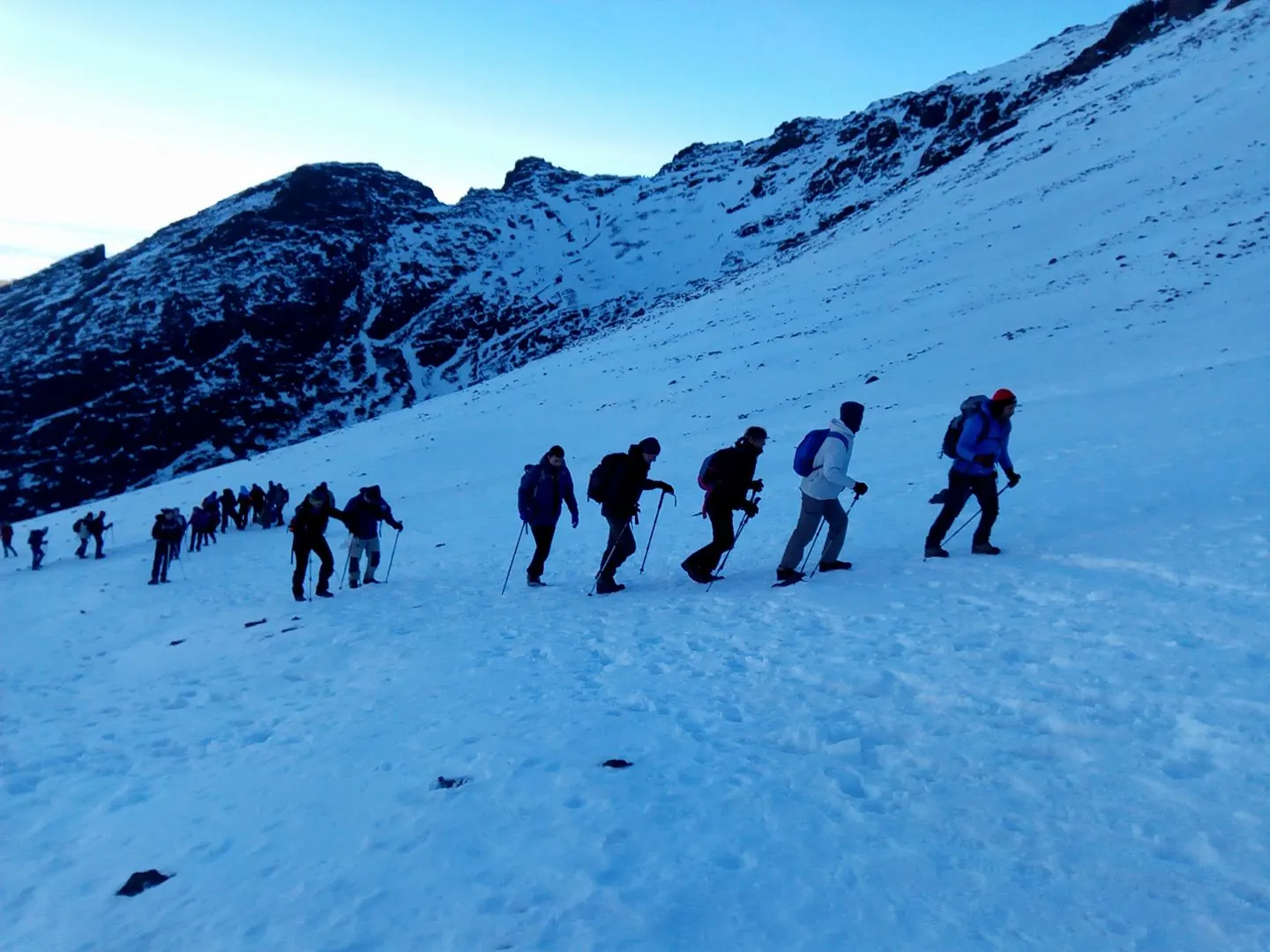
What really protects you is the rate of ascent. The guidance quoted by the CDC is clear:
- Don’t go from low altitude to sleeping above 2,750 m in a single day.
- Above 3,000 m, raise your sleeping altitude by no more than about 500 m a day.
- Add an extra acclimatisation day for every 1,000 m gained in sleeping altitude.
- Avoid alcohol and hard exercise during the first 48 hours at altitude.
Know the symptoms and speak up if you have them. Never go higher to sleep with symptoms, however mild. If they get worse while resting at the same altitude, go down. If you take medication or have a chronic condition, talk to your doctor before you travel.
How to train for a trek in six to eight weeks
You don’t need to be an athlete, but you do need legs that are ready. The same university experts suggest a simple plan for people starting from a low activity level, designed to build fitness over six to eight weeks:
- Move more every day. Take the stairs, park further away, walk or cycle wherever you can.
- Walk three days a week, not in a row. Start with 30 minutes on flat ground and add ten minutes each week until you reach an hour.
- Two strength days. Swimming, the gym or simply squats, sit-ups and push-ups. Work your core: the back is the weak spot of anyone carrying a pack for hours.
- One long walk a week. On terrain like your trek. Start at about 60 % of a stage’s distance and, by weeks six to eight, cover 80 to 100 %.
- Rest the next day. Recovery is part of training.
Use those long walks to test your boots, pack and clothes. And drink: the experts recommend at least two litres of water a day, sipping before you feel thirsty.
Clothing, boots and poles: the layering system
On a trek there is no shelter round the corner when the weather turns. The answer isn’t one thick jacket but several thin layers you add and remove through the day:
- Outer shellBlocks wind and rain.Waterproof, windproof jacket.
- Mid layerKeeps your body heat in.Light fleece; a warm jacket for stops and evenings.
- Base layerWicks sweat away so you stay dry.Breathable short and long-sleeved tops.
- Skin
Shed a layer before you start sweating on a climb; put one on before you cool down at each stop.
- Boots. Good ankle support, a thick, grippy sole and waterproofing if the route calls for it. Never wear new boots on a trek: break them in on your training walks.
- Poles. They help your balance and take load off knees and ankles, especially downhill. Telescopic poles fold away when you don’t need them.
- Socks and feet. Bring several pairs and check your feet every evening: a blister on day one can spoil the rest of the trip.
Trekking packing list for Morocco
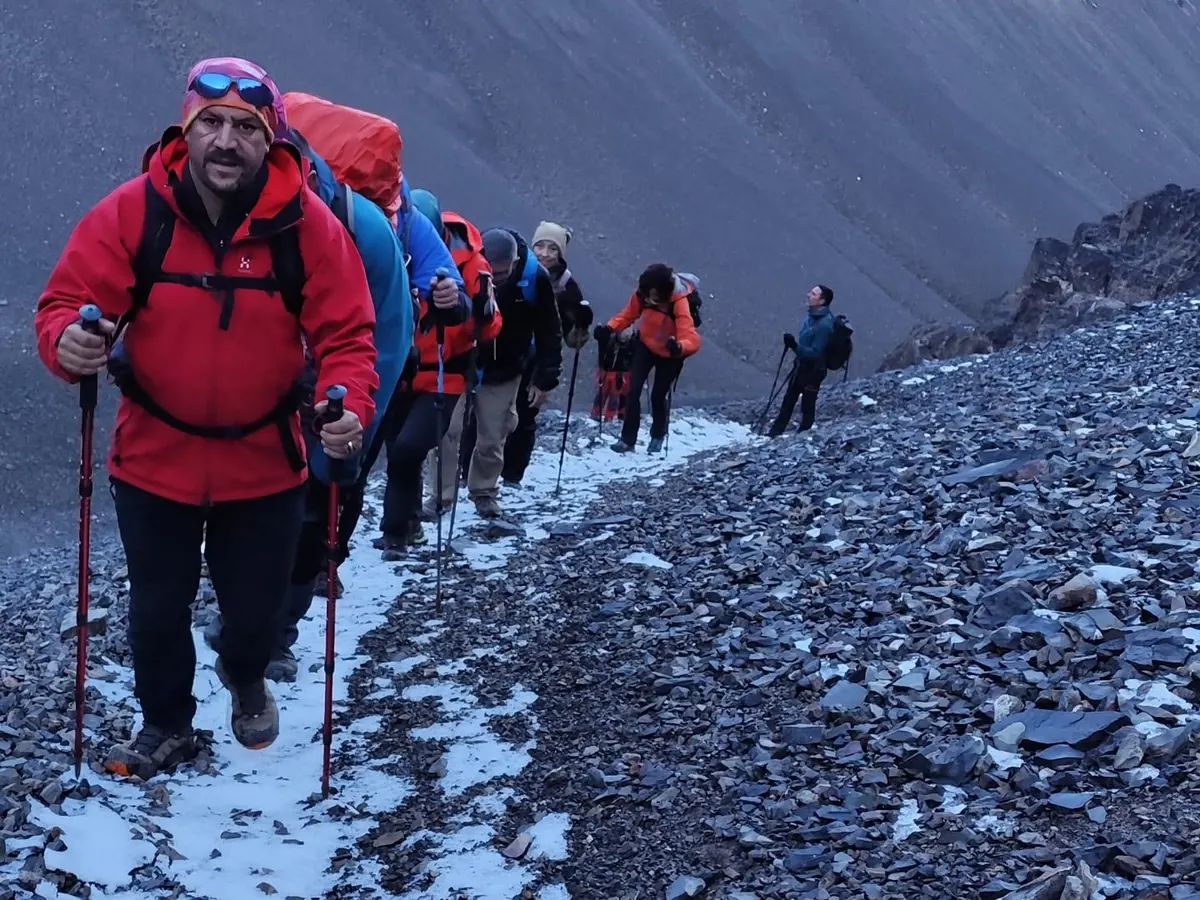
This is the list we give to people who walk with us. It works as a base for almost any multi-day trek; adjust it to the season and route.
Clothing
- Trekking trousers.
- Warm trousers, or leggings plus trousers.
- Breathable short and long-sleeved base layers.
- Light fleece.
- Waterproof, windproof jacket.
- Warm jacket or similar.
- Gloves, hat and sunglasses.
- Swimwear.
Footwear and walking gear
- Hiking boots, plus another pair of shoes to change into after each stage.
- A pair of telescopic walking poles.
- Small daypack for water, food, camera and anything you need while walking.
- Duffel bag for clothes and personal items.
- Head torch.
Night, hygiene and care
- Sleeping bag.
- Small towel.
- Sun cream.
Depending on the date
- Gaiters, crampons and an ice axe, depending on when you travel. Ask before you set off whether your dates and route need them.
Documents
- A passport valid for your whole stay. Check the entry rules for your nationality on your government’s travel advice.
- Travel insurance that covers trekking and mountain activities, including medical assistance and repatriation.
- Flight tickets.
Safety and responsible trekking
The UK government’s travel advice for Morocco has a short checklist for anyone planning to hike in the Atlas Mountains, and it applies to most treks:
- Research the trail and understand how much experience it needs.
- Pack the essentials: water, sun cream and the right clothing.
- Hire a professional guide.
- Get comprehensive insurance and make sure it covers the activities you plan.
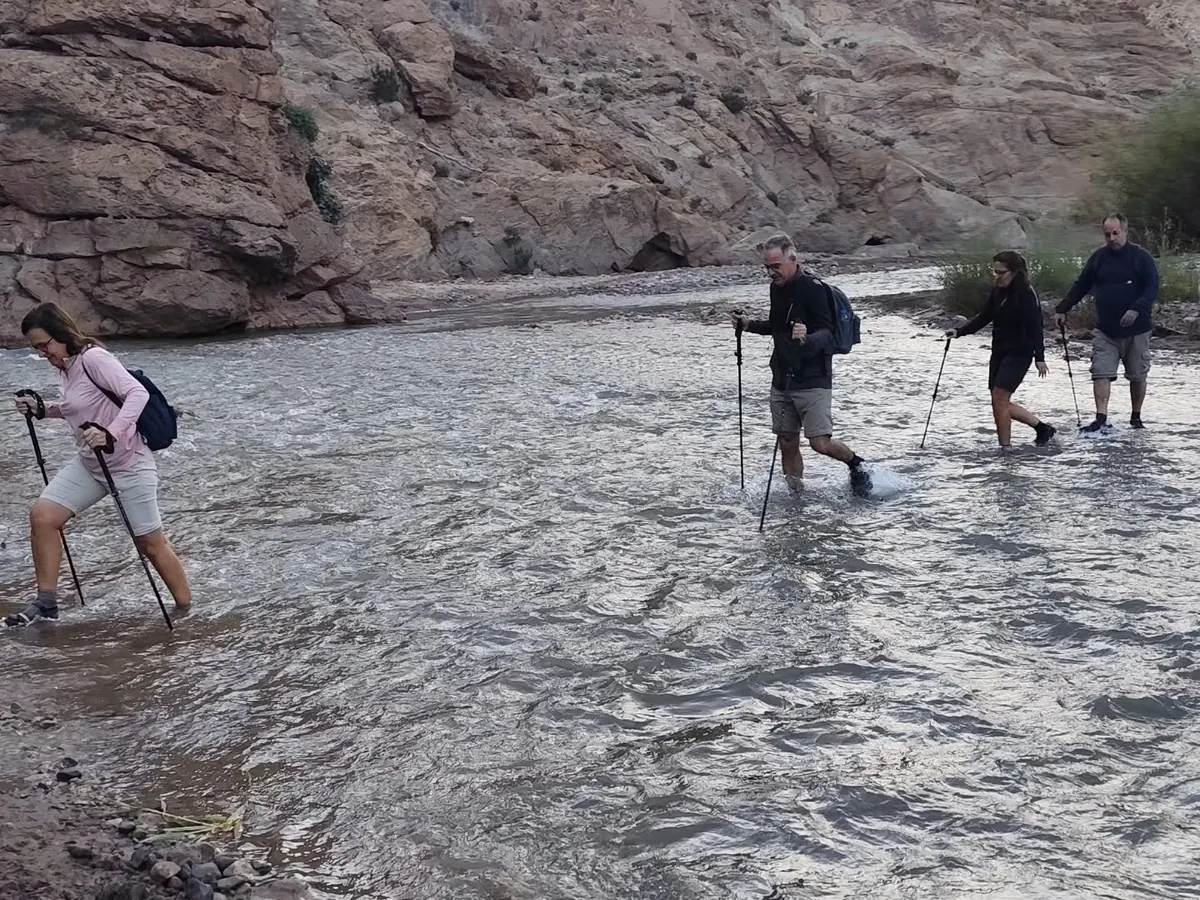
- Watch for flash floods. The same advice warns that heavy rain can cause them, particularly in the mountains or near rivers in winter. Never camp or linger in a dry riverbed.
The other half of safe trekking depends only on you: leave the trail as you found it.
- Carry your rubbish out to a place where it can be collected.
- Don’t light fires and don’t cut corners on slopes: shortcuts cause erosion and end up wiping out the path.
- Respect springs, crops and livestock in the villages you pass through.
- Always ask before photographing people, especially children, and dress modestly in villages.
Trekking with a licensed guide in Morocco
In Morocco, tour guiding is regulated by Law 05-12, which recognises two categories: city and tour guides, who work in cities, monuments and museums, and nature guides, who accompany visitors in mountains, deserts and other natural areas. For a trek, the second is the one you want.
The Moroccan Ministry of Tourism publishes the list of licensed guides with their name and category, so anyone can check before travelling. The UK travel advice also warns that people posing as official guides are common, which makes that check worth the two minutes. In case you are wondering: Mustapha AIT ISHA, the guide behind this website, is on that list as a nature guide, licence GEN 321.
Ask who your guide will be and check their name and category on the official list. Ask for the walking hours and ascent of each stage, the altitude of each night, what you carry and what travels separately, and what happens if someone in the group can’t continue.
If you’d like to see how a trek is put together in the Atlas, the desert or along the coast, browse our treks in Morocco and compare their length and stages.
Trekking FAQ
What is trekking in simple words?
A walking journey of several days through natural terrain, done in stages with nights on the route, on paths and tracks that never require climbing.
Is trekking the same as hiking?
They overlap, and the line is blurry. Hiking usually means day walks or short trips on defined paths; trekking means longer, more demanding journeys, sometimes on unmarked ground.
Do I need experience to go trekking?
You don’t need technical experience, but you do need fitness that matches the route. With six to eight weeks of training, a well-chosen trek and luggage support, a first trek is within reach for many people.
How many hours a day do you walk on a trek?
It depends on the route and the stage. Grading systems such as MIDE count actual walking time, without breaks, in bands of 1 to 3, 3 to 6, 6 to 10 and over 10 hours. Ask for that figure for each day before you book.
What is elevation gain in trekking?
It is the total height you climb. Cumulative elevation gain adds up every uphill section of a stage, and it affects effort far more than distance does.
Do I need a guide to trek in Morocco?
It is strongly recommended, especially in the mountains and desert. The UK travel advice tells Atlas hikers to hire a professional guide. For a trek, the right guide is a licensed nature guide, and you can check the official list published by the Ministry of Tourism.
Is trekking in Morocco safe?
With a licensed guide, a well-planned route and suitable insurance, trekking in Morocco is a popular and rewarding trip. Check your government’s travel advice shortly before departure, respect the weather, especially rain in the mountains, and acclimatise properly at altitude.
Sources
- CDC Yellow Book 2024: High Elevation Travel and Altitude Illness.
- UK Foreign, Commonwealth and Development Office: Morocco travel advice, safety and security.
- Moroccan Ministry of Tourism: Tour guides and list of licensed guides (in French).
- Open University of Catalonia: Hiking and trekking holidays: how to get fit (in Spanish).
- Spanish Ministry of Agriculture, Fisheries and Food: Caminos Naturales guide, MIDE grading explained (in Spanish).