



Marrakech has a reputation as a city of sunshine, and it deserves it. But the weather in Marrakech changes a lot through the year: in July the average high is above 37 °C, while January nights drop below 6 °C. This month-by-month guide uses the official climate data from the city’s weather station to help you pick the best time to visit Marrakech and work out what to pack.
Spring (March to May) and autumn (late September to November) are the most comfortable times to visit Marrakech, with average highs between 23 and 30 °C. July and August are the hottest months, with average highs of about 37 °C (99 °F). Winter days are mild, close to 20 °C, but the nights are cold. Rain is scarce: about 221 mm a year, falling mostly between November and April.
PhotosThe photos in this guide were taken by Mustapha AIT ISHA, licensed tour guide.
What is the climate like in Marrakech?
Marrakech sits on the Haouz plain at around 460 metres above sea level, with the High Atlas to the south and the Atlantic a little over 130 kilometres to the west. That location explains much of its weather: the ocean is too far away to take the edge off the inland heat. The result is a semi-arid climate: very hot, dry summers, winters that are mild by day and chilly at night, and little rain.
To keep this guide factual, we use the 1991-2020 climate normals for the Marrakech-Menara station, next to the airport. These are the reference values Morocco reports to the World Meteorological Organization, published by NOAA. They are thirty-year averages, not forecasts, so always check the official forecast a few days before you travel.
Marrakech weather by month
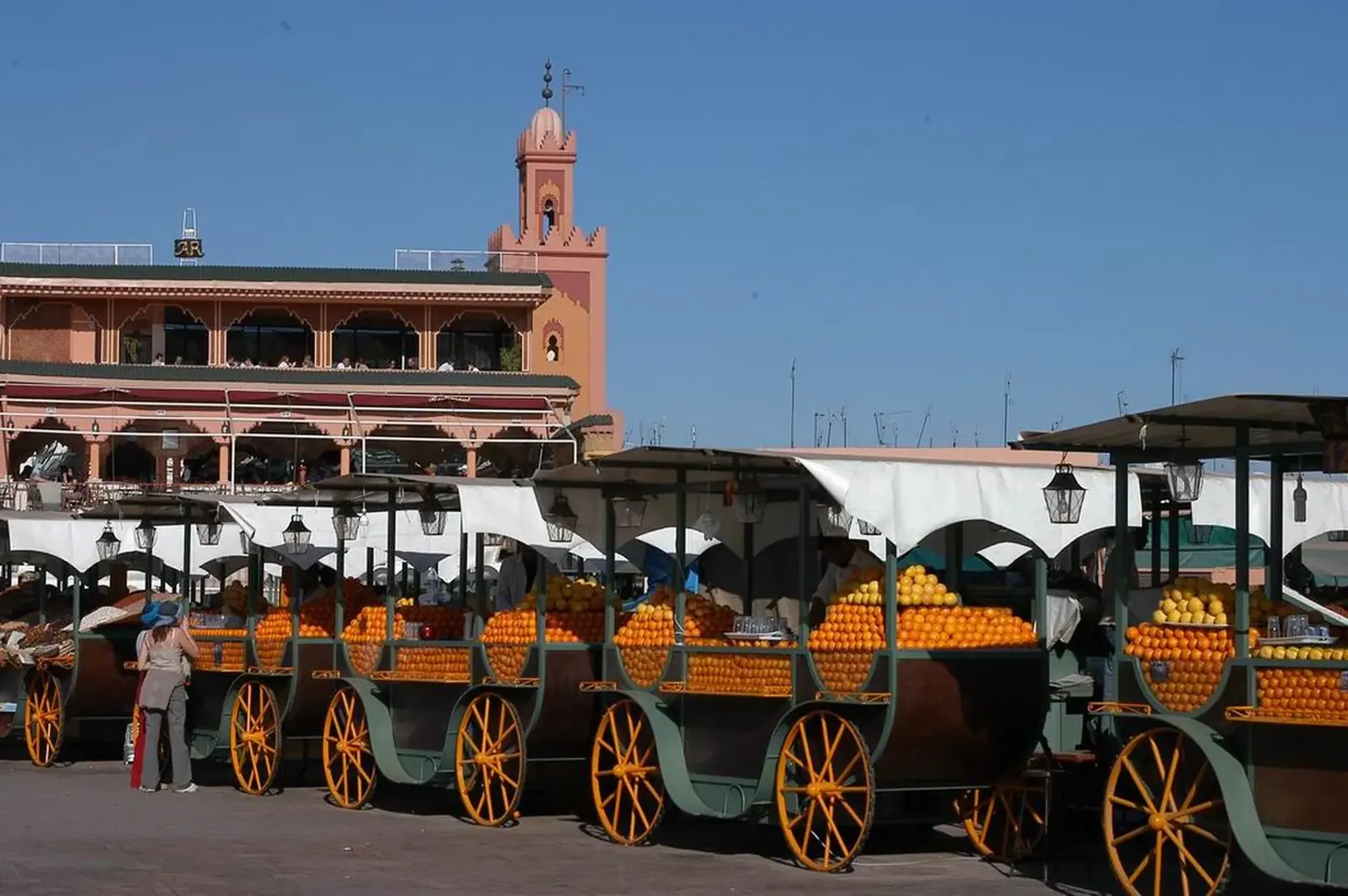
The chart sums up the year at a glance. Each bar runs from the average low to the average high of the month, and the blue bars in the centre show the average rainfall for each month. Notice the gap between night and day: in Marrakech it is often 13 to 17 degrees, so a morning that starts in a jacket can easily end in a T-shirt.
- Average low and high (°C)
- Centre: average monthly rain (mm)
1991-2020 climate normals for the Marrakech-Menara station (WMO), published by NOAA. Rainy days: days with at least 1 mm. To convert, 20 °C is 68 °F and 37 °C is about 99 °F.
See the month-by-month data
| Month | High (°C) | Low (°C) | Rain (mm) | Rainy days | Daylight (h) |
|---|---|---|---|---|---|
| January | 19.1 | 5.9 | 25.0 | 3.0 | 10.3 |
| February | 20.7 | 7.6 | 25.7 | 3.7 | 11.0 |
| March | 23.6 | 10.3 | 35.2 | 4.7 | 11.9 |
| April | 25.7 | 12.4 | 26.3 | 2.9 | 12.9 |
| May | 29.4 | 15.2 | 10.5 | 1.5 | 13.8 |
| June | 33.6 | 17.9 | 3.1 | 0.6 | 14.2 |
| July | 37.7 | 20.6 | 2.2 | 0.3 | 14.0 |
| August | 37.4 | 21.1 | 4.7 | 0.8 | 13.3 |
| September | 32.5 | 18.6 | 15.2 | 1.3 | 12.3 |
| October | 28.5 | 15.7 | 19.1 | 2.4 | 11.3 |
| November | 23.1 | 10.7 | 29.8 | 3.8 | 10.5 |
| December | 20.1 | 7.3 | 24.2 | 4.1 | 10.1 |
The curve is smooth and predictable. January is the coolest month, with an average high of 19.1 °C and an average low of 5.9 °C. From March the afternoons pass 23 °C, by May they are close to 30 °C, and in July they peak at 37.7 °C, almost level with August. The heat eases from September, and by November the average high is back below 25 °C.
Rain follows the opposite pattern. Almost all of it falls between November and April, and March is the wettest month with about 35 mm. Even then, there are fewer than five rainy days in an average month. In summer it hardly rains at all.
Marrakech weather season by season
Spring (March, April and May)
For many travellers this is the best season. Average highs climb from 23.6 °C in March to 29.4 °C in May, and nights warm up from about 10 to 15 °C. March can still bring a rainy day, and snow often lingers on the Atlas peaks, which makes for lovely views from the city. May is a taste of summer, so plan long walks for the morning.
Summer (June, July and August)
This is the hot season. The average high is 33.6 °C in June and around 37.5 °C in July and August, and nights hover around 18 to 21 °C. Those are averages: heatwaves easily push the thermometer past 40 °C. Summer travel is perfectly possible, but at a slower pace. Go out early, rest through the middle of the day and head back out in the evening, when Jemaa el-Fna comes to life.
Autumn (September, October and November)
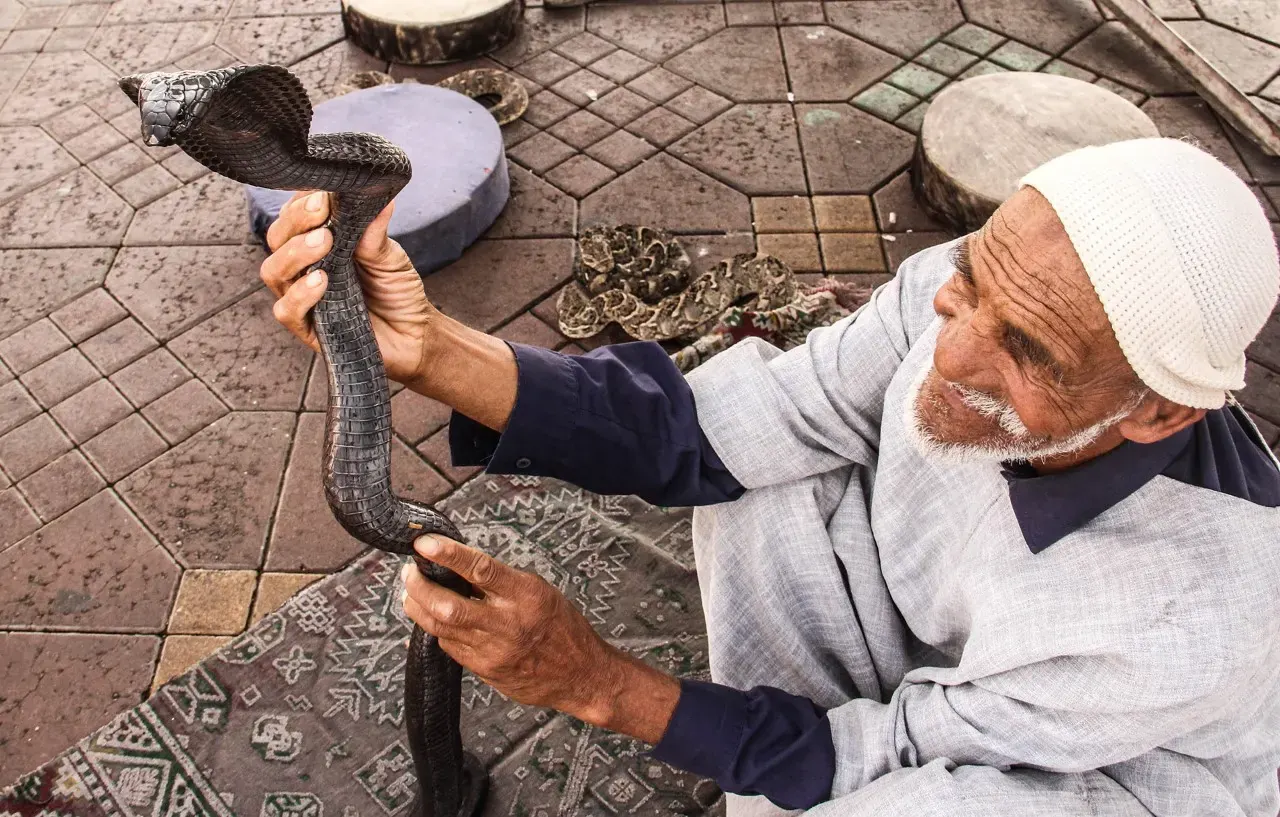
September is still hot, with an average high of 32.5 °C, but October drops to 28.5 °C and November to 23.1 °C. It is a very pleasant time to explore the medina and combine the city with day trips. The first rains of the season usually arrive in autumn.
Winter (December, January and February)
Days are bright and mild, with highs of about 19 to 21 °C, but the sun sets early and the evenings feel cold. In January the average low is 5.9 °C, and traditional houses and riads, built to keep the heat out, can feel chilly at night. It is a good time to see the city without the heat, as long as you bring a warm layer for the evening. Bear in mind that Christmas and New Year are high season.
When is the best time to visit Marrakech?
If you want comfortable temperatures for walking all day, the best months are March to May and late September to November. But the best time also depends on what you want to do.
- City sightseeing: spring and autumn, when the heat is bearable and the days are long.
- Hiking in the Atlas: April to October on mid-altitude routes. In winter the high peaks are covered in snow and need different gear and experience.
- Desert trips: October to April (see our guide to desert trips from Marrakech). In summer the daytime heat in the dunes is very hard going.
- The coast: almost all year round. On the Atlantic, summer is far cooler than in Marrakech.
- No heat and fewer crowds: January and February, after the festive season, with warm clothes for the evenings.
Day length matters for planning too. Marrakech gets about 10 hours of daylight in mid-December and about 14 in mid-June, so winter excursions are best started early.
Beyond Marrakech: Atlas, desert and coast
Many visitors use Marrakech as a base to explore southern Morocco, and a few hours’ drive can change the weather completely. This table compares Marrakech with three official stations of Morocco’s national meteorological service, published on the WMO World Weather Information Service: Ouarzazate, the gateway to the south; Errachidia, the closest to the Merzouga dunes; and Agadir, on the Atlantic coast.
| City | January | April | July | October |
|---|---|---|---|---|
| Marrakech | 19.15.9 | 25.712.4 | 37.720.6 | 28.515.7 |
| Ouarzazate | 17.31.8 | 26.711.9 | 38.822.7 | 27.513.3 |
| Errachidia | 15.92.0 | 26.113.0 | 39.525.8 | 26.814.2 |
| Agadir | 21.18.4 | 23.214.1 | 26.719.2 | 26.116.7 |
1991-2020 normals. Marrakech: NOAA (WMO). Ouarzazate, Errachidia and Agadir: Morocco’s national meteorological service, via the WMO.
The differences are striking. Across the Atlas, Ouarzazate and Errachidia have colder winters than Marrakech, with January lows of about 2 °C, and summers that are just as hot. That is why winter nights in the desert call for a warm sleeping bag, as we explain in our guide to a night in a Sahara desert camp. In Agadir the ocean softens everything: the average July high is 26.7 °C, eleven degrees cooler than Marrakech.
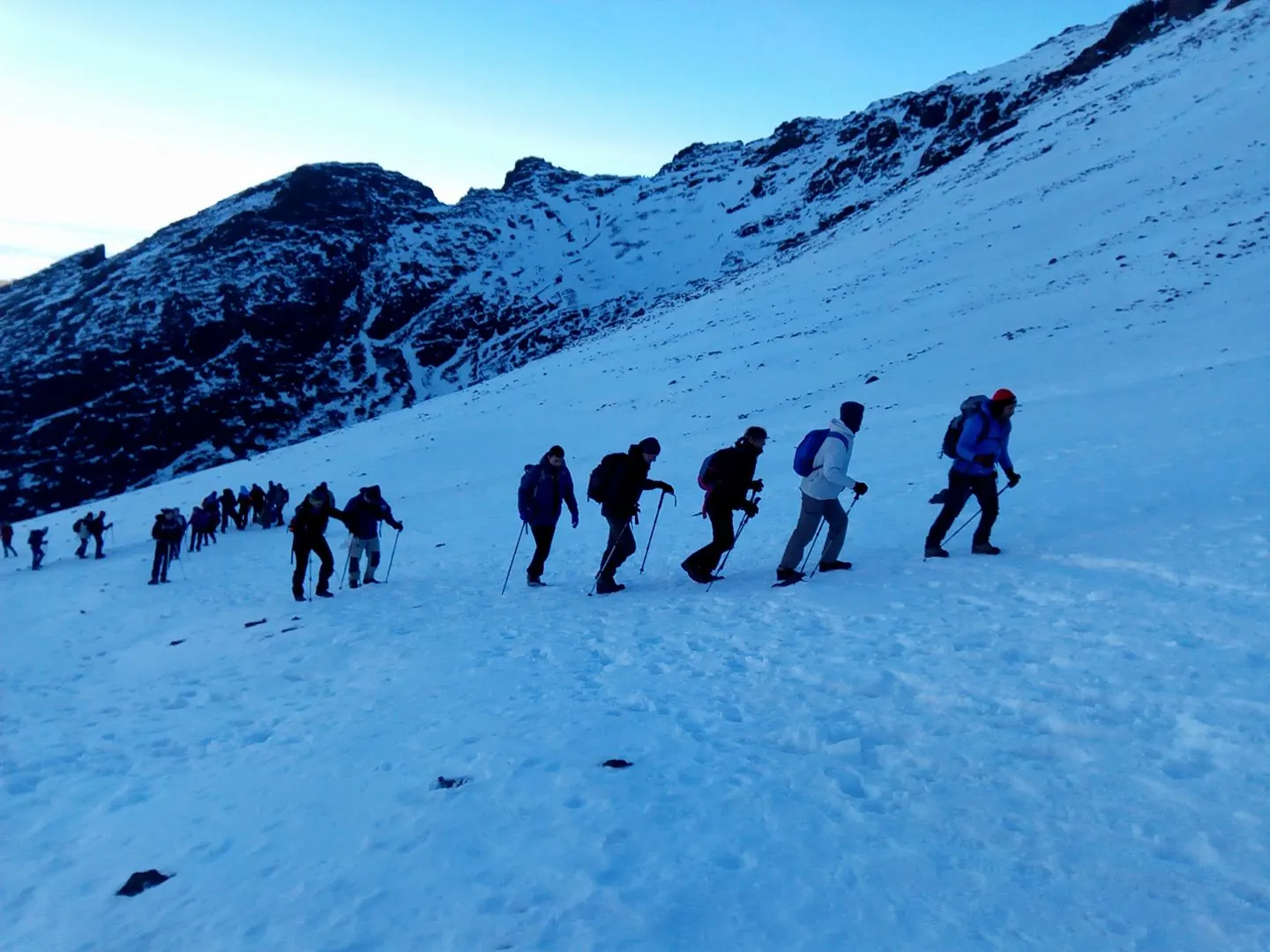
In the mountains, altitude is what matters most. The higher you go, the cooler it gets, and in winter the High Atlas peaks are covered in snow. If you are thinking of climbing North Africa’s highest summit, read our guide to climbing Mount Toubkal first, where we explain how the ascent changes in winter.
A warming climate: what recent years show
Climate normals describe thirty years, but recent years have been warmer than average. According to the official State of the Climate in Morocco 2024 report from Morocco’s General Directorate of Meteorology, 2024 was the warmest year since records began in the country, with an anomaly of +1.49 °C compared with 1991-2020, and the sixth year of drought in a row. On 23 July 2024, during a heatwave, Marrakech reached 47.6 °C.
The practical takeaway is simple: use the averages to choose your season, but not to predict your exact week. If you travel between May and September, expect some days hotter than the averages and check Moroccan weather warnings before heading out on an excursion.
What to pack for Marrakech in each season
The most practical approach is layers, because the difference between day and night is big all year. Clothes that cover your shoulders and knees are also useful in the medina and protect you from the sun.
- Spring and autumn: light clothes for the day, a jumper or light jacket for the evening and comfortable walking shoes.
- Summer: loose cotton or linen, a hat, sunglasses, sun cream and a water bottle at all times.
- Winter: layers, a warm coat for the evening, and proper winter clothing if you are heading to the mountains or the desert.
- All year: a light scarf, handy against sun, dust and the night chill.
To make the most of your time in the city, our guide to the Marrakech souks explains how to find your way around the medina and when to go.
Marrakech weather: frequently asked questions
What is the hottest month in Marrakech?
July, with an average high of 37.7 °C (about 100 °F), almost level with August at 37.4 °C. These are 1991-2020 averages: heatwaves go well beyond 40 °C.
What is the coldest month in Marrakech?
January. The average high is 19.1 °C and the average low 5.9 °C, so days are mild and nights are cool.
Does it rain a lot in Marrakech?
No. The city gets about 221 mm a year, mostly between November and April. March is the wettest month, with about 35 mm spread over fewer than five rainy days on average.
Does it snow in Marrakech?
Hardly ever in the city itself. What you do see in winter and early spring is snow on the High Atlas peaks to the south.
What is the best month to visit Morocco?
For Marrakech and the south, spring and autumn are the most balanced seasons. The desert is best from October to April, and mid-altitude mountain routes from April to October.
Is August a good time to visit Marrakech?
It can be, if you take it slowly: start early, stay out of the midday sun, drink water often and save long walks for the morning and evening.
Sources
- NOAA, National Centers for Environmental Information: WMO Climate Normals 1991-2020, Marrakech-Menara station.
- World Meteorological Organization, World Weather Information Service (data from Morocco’s national meteorological service): Ouarzazate, Errachidia and Agadir.
- Morocco’s General Directorate of Meteorology: État du climat au Maroc 2024.
- Daylight hours calculated for the latitude of Marrakech (31.6° N) in the middle of each month.