


Spending Christmas or New Year in Morocco is an increasingly popular idea: it is a short flight from the UK, the days are sunny, and the desert or the Atlas mountains offer a very different way to see in the new year. But there is something worth knowing before you pack: Christmas is not a holiday in Morocco, while January brings three public holidays, including the Amazigh New Year. This guide explains what is celebrated, what the weather is like and how to prepare.
In Morocco, 25 December is a normal working day. The official public holidays are 1 January, 11 January (the anniversary of the 1944 Independence Manifesto) and, since 2024, 14 January, the Amazigh New Year or Yennayer. In Marrakech, December and January days reach about 19 to 20 °C, but nights drop to 6 or 7 °C, and in the south and the desert they get close to 2 °C. Pack proper warm clothes.
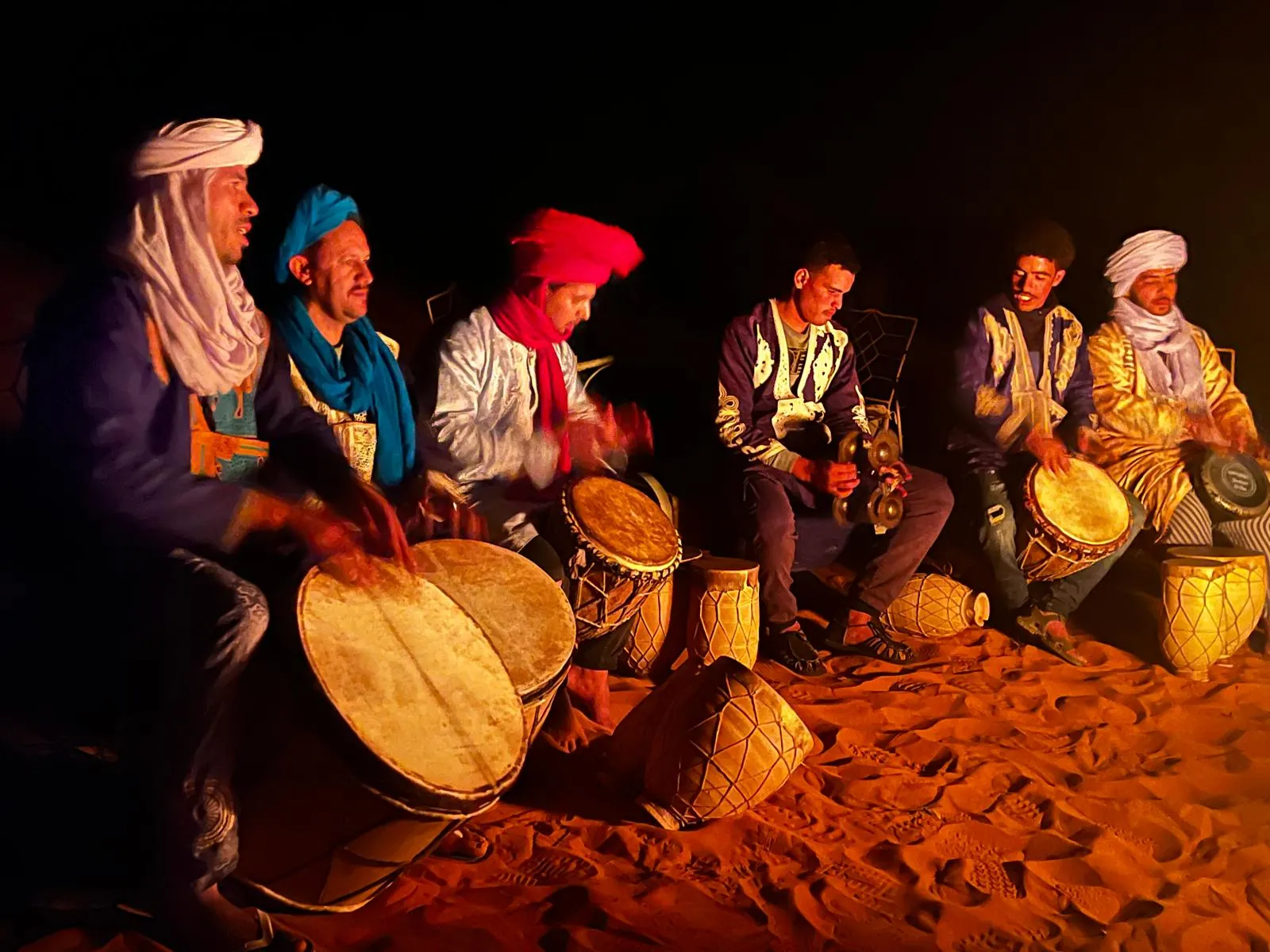
PhotosThe photos in this guide were taken by Mustapha AIT ISHA, licensed tour guide.
Is Christmas celebrated in Morocco?
Morocco is a Muslim-majority country and Christmas is not one of its official holidays. Christmas Eve, Christmas Day and Boxing Day are ordinary days: the souks are open, banks and offices work and life carries on as usual. There is little festive atmosphere in the streets, beyond decorations in some shopping centres, hotels and restaurants, some of which prepare special dinners.
For many travellers that is exactly the appeal: a different kind of holiday, without the shopping rush, and with time to explore the medina, the Atlas or the desert. There are Christian communities in Morocco and Catholic churches in several cities, so if you would like to attend a Christmas service, ask your accommodation about times.
New Year is a different story. Morocco’s civil calendar is the Gregorian one, the same as in the UK, and 1 January is an official public holiday. New Year’s Eve does not have strong local traditions, but in the tourist cities some hotels, riads and restaurants organise special dinners.
Morocco’s holiday calendar over Christmas and New Year
This calendar shows the four central weeks of the 2026-2027 festive season. Moroccan public holidays, when banks and government offices close, are in green; dates celebrated in the UK that are normal working days in Morocco are outlined.
- 24 Dec Christmas Eve
- 25 Dec Christmas Day
- 26 Dec Boxing Day
- 31 Dec New Year’s Eve
- 1 Jan New Year’s Day
- 11 Jan Independence Manifesto Day
- 14 Jan Yennayer
- Official public holiday in Morocco
- Celebrated in the UK, normal working day in Morocco
December 2026 and January 2027. Morocco’s religious holidays follow the lunar calendar and move every year; none falls in these weeks.
Morocco’s January holidays rarely affect sightseeing, but banks, offices and government services close. If you need to sort anything out, avoid those days.
Yennayer, the Amazigh New Year
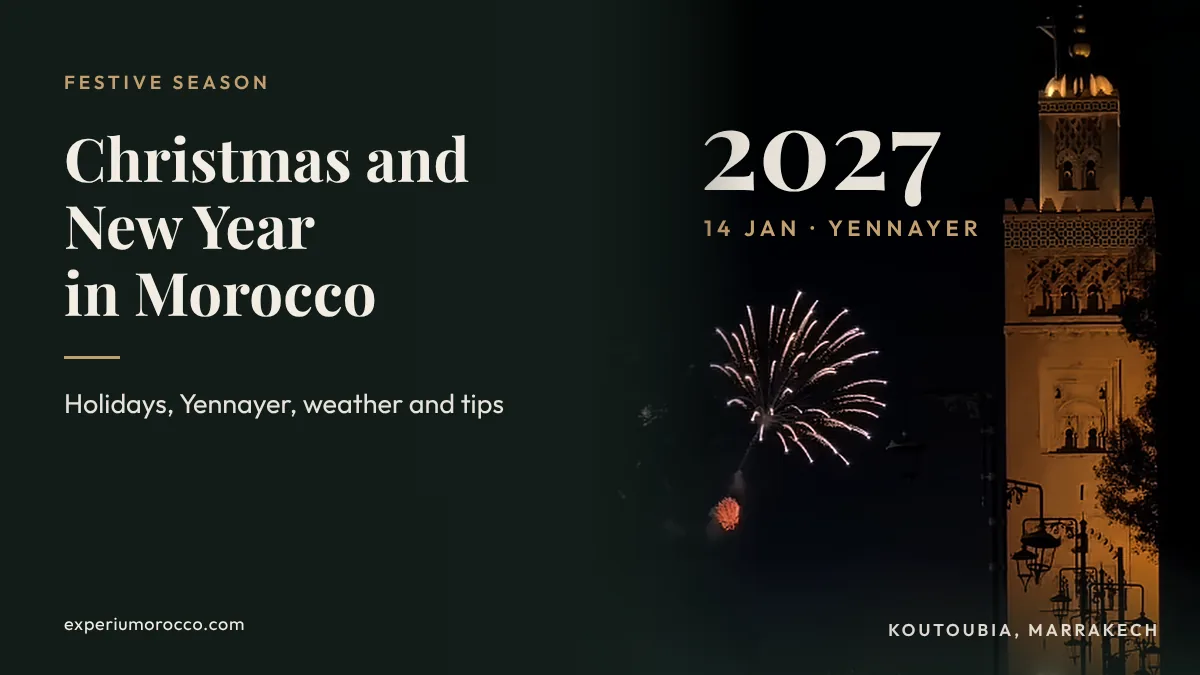
As well as 1 January and the Islamic New Year, which follows the lunar calendar and moves every year, Morocco celebrates Yennayer on 14 January, the Amazigh New Year, which marks the start of the traditional farming calendar. In May 2023, by decision of King Mohammed VI, Yennayer became an official paid national holiday, and it was first celebrated as such on 14 January 2024.
By the traditional count, 14 January 2027 will mark the beginning of the Amazigh year 2977. It is above all a family occasion, with shared meals and dishes that vary from region to region, and in recent years it has become more visible through cultural events in many cities. If your trip coincides, it is a good chance to get closer to Amazigh culture, which is present all over the country. Our guide to the Morocco flag also explains the meaning of the Amazigh symbol.
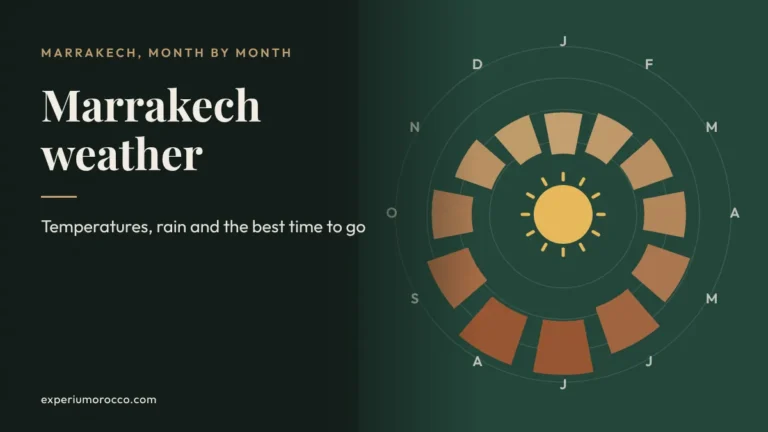
Morocco weather in December and January
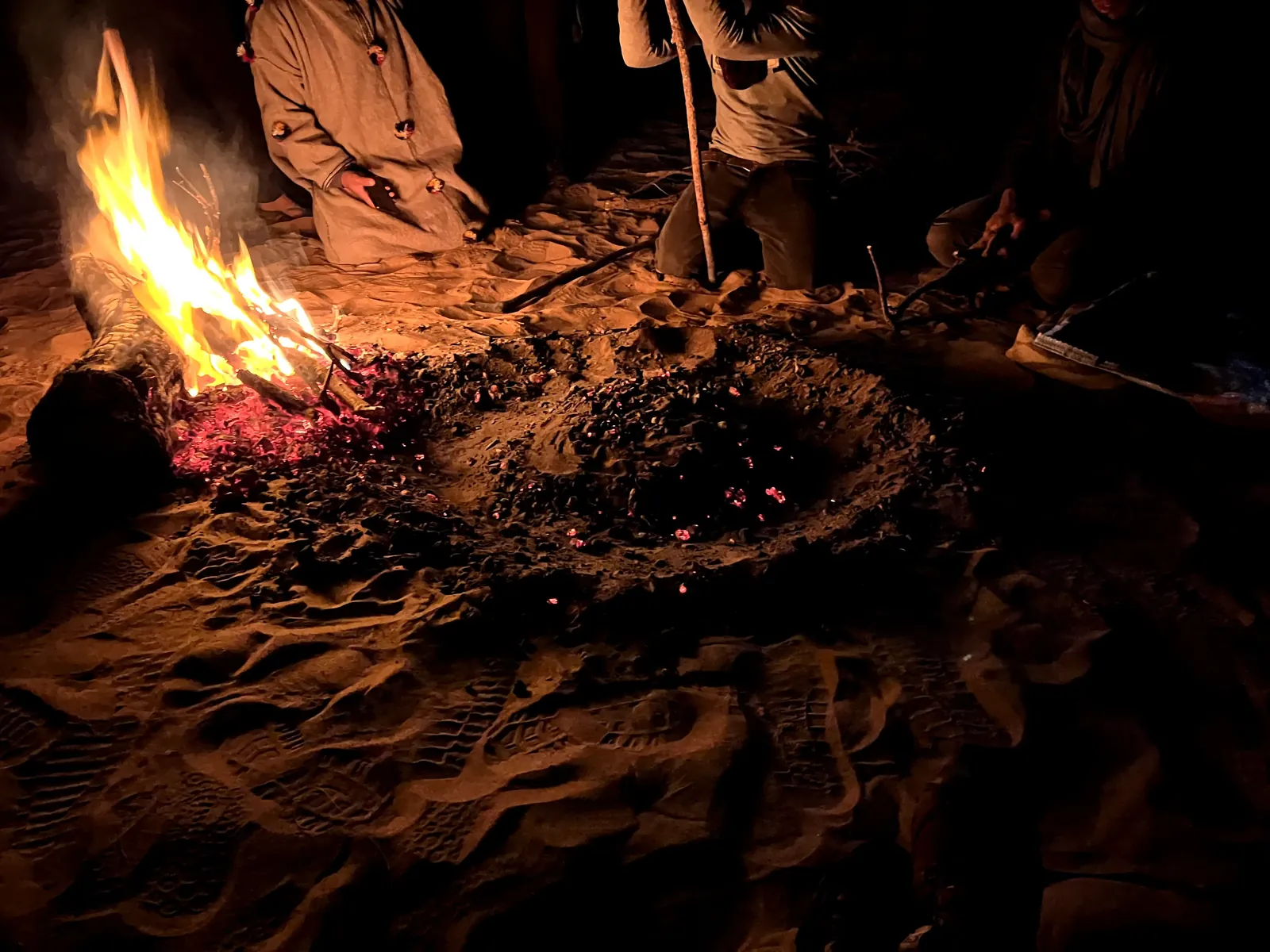
In winter, the difference between day and night is large. The sun is warm during the day and long sleeves are enough, but as soon as the afternoon fades the temperature drops fast. These are the official December and January averages for four cities, from the 1991-2020 normals Morocco reports to the World Meteorological Organization.
| City | December | January |
|---|---|---|
| Marrakech | 20.1 / 7.3 | 19.1 / 5.9 |
| Ouarzazate | 17.7 / 3.2 | 17.3 / 1.8 |
| Errachidia | 16.7 / 3.5 | 15.9 / 2.0 |
| Agadir | 22.1 / 10.1 | 21.1 / 8.4 |
1991-2020 normals. Marrakech: NOAA (WMO). Ouarzazate, Errachidia and Agadir: Morocco’s national meteorological service, via the WMO.
Across the Atlas, in Ouarzazate and Errachidia, January nights average about 2 °C, and out in the desert, away from buildings, they can drop further. Rain is rarely a problem: December in Marrakech has about four rainy days on average. The mountains are another matter: the High Atlas peaks are covered in snow, and some mountain passes can close temporarily after heavy snowfall.
Days are short. In mid-December Marrakech gets about 10 hours of daylight, so long excursions start early. For the full month-by-month figures, see our guide to Marrakech weather by month.
New Year in Marrakech, the desert or the mountains
In Marrakech
The easiest option: mild days for exploring the medina, sunny terraces at lunchtime and plenty of choice for the last dinner of the year. Book ahead, as it is high season. To find your way around, have a look at our guide to the Marrakech souks.
In the desert
Seeing in the new year under Saharan stars is a dream for many travellers, and winter is a good season for the dunes because the daytime heat is gentle. The nights, however, are genuinely cold. If you sleep in a camp, bring thermal layers, a hat and an extra warm layer, and read our guide to a night in a Sahara desert camp first. If you are weighing up the different routes, our guide to desert trips from Marrakech compares the options.
In the mountains
The snowy Atlas is beautiful at this time of year, but winter changes conditions completely. High routes such as Toubkal call for winter equipment and experience, as we explain in our guide to climbing Mount Toubkal. Lower valleys such as the Ourika Valley make an easy day trip without special gear.
Tips for visiting Morocco at Christmas and New Year
- Book early. The festive season coincides with school holidays in the UK and across Europe, and flights, accommodation and excursions fill up sooner.
- Dress in layers. T-shirt at midday and a coat at night, sometimes on the same day.
- Be ready for cold nights. Many traditional houses have no central heating, so warm pyjamas and thick socks are welcome.
- Check the weather and the roads. If you are crossing the Atlas, look at the Moroccan weather forecast before setting off: snow can close mountain passes.
- Mind the holidays. Banks and government offices close on 1, 11 and 14 January.
- Respect the local rhythm. New Year’s Eve is not a traditional festival, although many Moroccans in the cities celebrate it too. In public places, keep things low-key.
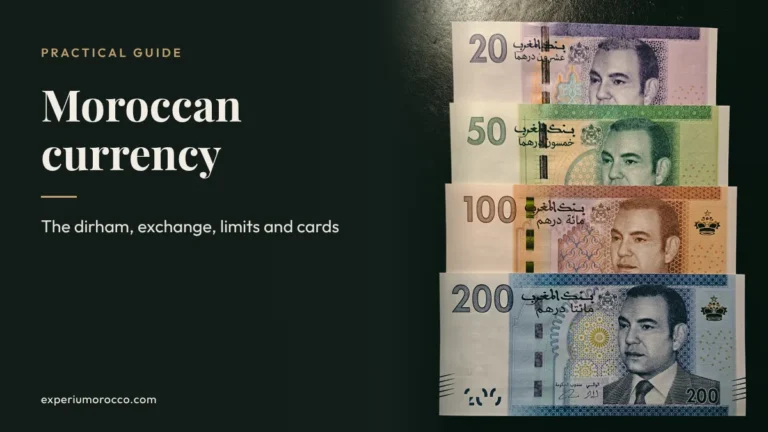
And if you need to change money, remember that dirhams are hard to get outside Morocco. Our guide to Moroccan currency explains how it works.
Christmas and New Year in Morocco: frequently asked questions
Is Christmas a holiday in Morocco?
No. Christmas is not an official holiday in Morocco: 24, 25 and 26 December are working days and almost everything runs as normal.
Is 1 January a holiday in Morocco?
Yes. New Year’s Day is an official public holiday, as are 11 January, the anniversary of the 1944 Independence Manifesto, and 14 January, the Amazigh New Year.
What is Yennayer?
The Amazigh New Year, celebrated on 14 January. It has been an official national holiday in Morocco since 2024. The Amazigh year 2977 begins on 14 January 2027.
What is the weather like in Marrakech at Christmas?
Sunny, mild days with average highs of about 20 °C in December, and cold nights with average lows of about 7 °C. In January the lows drop to about 6 °C.
Is the desert cold at New Year?
Yes, at night. In Errachidia, the nearest official weather station to the Merzouga dunes, the average January low is about 2 °C. Out in the dunes it can be even colder.
Do I need to book New Year in Marrakech in advance?
It is strongly recommended. It falls during European holidays, and accommodation, dinners and excursions tend to fill up sooner than at other times of year.
Sources
- Royal Cabinet of Morocco: statement of 3 May 2023 declaring the Amazigh New Year an official paid national holiday.
- NOAA, National Centers for Environmental Information: WMO Climate Normals 1991-2020, Marrakech-Menara station.
- World Meteorological Organization, World Weather Information Service (data from Morocco’s national meteorological service): Ouarzazate, Errachidia and Agadir.