

The Morocco flag is one of the first things you notice when you land: a deep red flag with a green star at its centre, flying over town halls, kasbahs, shop doorways and mountain villages. It is simple to describe and full of history. This guide explains what the Moroccan flag means, how it took its present form, how to draw it step by step, and what every traveller should know about seeing it, wearing it and buying it in Morocco.
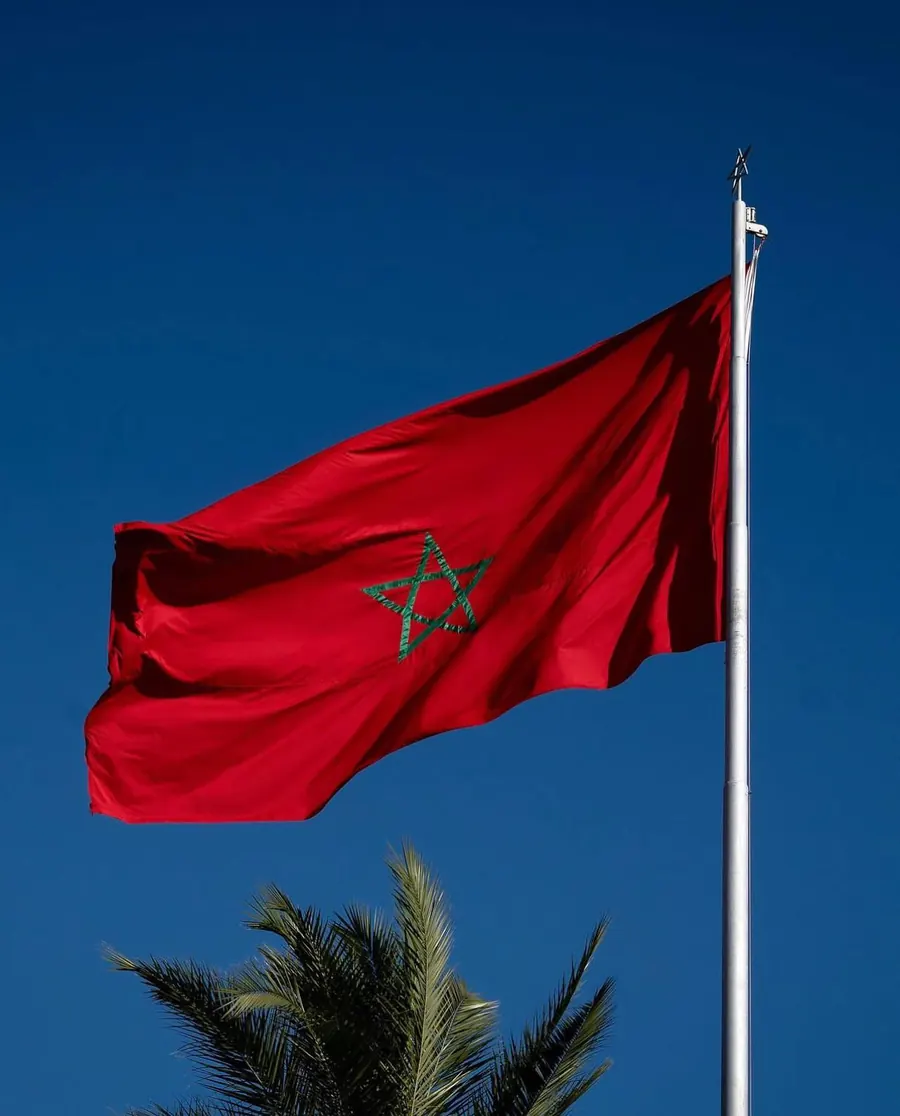
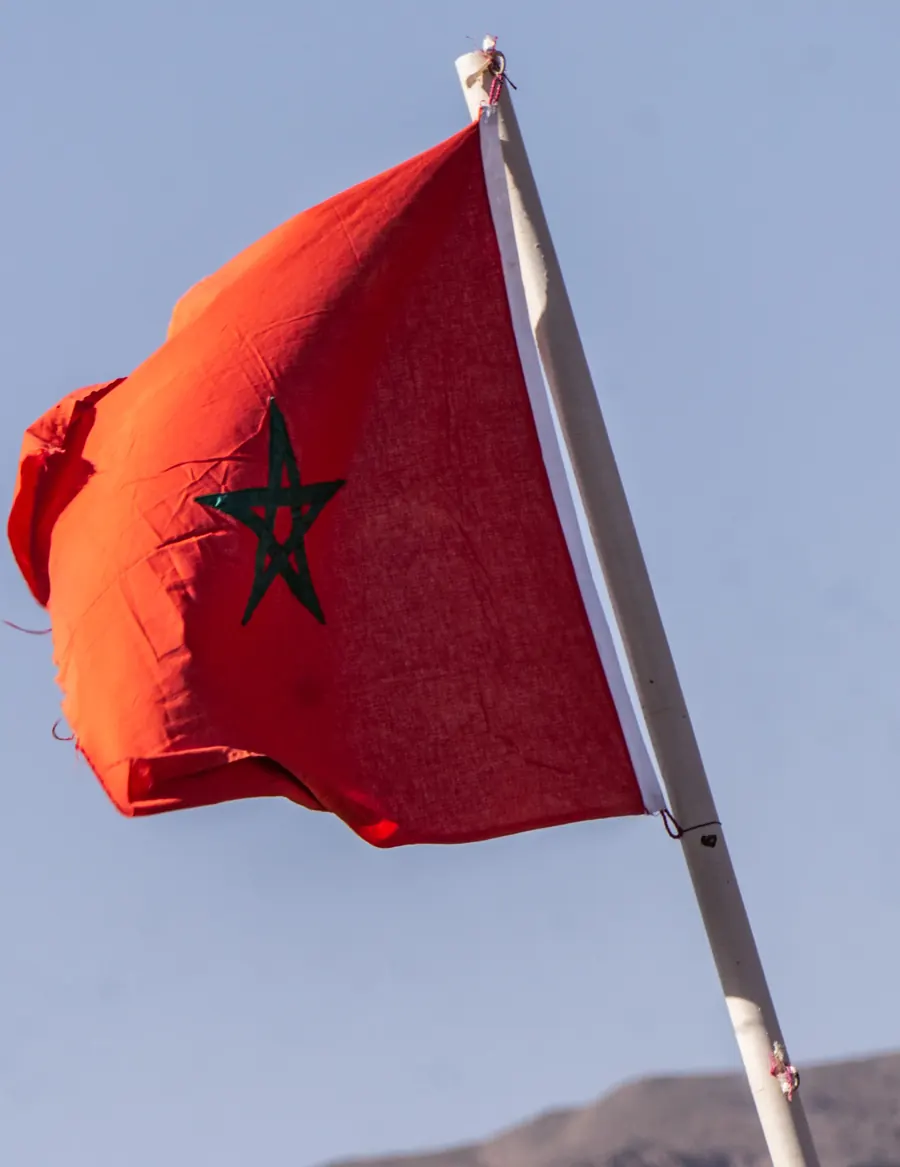
The flag of Morocco is a red field with a green five-pointed star at its centre, as set out in Article 4 of the Constitution. The star is an interlaced pentagram known as the seal of Solomon, added to the traditional red flag by a dahir of Sultan Moulay Youssef on 17 November 1915. The motto of the Kingdom is “God, the Homeland, the King”.
What does the Moroccan flag look like?
The Moroccan flag has only two elements, and the Constitution names both of them. Article 4 of the 2011 Constitution states that “the emblem of the Kingdom is the red flag with a green five-pointed star at its centre”. There are no stripes, no coat of arms and no writing on the national flag.
Look closely and you will see that the star is not a solid shape. It is drawn with five green bands that cross and weave over and under one another, so the red of the flag shows through the middle. This interlaced star is a pentagram, traditionally called the seal of Solomon.
- FieldRed, with no other mark apart from the star.
- StarGreen, five points, interlaced outline, placed at the centre.
- ShapeA rectangle, usually made in a 2:3 ratio (two units high for three wide).
- Star sizeThe star fits inside an imaginary circle whose diameter is about one third of the flag’s length.
- Digital coloursRed around #C1272D and green around #006233 are the values most often used on screen. They are common references, not codes fixed by the Constitution.
- Emoji & code🇲🇦 (ISO code: MA / MAR)
Moroccan flag meaning: what does the flag symbolize?
The official texts describe the flag but do not assign a meaning to each colour. The 1915 dahir gives a practical reason for the star: to distinguish the Moroccan flag from other plain red flags. Over the past century, however, Moroccans have come to read the flag in a fairly consistent way, and these are the meanings you will hear most often.
The red field
Red is the oldest part of the flag. Moroccan rulers flew red banners long before the star was added, and the colour is closely linked to the Alaouite dynasty, which has reigned in Morocco since the 17th century and traces its lineage to the family of the Prophet. Many Moroccans also see in it courage, strength and the sacrifices of those who defended the country.
The green interlaced star
Green has long been associated with Islam, and with hope and peace. The five points of the star are widely read as the five pillars of Islam: the profession of faith, prayer, almsgiving, fasting in Ramadan and the pilgrimage to Mecca. The interlaced lines make it a seal of Solomon, an ancient emblem known in Moroccan tradition long before it appeared on the flag.
Is it a Star of David?
No. This is one of the most common questions about the Morocco flag, and the confusion comes from the name. The six-pointed hexagram is sometimes also called the seal of Solomon, but the star on the Moroccan flag has five points. It is a pentagram, not a hexagram.
A brief history of Morocco’s flag
The flag Morocco uses today is the result of a long tradition rather than a sudden invention. Its story is short enough to follow in four dates.
- Before 1915
- Earlier dynasties such as the Idrisids and the Almohads are generally described as flying white banners, sometimes covered with inscriptions. Red became established with the Alaouite dynasty from the 17th century, and a plain red flag became the flag of the country, at sea as well as on land.
- 17 Nov 1915
- A dahir of Sultan Moulay Youssef, dated 9 Muharram 1334, adds a green five-pointed seal of Solomon to the centre of the red flag. The text explains that the old flag looked too much like other red flags, especially those used for signals at sea.
- 1956
- Morocco recovers its independence and the red flag with the green star remains the national flag. Independence Day is celebrated every year on 18 November.
- 2011
- The current Constitution describes the flag and the motto of the Kingdom in Article 4.
The motto of the Kingdom: God, the Homeland, the King
The same article of the Constitution that defines the flag also sets the motto of the Kingdom. You will meet it almost as often as the flag itself.
Travellers often spot it written in huge letters on a hillside. The best known example is on the hill of Agadir Oufella, above Agadir, where the three words are lit up at night and can be seen from the seafront and the marina. The motto also appears on public buildings and official documents, and on the coat of arms of Morocco, where two lions support a shield bearing the green star, under a royal crown, with a ribbon carrying a verse from the Qur’an. If you see these three words on a mountainside during a road trip, you now know what they say.
How to draw the Morocco flag, step by step
The best way to understand the flag is to build it. The drawing below follows the same steps a flag maker would use, from the red field to the woven star. Watch it once, then try it with a pencil and a ruler.
- 1The red field. A rectangle in a 2:3 ratio.
- 2Find the centre. The two diagonals cross exactly where the star goes.
- 3A guide circle. Draw a circle around the centre.
- 4Five points. Mark five equal points on the circle, one at the top.
- 5The green star. Join every second point with a green band. Each band passes over, then under, the others.
- 6Clean up. Erase the guides: the flag is complete.
The Constitution describes the flag in words. The 2:3 shape, the colours and the size of the star in this drawing follow the proportions in common use and are shown for illustration.
If you draw it by hand, the woven effect is the only tricky part. Draw the full star first with a light pencil, then, at each of the five crossings inside the star, leave a small gap in one band so that it seems to pass under the other. Going around the star, each band should alternate: over at one crossing, under at the next.
Seeing the flag in Morocco: a traveller’s guide
Why are the streets covered in red flags?
The flag is part of everyday life in Morocco. It flies over schools, town halls and post offices, and it hangs above shop doors and in the narrow lanes of the old medinas, often next to a portrait of the King. Around the national holidays the main avenues fill with flags. The dates when you are most likely to see whole streets dressed in red and green are Throne Day on 30 July, Oued Ed-Dahab Day on 14 August, the Revolution of the King and the People on 20 August, the Green March on 6 November and Independence Day on 18 November. Football is the other great occasion: on big match days, flags appear on cars, balconies and café terraces in every town.
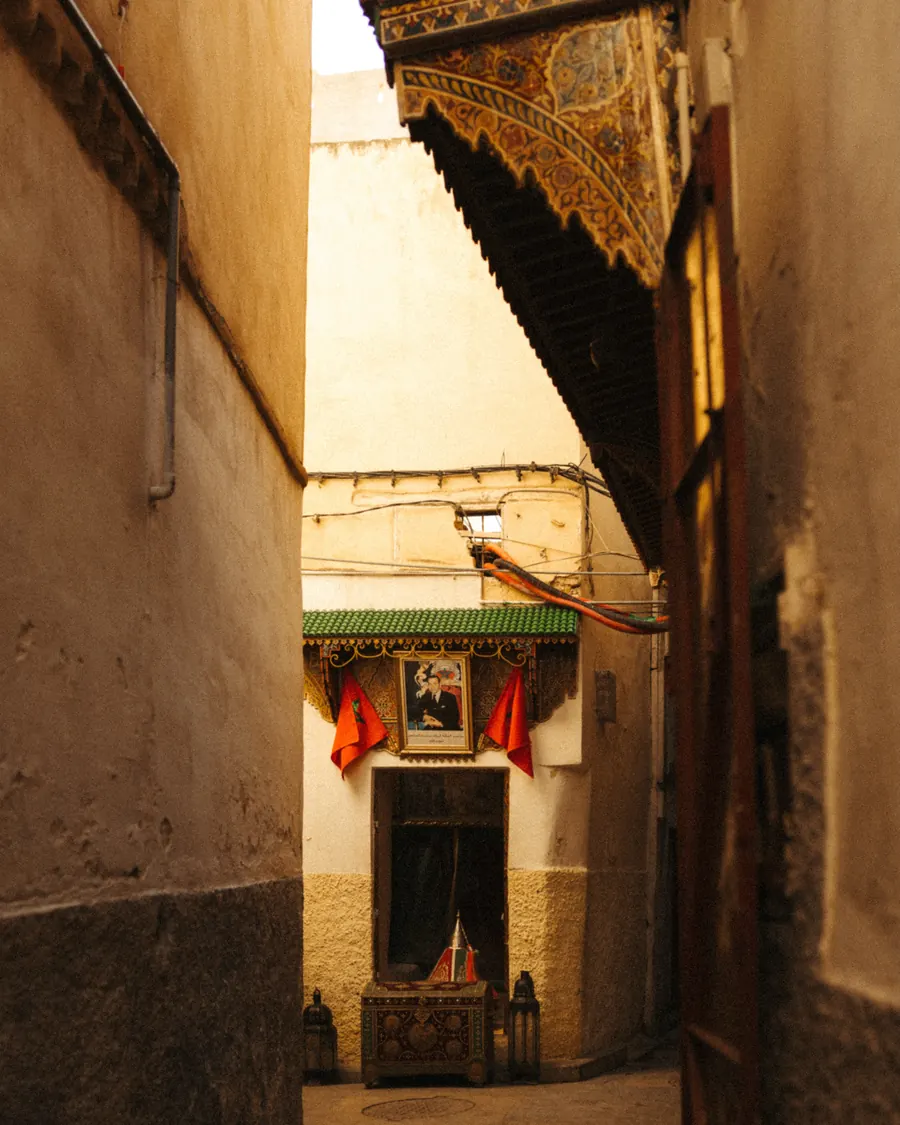
Even in a quiet riad, the flag is often there, moving gently above the courtyard or the roof terrace.
A record-breaking flag in Dakhla
In May 2010, young volunteers from across the country unfolded a Moroccan flag of about 60,400 square metres in Dakhla, in the south of the Kingdom. A Guinness World Records judge measured it on site and certified it as the largest flag in the world at the time. The record has since been beaten, but it remains a favourite story in Morocco.
The other flag you may see: the Amazigh symbol
Amazigh culture is part of the official identity of Morocco. Article 5 of the Constitution makes Amazigh an official language of the State alongside Arabic and calls it the common heritage of all Moroccans. The Royal Institute of Amazigh Culture (IRCAM) was created in 2001, the Tifinagh alphabet is used on the signs of many public buildings, and the Amazigh New Year became an official public holiday by Royal decision in 2023. It is celebrated on 14 January.
In the Atlas, in the oases of the south and at cultural festivals, you may also see a banner with three horizontal bands of blue, green and yellow and a red letter in the middle. That letter is the yaz, ⵣ, from the Tifinagh alphabet. The banner is a cultural symbol that some Amazigh associations and individuals use to express their identity. It has no official status and is not a flag of the State. Morocco has one national flag: the red flag with the green star.
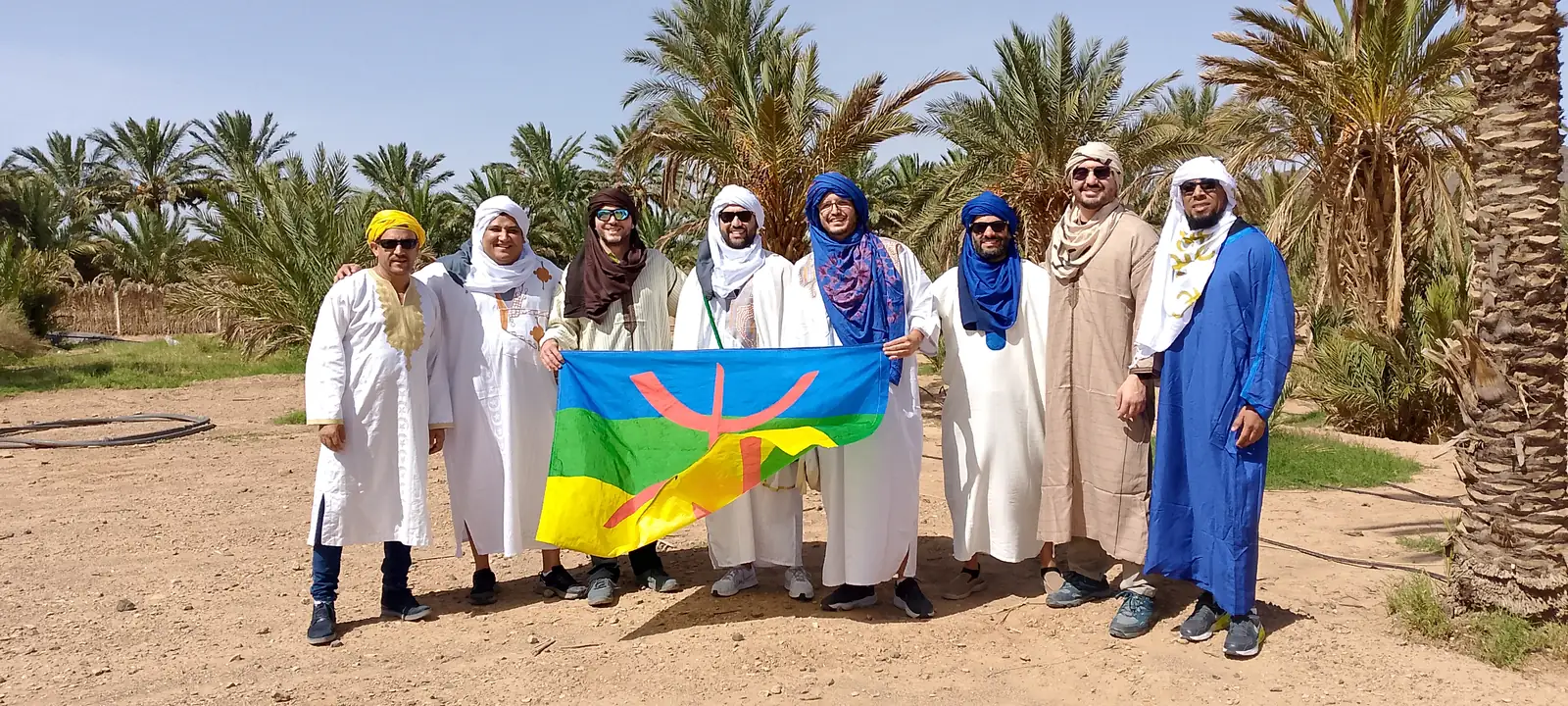
If you are curious about Amazigh life in the mountains, our guide to Imlil and its villages is a good place to start.
Flag-inspired souvenirs and flag etiquette
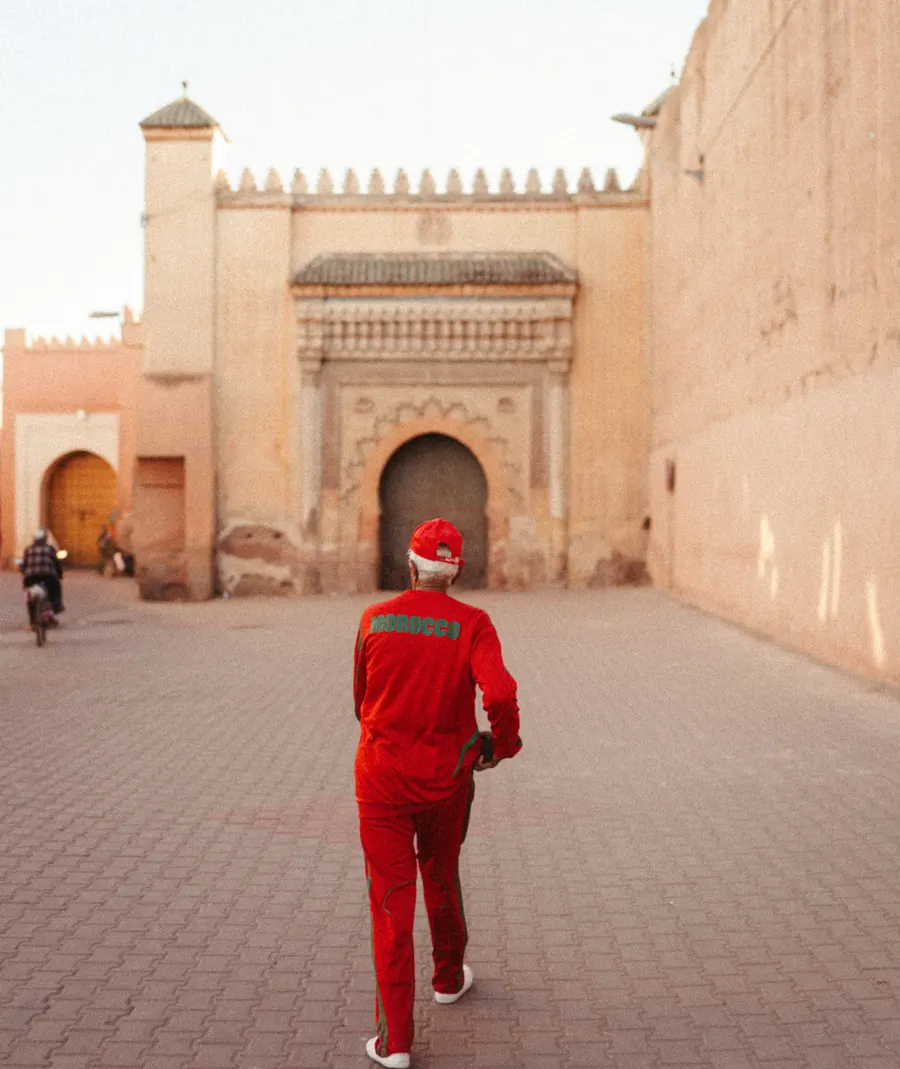
Red and green are everywhere in Moroccan shops, and many visitors like to bring a little of the flag home. You will find flags of every size, national team football shirts, scarves, caps, tracksuits and hoodies, bracelets, key rings and stickers, as well as djellabas, kaftans and slippers in the colours of the flag. Sports shops sell the official kits, the souks have the widest choice of everything else, and stalls appear near stadiums on match days. Even the merchants join in: some herbalists arrange their coloured potpourri into a red field with a green star.
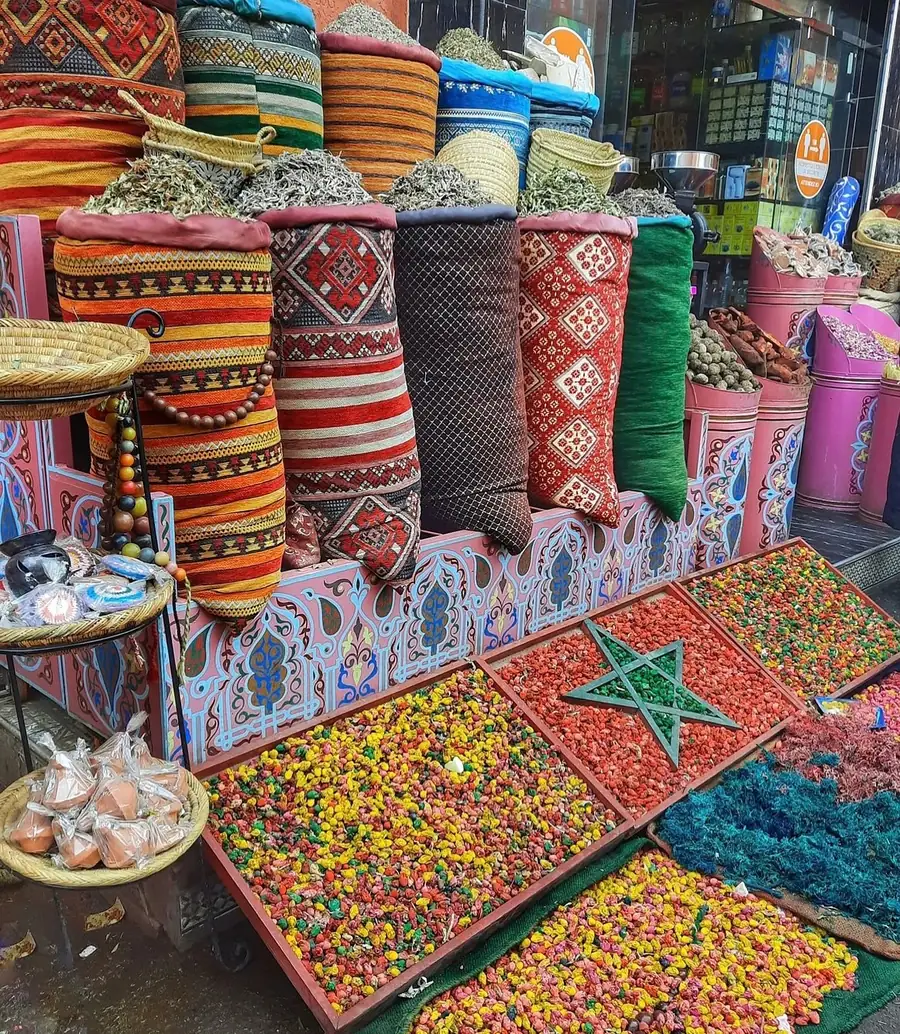
Prices in the souks are not fixed and the figures you are first quoted are only a starting point, so take your time and compare. Our guide to the souks of Marrakech explains how bargaining works.
Moroccans are proud of their flag, and a visitor wearing the national colours is usually greeted with a smile, especially on match days. A few simple habits show respect:
- Wear the colours freely: shirts, scarves and caps with the flag are welcome.
- Do not let a flag touch the ground, and do not write on it or use it as a cloth or a towel.
- If you hang a flag from a balcony or a car, keep it clean and in good condition.
- Stand up when the national anthem is played at a ceremony or a match.
Respect for the flag is also a legal matter. Law no. 17-05 of 2005 punishes insults to the flag and to the symbols of the Kingdom, so treat any flag you buy with the same care Moroccans do.
Frequently asked questions about the Morocco flag
What does the Moroccan flag symbolize?
The red is linked to the Alaouite dynasty and is often read as courage and strength. The green star is associated with Islam, hope and peace, and its five points are widely seen as the five pillars of Islam. The official texts describe the design but do not define these meanings.
Is the star on the Moroccan flag a Star of David?
No. The star on the flag of Morocco has five points: it is an interlaced pentagram called the seal of Solomon. The Star of David has six points.
When was the current Moroccan flag adopted?
The green star was added to the red flag by a dahir of Sultan Moulay Youssef dated 17 November 1915. The flag remained in use after independence in 1956 and is described today in Article 4 of the 2011 Constitution.
What was the Morocco flag before 1915?
Before 1915, Morocco flew a plain red flag with no star. The star was added to distinguish it from other red flags, especially the ones used for signals at sea.
What colours are on the Moroccan flag?
Two colours: a red field and a green star. On screen, red around #C1272D and green around #006233 are the most common values, but they are references in common use, not codes set by the Constitution.
Which flags look like the Moroccan flag?
The flag of Vietnam is also red with a five-pointed star, but its star is solid and yellow, while Morocco’s is a green interlaced outline. The flags of Turkey and Tunisia are red too, but they carry a white crescent and star.
Is the Amazigh flag an official flag of Morocco?
No. The blue, green and yellow banner with the red letter yaz is a cultural symbol used by some Amazigh associations and individuals. Morocco has one national flag. Amazigh itself is an official language of the State under Article 5 of the Constitution.
Can tourists buy and wear the Moroccan flag?
Yes. Flags, football shirts, scarves and clothing in the national colours are sold all over the country, and wearing them is welcome. Just treat the flag with respect: keep it off the ground and never damage it.
Sources
- Constitution of the Kingdom of Morocco (2011), Articles 4 and 5, published by the Ministry of Justice (French text).
- Emblems of the Kingdom (flag, coat of arms, national anthem), maroc.ma, the national portal of Morocco.
- Dahir of 9 Muharram 1334 (17 November 1915) on the Moroccan flag.
- Penal Code, consolidated version, and Law no. 17-05 on insults to the emblem and symbols of the Kingdom, Ministry of Justice.
- Royal Cabinet communiqué of 3 May 2023 on the Amazigh New Year as an official public holiday.
- Guinness World Records, largest flag, certified in Dakhla in May 2010.