

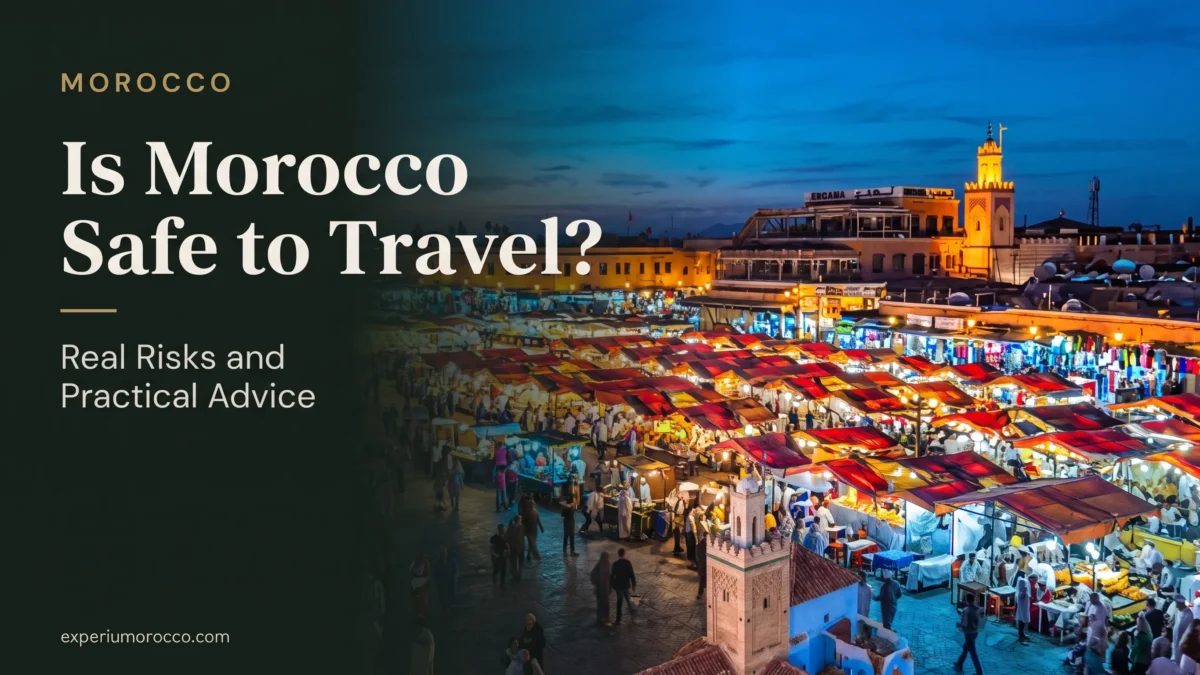
Is Morocco safe to travel? For most visitors, yes, as long as you take the same common-sense precautions you would in any busy tourist country. That is not just our view: no major Western government advises against travel to Morocco as a whole, and nearly 20 million people visited in 2025. This guide sets out what the official travel advisories actually say, the real risks and how to avoid them, the laws worth knowing and the numbers to call if something goes wrong.
The UK government does not advise against travel to any part of Morocco. The US rates it Level 2 of 4, “exercise increased caution”, because of terrorism. Spain says Morocco “is a safe country for travellers”, and France calls it “a safe country”. The main risks are petty theft, scams, road accidents, strong sea currents and mountain flash floods. In an emergency, call 190 for the police and 150 for an ambulance.
What official travel advice says about Morocco
We checked the main government travel advisories at the end of October 2026. Their wording differs, but the picture is consistent: travel normally, stay alert and keep away from the remote border areas.
- United Kingdom (FCDO): advises against travel to no part of Morocco. Its page was last updated on 19 August 2026.
- United States: Level 2, “exercise increased caution”, because of the risk of terrorism. No region has a higher level. Reissued on 21 April 2025.
- Spain: recommends travelling with caution and states that Morocco is a safe country for travellers (updated 9 July 2026).
- France: describes Morocco as a safe country under the control of the authorities, while noting the terrorist threat.
- Canada and Australia: “exercise a high degree of caution”, their second level out of four.
The only areas several governments advise against are in the far south and east: near the defensive wall (the berm) in the southern provinces, near the closed border with Algeria, and along the border with Mauritania away from the coastal road. Canada also recommends avoiding non-essential travel to the southern provinces. These areas are far from the usual tourist routes.
Morocco by the numbers: record visitor figures
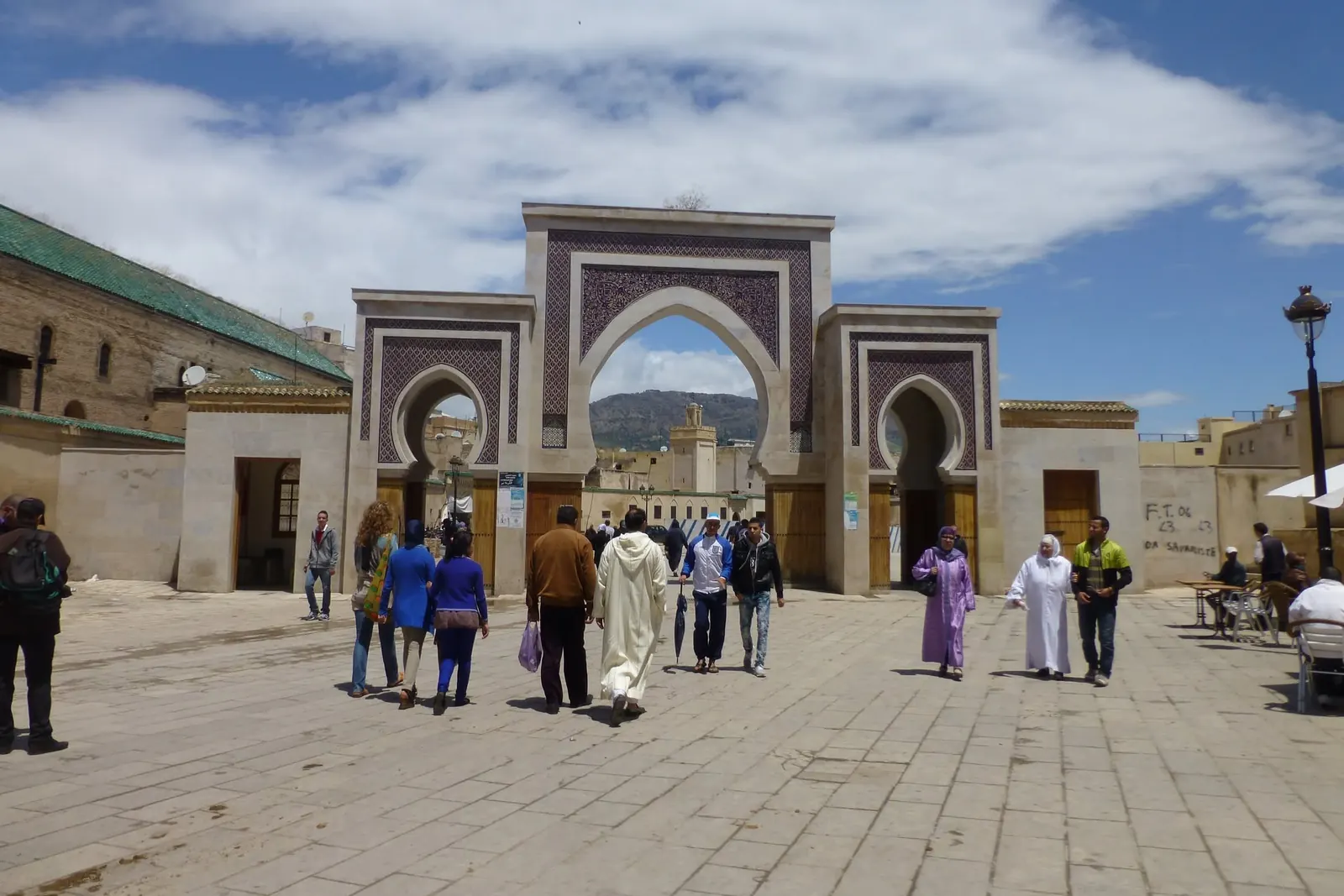
According to Morocco’s Ministry of Tourism, the country welcomed 17.4 million visitors in 2024 and 19.8 million in 2025, a 14% rise. Arrivals kept growing in 2026, with 15.7 million by the end of September, up 5% on the same period of the previous year. Numbers alone do not prove a destination is safe, but they do show how many people travel there each year without trouble.
The real risks, and how to avoid them
Terrorism
This is the reason the US rates Morocco at Level 2. The UK warns that terrorists are likely to try to carry out attacks, and that the Moroccan authorities regularly break up cells. In practice: stay alert in crowded places and at major sights, and follow instructions from the police.
Petty theft and scams
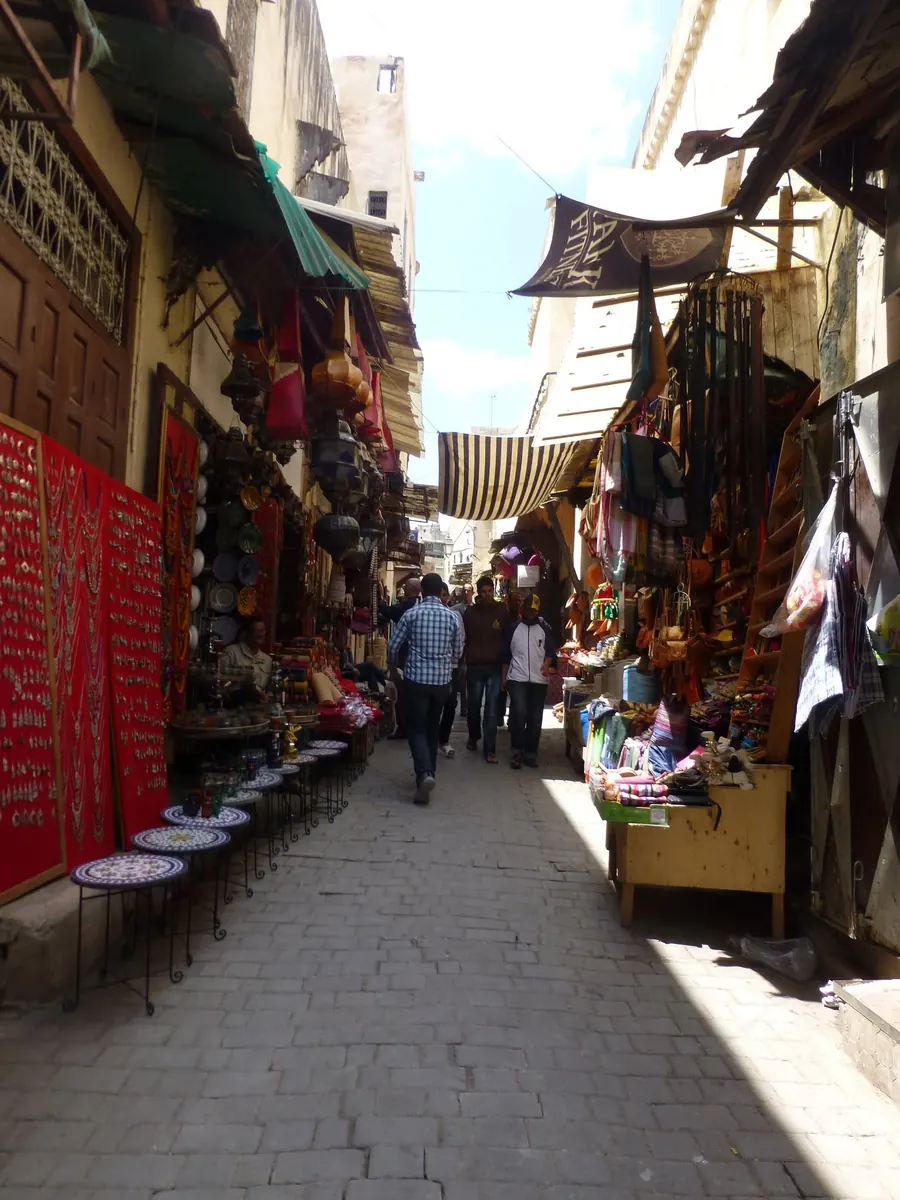
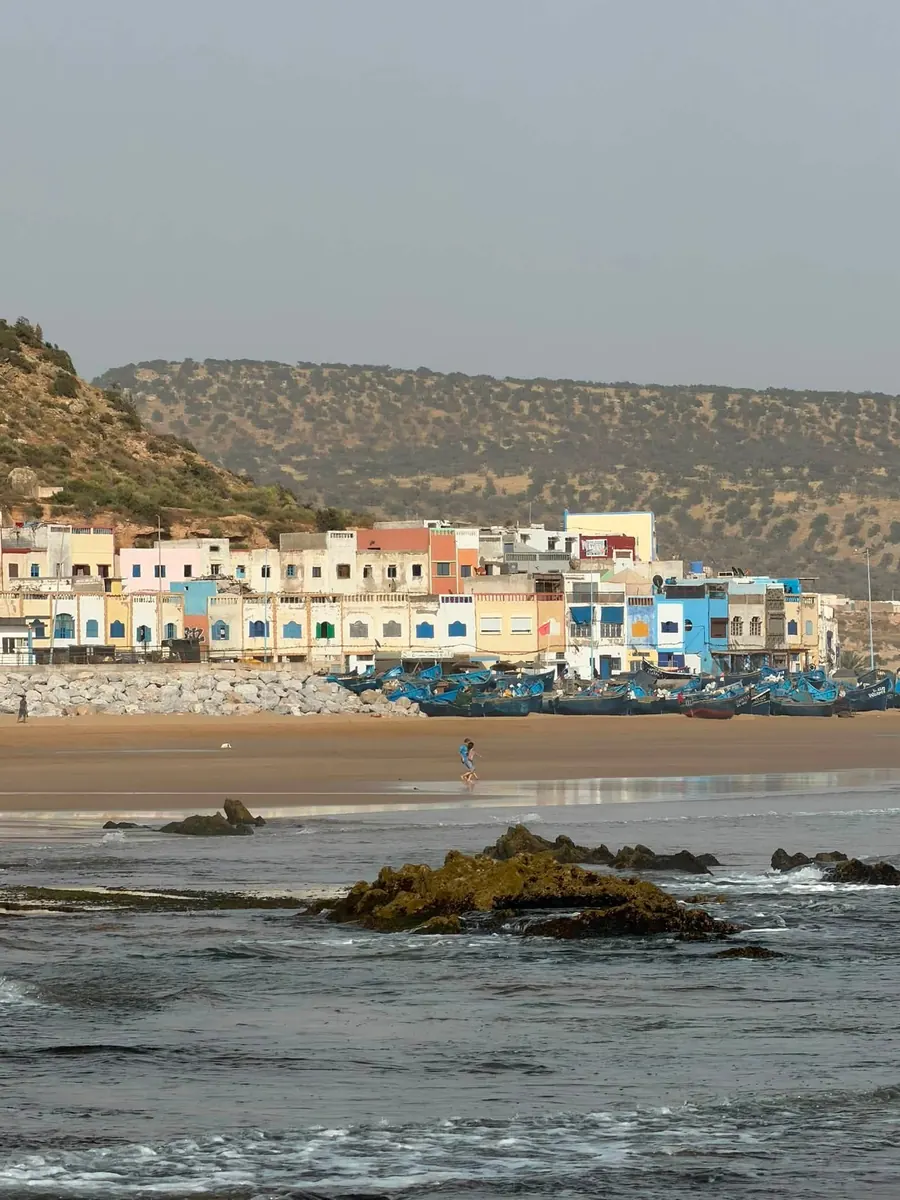
Pickpocketing and bag-snatching, sometimes from passing motorbikes, are the most common problems in tourist areas, according to the UK and France. Keep your phone and wallet out of sight in crowds. Fake guides are another classic: in Morocco, guiding is regulated by Law 05-12, and an official guide carries a professional badge. We explain how to handle the souks in our Marrakech souks guide.
Roads and driving
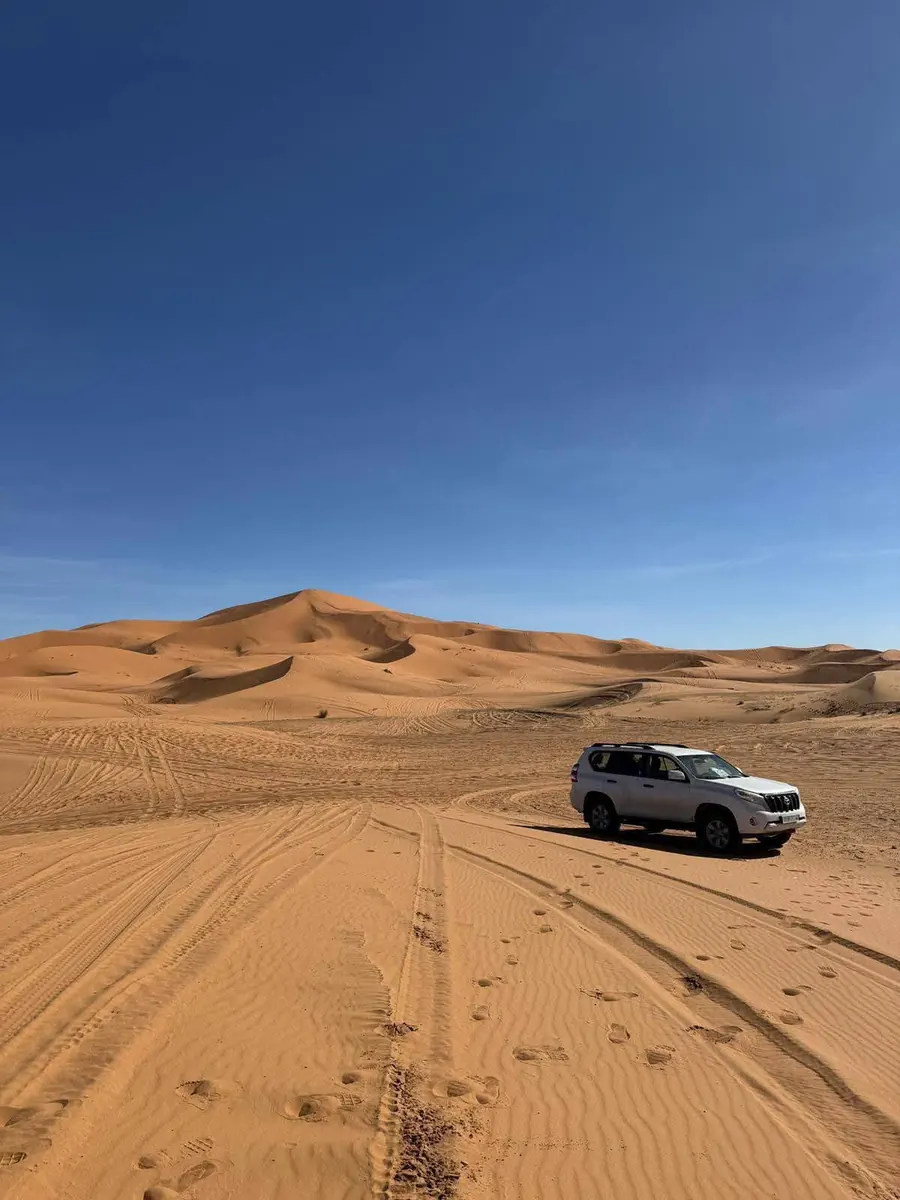
Every advisory we read flags road accidents as a significant risk and recommends avoiding driving at night. Mountain roads in the Atlas and the Rif are steep and narrow. If you are not used to driving in Morocco, a private driver is often the safer choice.
Sea, mountains and desert
- The ocean: strong currents and unexpected waves, and few beaches have lifeguards. Swim only where locals do, and never alone.
- Flash floods: the US warns of flash floods from November to March. Never camp in a dry riverbed; we explain why in our guide to the Todra Gorge.
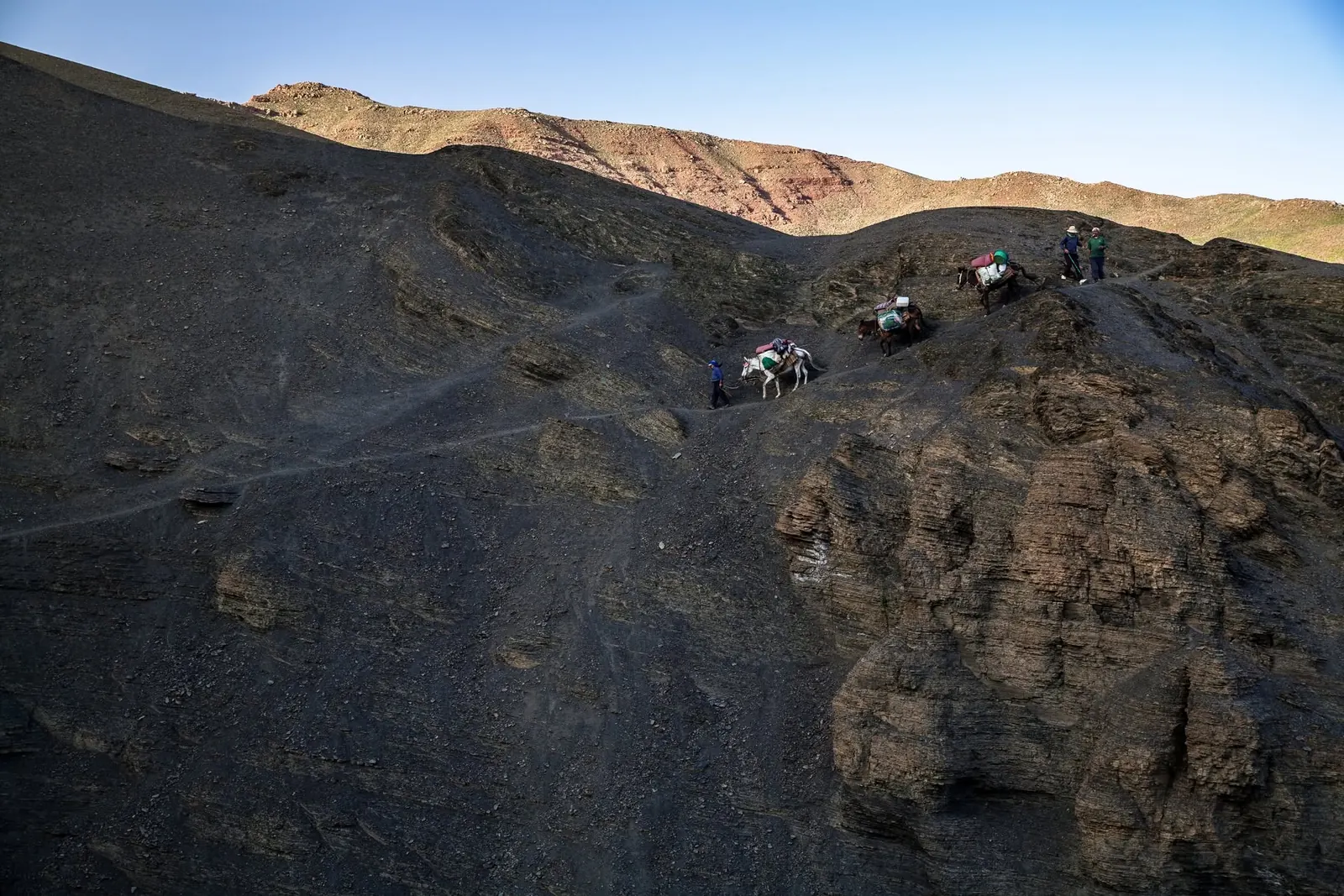
- Mountain walking: the UK recommends a professional guide for the Atlas and insurance that covers the activity. In Morocco, nature guides are a separate official category from city guides.
- Earthquakes: the Al Haouz earthquake of 8 September 2023 (magnitude 6.8, according to the USGS) killed almost 3,000 people. Spain notes that access to some areas of Al Haouz and Taroudant provinces is still difficult.
Women travelling alone
All the advisories mention unwanted attention, especially towards women travelling alone. The UK suggests loose clothing that covers arms and legs. In most situations, a firm, polite “no” and walking on is the best response.
Moroccan laws travellers should know
- Drugs: zero tolerance, with prison sentences. Medical and industrial cannabis is legal, but recreational use is not, as we explain in our guide to Chefchaouen.
- Same-sex relationships: illegal in Morocco, including for foreigners, according to the UK, US and Spanish advisories.
- Photography: do not photograph military or sensitive sites, palaces or government buildings, and ask before photographing people.
- Drones: banned without prior authorisation; they can be confiscated on arrival.
Health: vaccines, rabies and pharmacies
The UK’s TravelHealthPro service recommends hepatitis A, tetanus and typhoid vaccines for most travellers, and others such as hepatitis B or rabies for some. Rabies is present: avoid touching stray dogs and cats, and seek medical help straight away after any bite or scratch. On 20 October 2026 TravelHealthPro also reported a small diphtheria outbreak in several regions, so it is worth checking your vaccinations are up to date.
Every city has a 24-hour pharmacy, and pharmacists are often the first port of call for minor problems. Canada notes that hospitals often expect payment up front, so travel insurance with medical cover is essential.
Emergency numbers in Morocco
Save these numbers on your phone before you go. Operators do not always speak English, so a little French or Arabic, or help from your hotel, can save time.
- 190PoliceIn towns and cities.
- 177Royal GendarmerieIn rural areas.
- 150Fire service and ambulanceCivil protection, nationwide.
Numbers listed by the UK and Spanish governments. We found no official source confirming that 112 works in Morocco.
Before you fly, it also helps to sort out a few practical points: how to get from Marrakech airport to the medina safely and at a fair price, and how to manage Moroccan currency and cash.
Is Morocco safe? Frequently asked questions
Is Morocco safe for tourists right now?
Yes, according to the main government advisories. None advises against travel to the country as a whole; the restrictions concern remote border areas in the far south and east.
Is Marrakech safe?
Generally, yes. The usual problems are pickpocketing, persistent sellers and fake guides. Keep valuables out of sight and use official guides.
Is Morocco safe for women travelling alone?
Women do travel alone in Morocco, but the advisories note that unwanted comments and attention are common. Dressing modestly and not engaging with remarks helps.
Is it safe to go to the desert or the Atlas Mountains?
Yes, with a reputable organiser or a licensed guide. The main dangers are flash floods, heat and getting lost, not crime.
What is the emergency number in Morocco?
190 for the police, 177 for the gendarmerie in rural areas and 150 for the fire service and ambulance.
Is it safe to visit the areas hit by the 2023 earthquake?
Reconstruction has been under way since 2023, but Spain notes that access to some areas is still difficult. Check road conditions locally before heading into the High Atlas.
Sources
- UK Foreign, Commonwealth and Development Office: Morocco travel advice and getting help.
- US Department of State: Morocco travel advisory.
- Government of Canada: travel advice for Morocco.
- Australian Government, Smartraveller: Morocco.
- Spanish Ministry of Foreign Affairs: travel recommendations for Morocco (in Spanish).
- French Ministry for Europe and Foreign Affairs: advice for travellers to Morocco (in French).
- TravelHealthPro (UK): Morocco health advice.
- Moroccan Ministry of Tourism: key tourism figures (in French).
- US Geological Survey: M6.8 Al Haouz earthquake, 2023.