


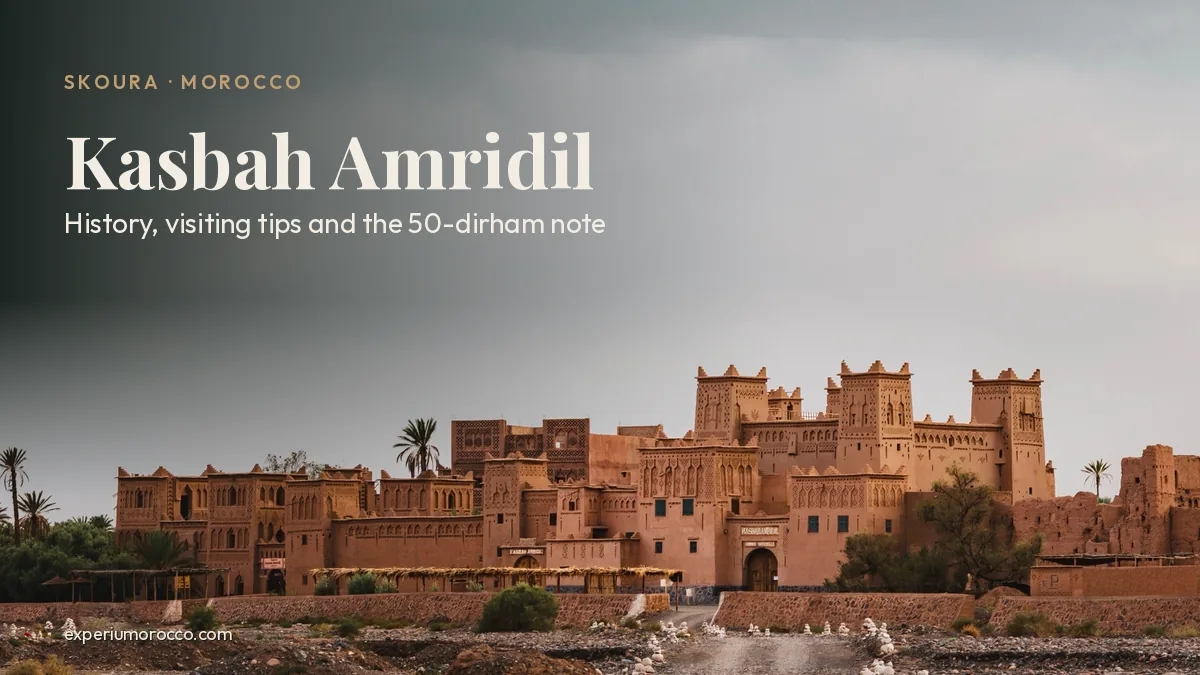
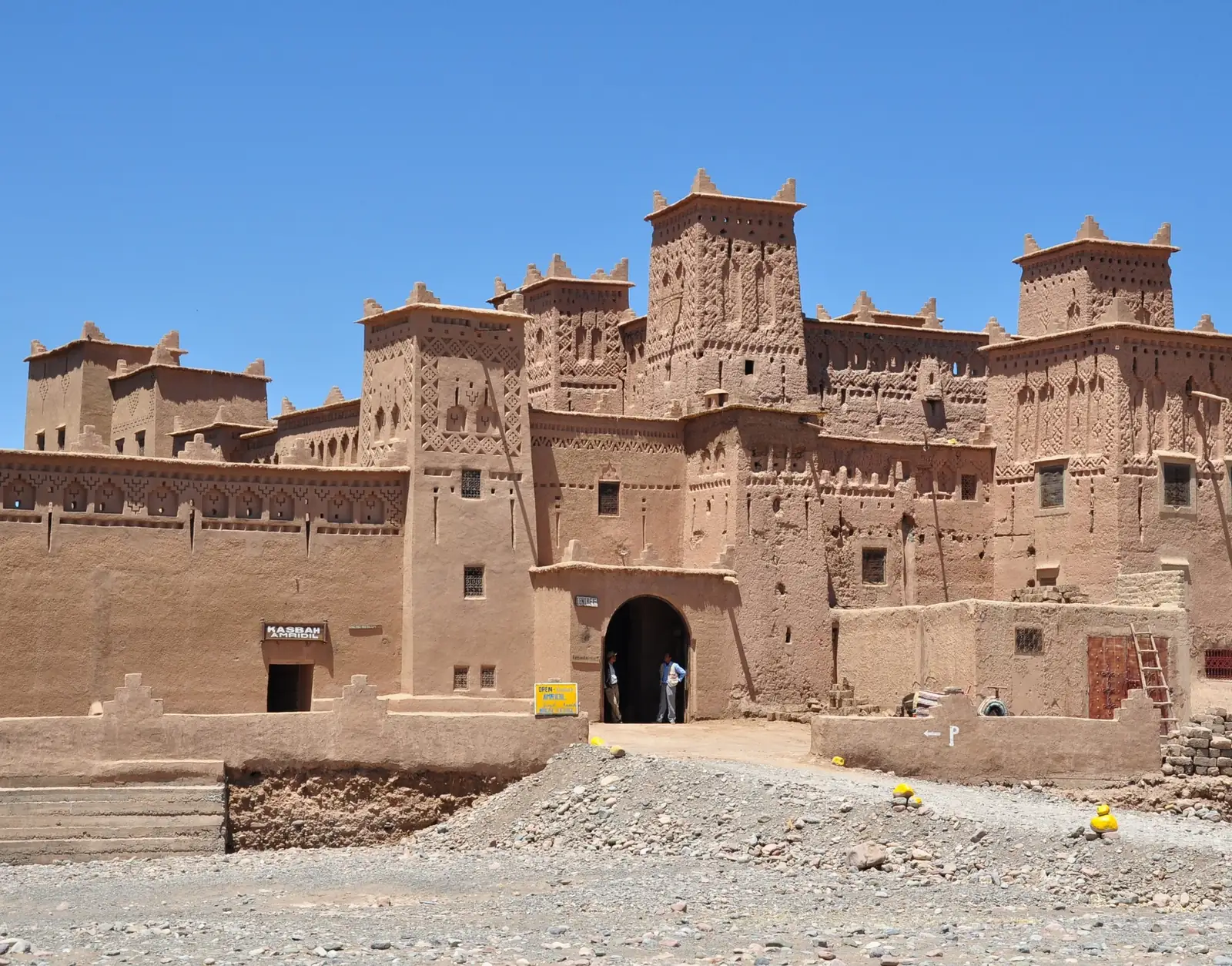
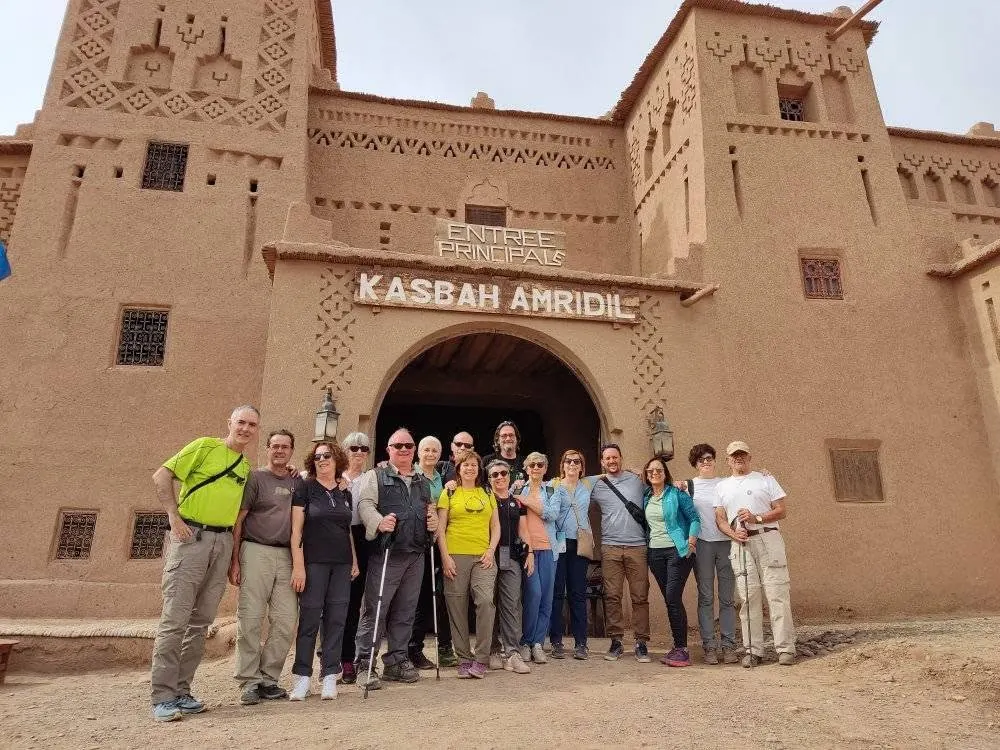
Kasbah Amridil is the best-known earthen fortified house in the Skoura oasis, about 40 km (25 miles) east of Ouarzazate, and one of the best-preserved kasbahs in Morocco. It began as a 17th-century ksar, became the home of the Nasiri family in the late 19th century (they still live in part of it and look after it), and its towers once featured on the old 50-dirham banknote.
Kasbah Amridil is a fortified earthen house (tighremt) in the Skoura oasis, Ouarzazate province. The original ksar dates from the 17th century; the present house from the late 19th. It is visited as a museum, with a paid entry (around 40 dirhams, indicative). Highlights: four floors around a central courtyard and a rooftop over the palm grove.
What is Kasbah Amridil?
In southern Morocco, a kasbah (tighremt in Amazigh) is a large fortified house with corner towers, built for a leading local family. It is not the same as a ksar, which is a whole walled village. Amridil has both: the ruins of the old ksar lie to the north, and the kasbah you visit stands to the south, right by the river.
The Nasiri family still owns it. They live in one part and have restored the rest as a museum of kasbah life, with storerooms, a kitchen and farm tools. It is one of the few houses of its kind in Morocco that you can walk through from the ground floor to the towers without stepping over collapsed walls. For a diagram of the difference between a ksar and a kasbah, see our Ait Ben Haddou guide.
History: from 17th-century ksar to the Nasiri family home
You will see different dates quoted for Amridil, and that is because they refer to two different buildings. The original settlement is a 17th-century ksar, set on a strategic spot on the riverbank where the palm grove begins, in control of both the water and the route.
The house you see today is younger. According to the study of Berber architecture in Morocco by the architect and anthropologist Salima Naji, in the late 19th century M’hamed Ben Brahim Nasiri, a faqih (Islamic scholar) from a leading family of the ksar, taught the Quran to the sons of Madani El Glaoui, the powerful caid of the region and elder brother of Thami El Glaoui. As payment, El Glaoui sent his craftsmen to build him a tighremt inside the ksar. The Nasiri family is linked to the Nasiriyya zawiya of Tamegroute, in the Draa Valley.
- 17th century. The ksar is founded at the edge of the Skoura palm grove.
- Late 19th century. The fortified house is built for M’hamed Ben Brahim Nasiri.
- 1987 series. The kasbah appears on the 50-dirham banknote.
- 2000. The palm groves of Ouarzazate province, Skoura included, become part of UNESCO’s Southern Moroccan Oases Biosphere Reserve.
- 1 January 2026. The 1987-series 50-dirham note stops being legal tender.
- Today. The family lives in one part and opens the rest as a museum.
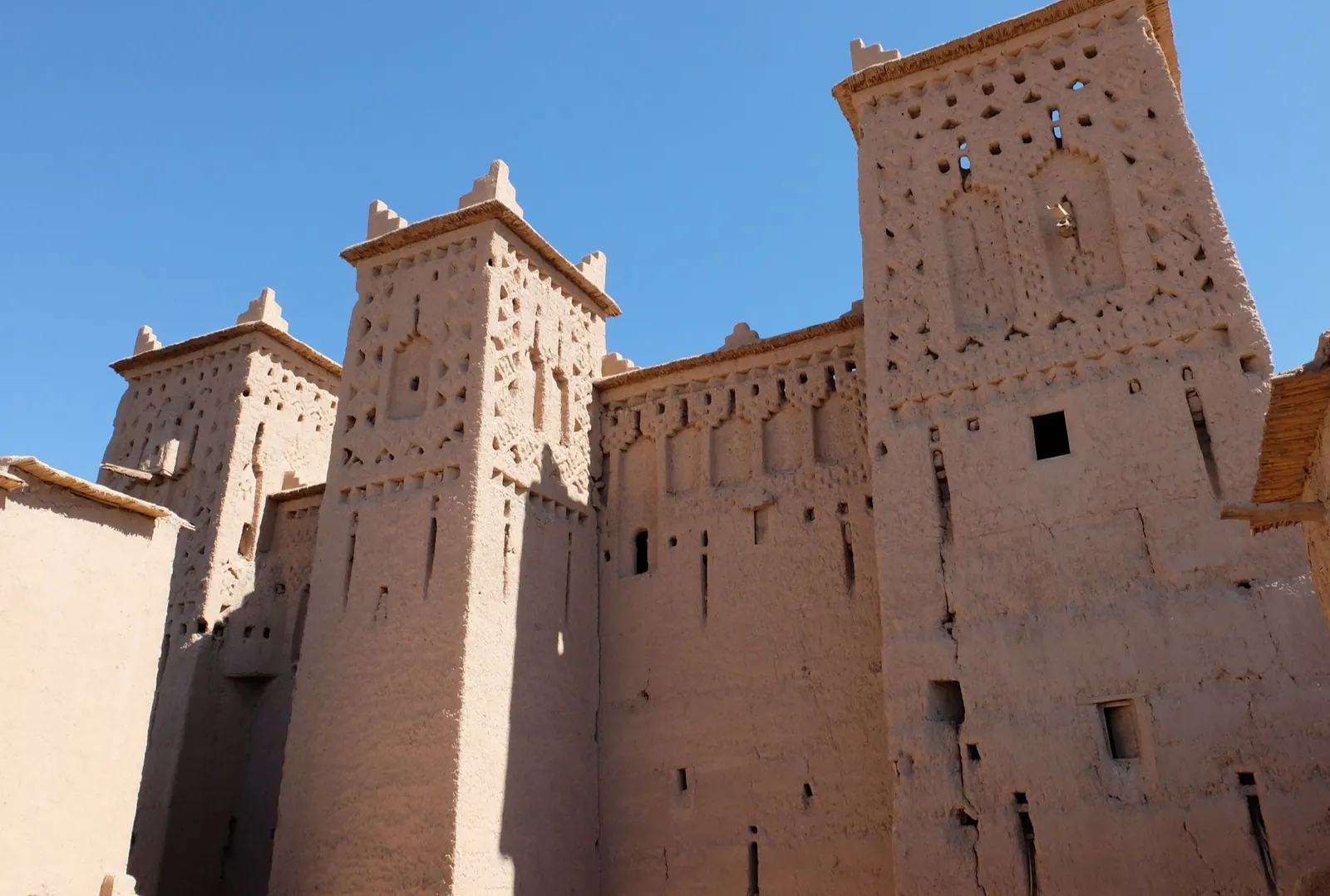
The kasbah on the 50-dirham note
Amridil became a household image in Morocco thanks to the 50-dirham note of the 1987 series, the one with the portrait of King Hassan II, which stayed in circulation for more than twenty years. That is why so many Moroccans recognise it at first sight, even if they have never been to Skoura.
You can no longer spend that note. Bank Al-Maghrib, Morocco’s central bank, withdrew it from circulation on 1 January 2026, together with the 10, 50, 100 and 200-dirham notes of 1987. Anyone holding one can exchange it without conditions at Bank Al-Maghrib or any bank until 31 December 2030. If a stallholder offers you one as a souvenir, treat it as what it now is: a collector’s item.
The 50-dirham note in use today, issued in 2024, shows no kasbah at all: the front features the Ouzoud Falls. For everything else about banknotes, exchange and paying, see our guide to the Moroccan dirham.
Inside Kasbah Amridil: four floors around a courtyard
From the outside, the towers steal the show. Inside, the interest lies in how daily life was organised. The main house is almost square, with a tower at each corner (a fifth tower on the south side was added later) and four levels around a central courtyard, the wust ad-dar, which brings light and air to every floor.
- Ground floor. Storerooms and stables, entered from an outer courtyard through a vestibule.
- First floor. Kitchens and stores of oil, fruit and grain around a covered courtyard.
- Second floor. Open courtyard, arcaded gallery and living rooms in ochre and white.
- Rooftop. Sundial and access to the four corner towers.
Walls: rammed earth below, mud brick for towers and parapets.
Not to scale. Layout based on the published description by S. Naji (2009); materials after Asencio Juncal et al. (2020). Original drawing by experiumorocco.com.
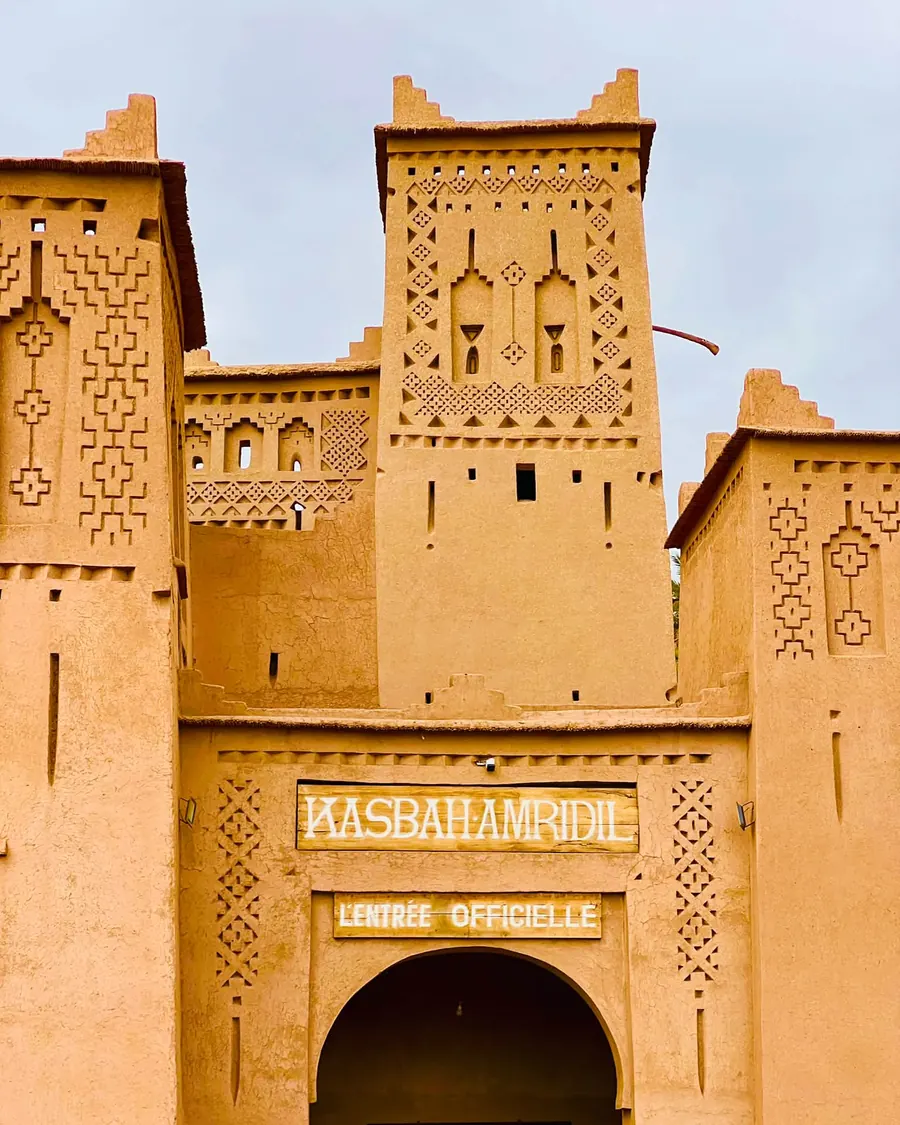
As in other tighremt of the region, the lower walls are rammed earth, thicker and stronger, while the tops of the towers and parapets are finished in lighter mud brick. Studies of architecture in the High Atlas valleys single out Skoura for the most elaborate decoration in the area: blind arches, sawtooth friezes, lozenges and relief patterns made from the bricks themselves. On Amridil’s towers you can see them up close.
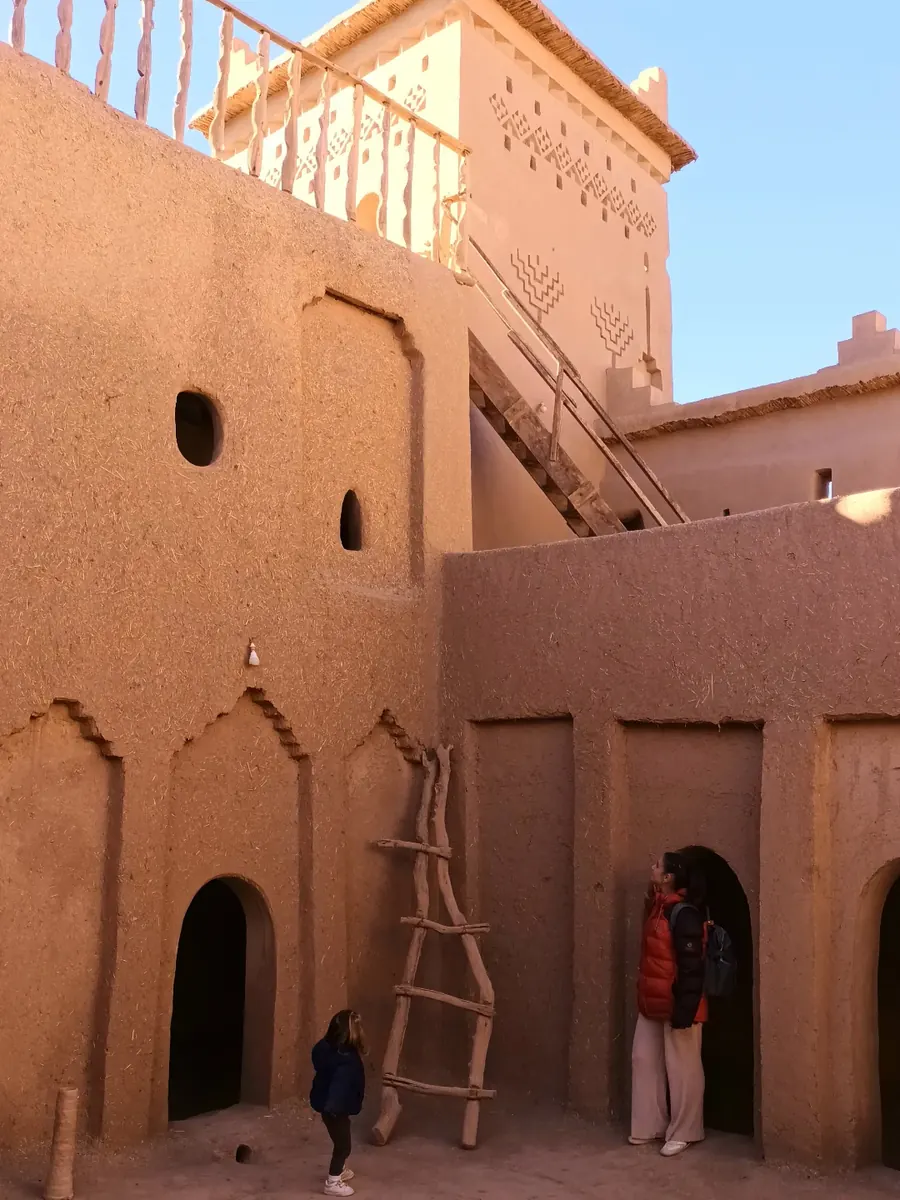
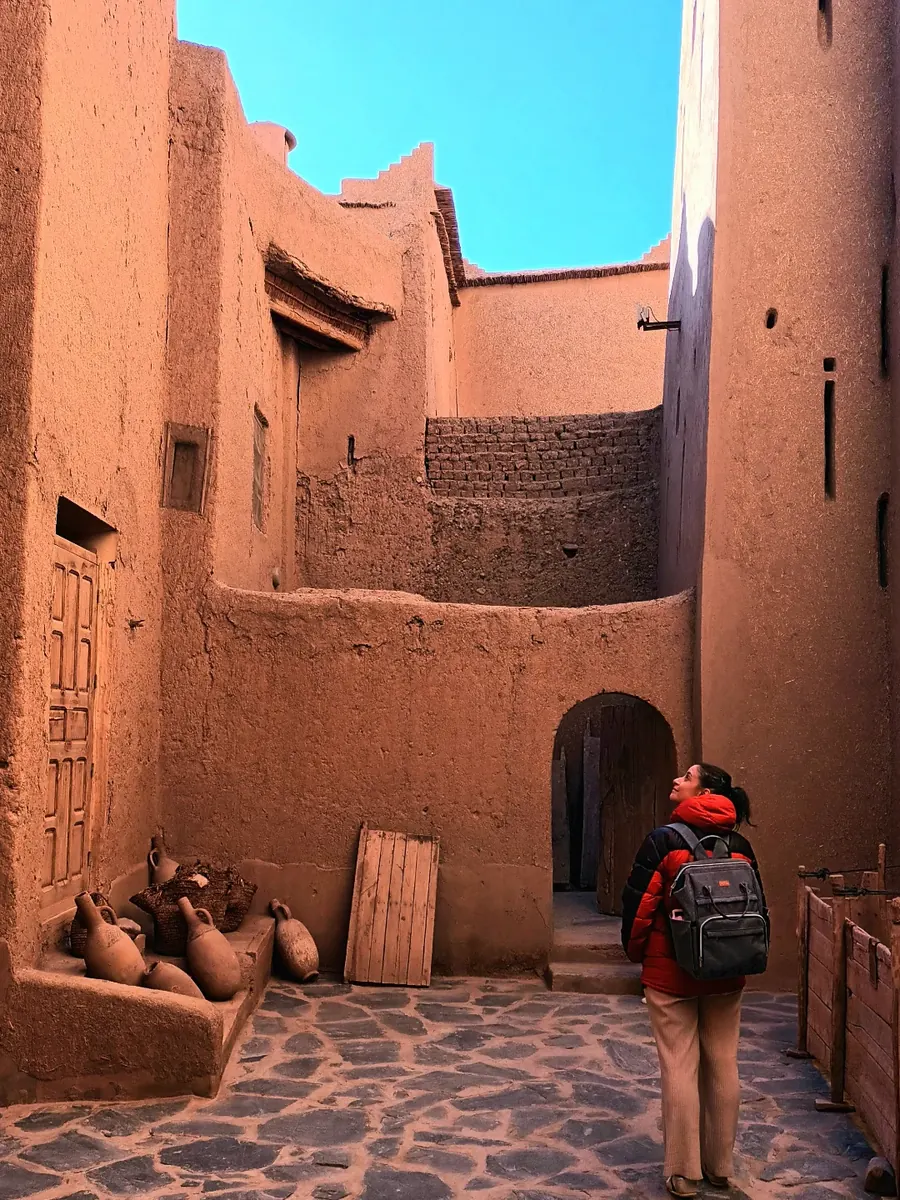
The museum: daily life in a kasbah
The visit takes you through the storerooms, the kitchen with its bread oven, the olive press and an old well, plus rooms with farming tools, pottery and household objects. Look up: the ceilings are palm beams and reeds, the same technique used all along the valley. More old pieces are on display in the outer courtyard.
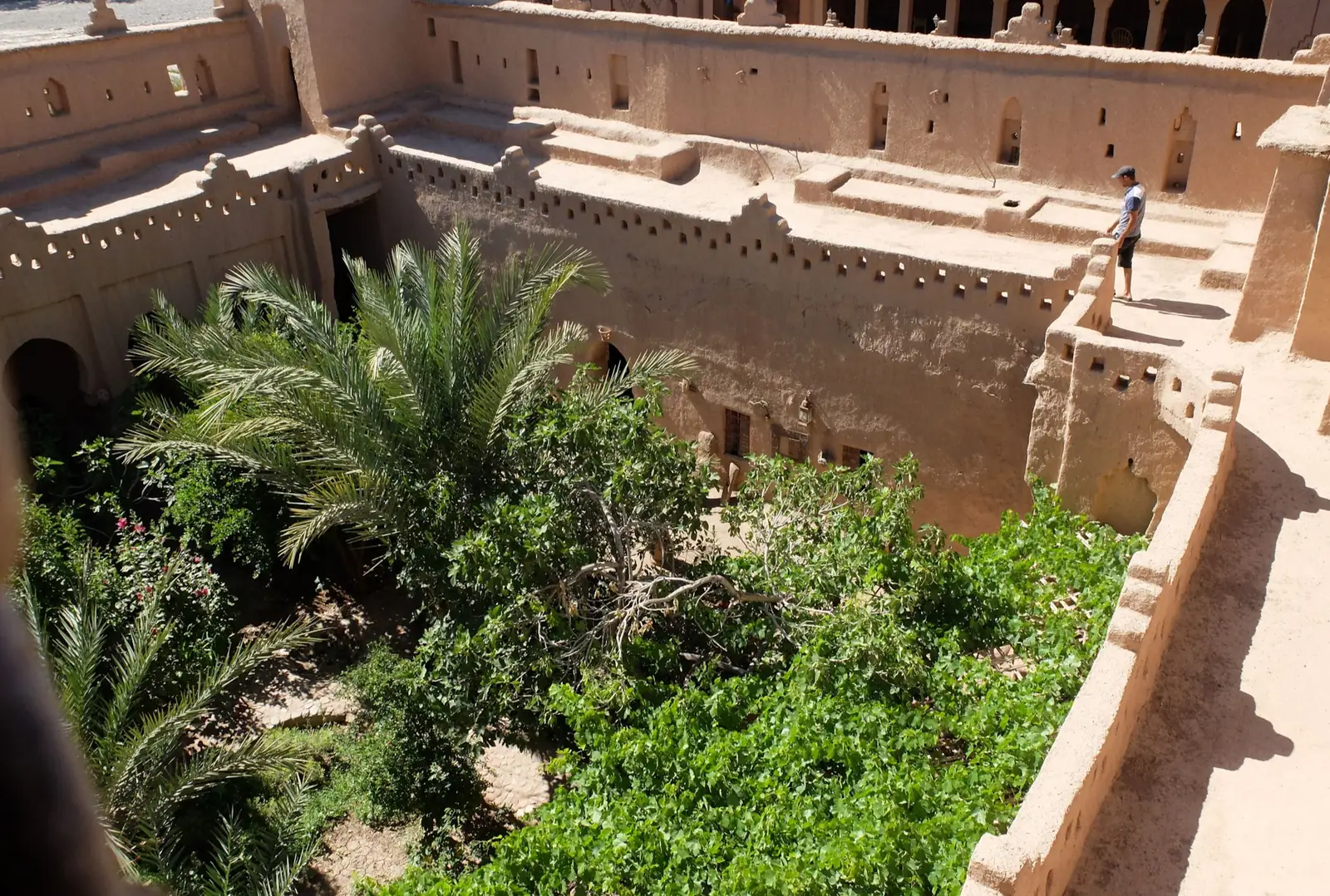
The rooftop and the towers
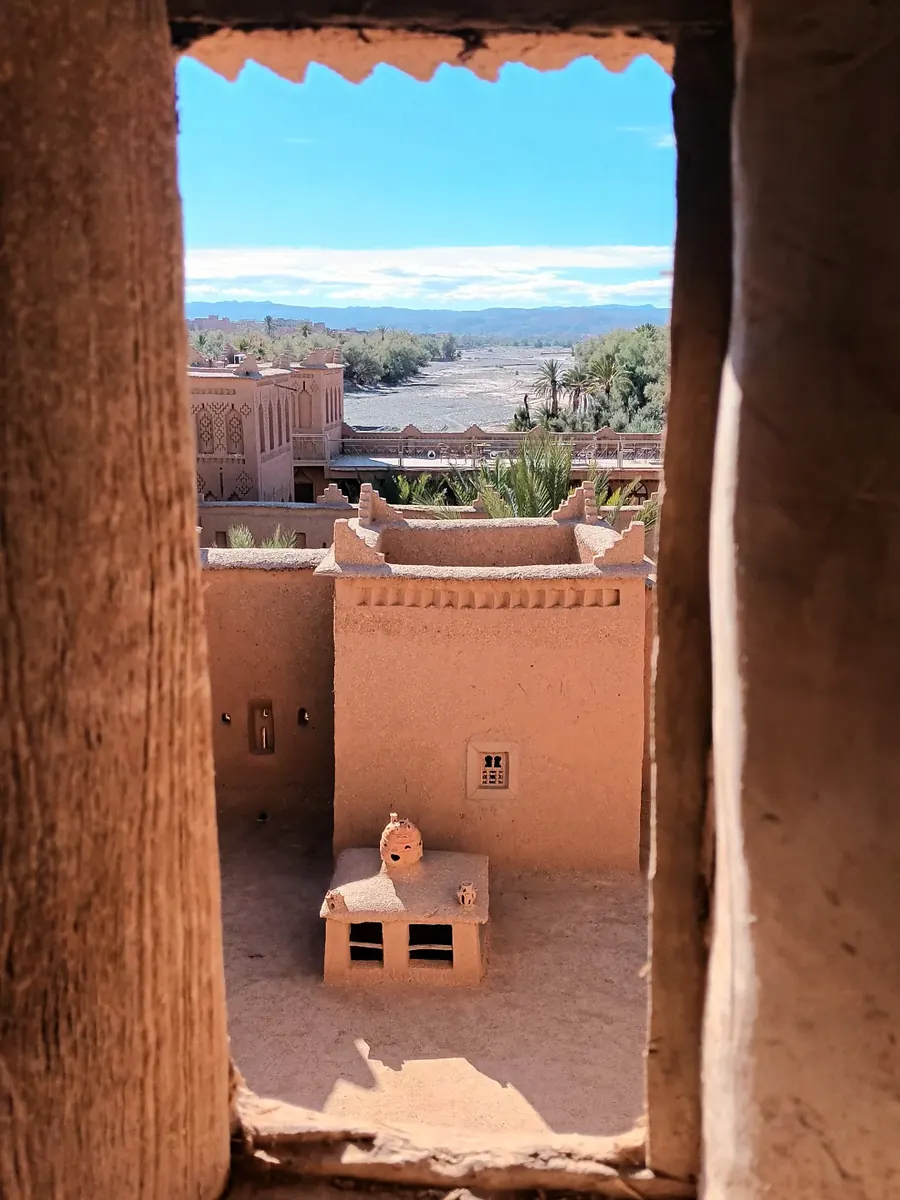
The top floor is a terrace that gives access to the towers and still has a sundial once used to tell the prayer times. From up here it is clear why the house stands where it does: the riverbed on one side, the green of the palm grove on the other, and the High Atlas on the horizon.
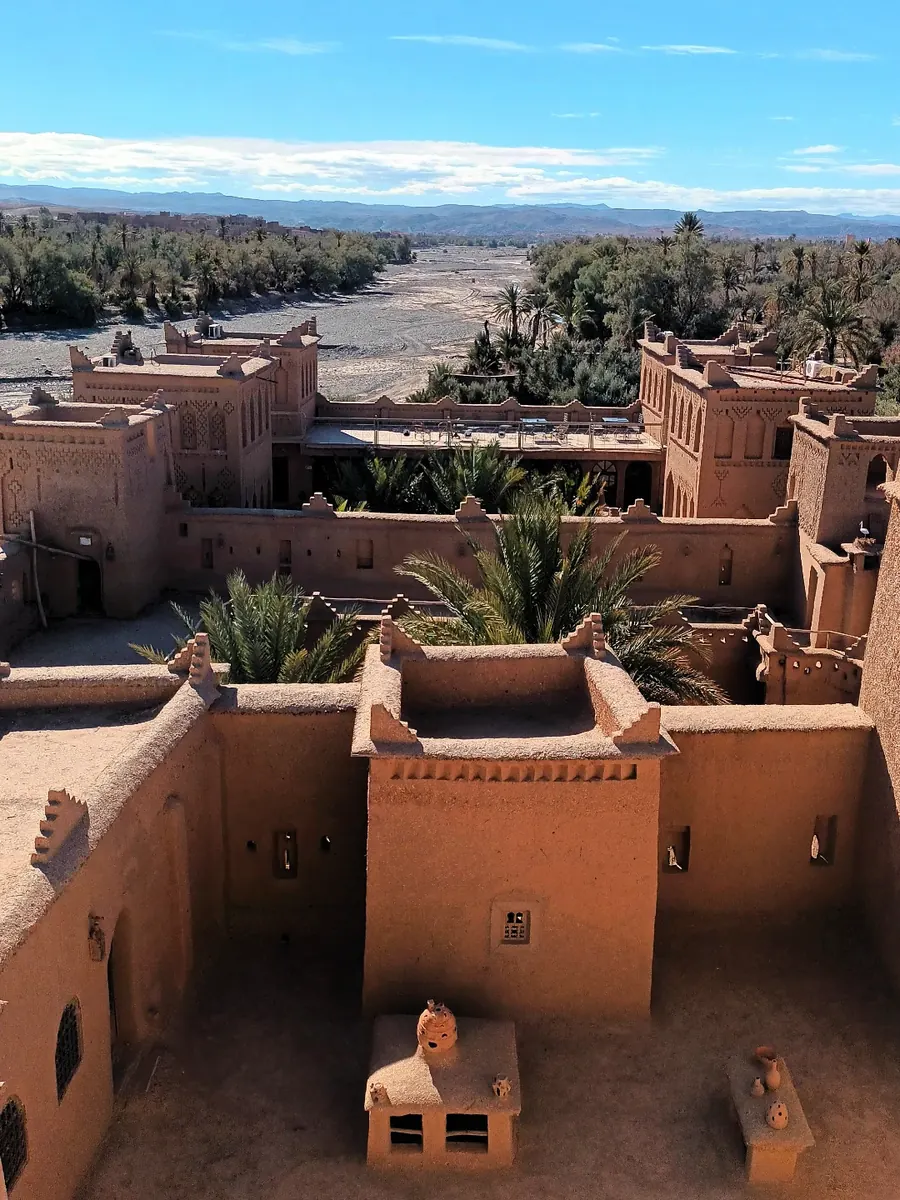
The Skoura oasis around the kasbah
Amridil makes sense only with the Skoura oasis around it. The palm grove grows where three rivers coming down from the High Atlas meet, the Madri, the Boujila and the Hajjaj, and for much of the year they carry little or no water. So the oasis relies on khettaras, underground channels that tap groundwater and carry it by gravity to the fields, and on a network of irrigation ditches shared out in turns.
Farming here works in layers: date palms on top, olive and fruit trees in the middle, and cereals, fodder and vegetables at ground level. In 2000 UNESCO recognised these palm groves as the Southern Moroccan Oases Biosphere Reserve, covering the provinces of Ouarzazate, Zagora and Errachidia. A study published by the University of Coimbra counts more than a hundred kasbahs in Skoura, many of them in ruins; only a handful are still lived in or have been turned into guesthouses.
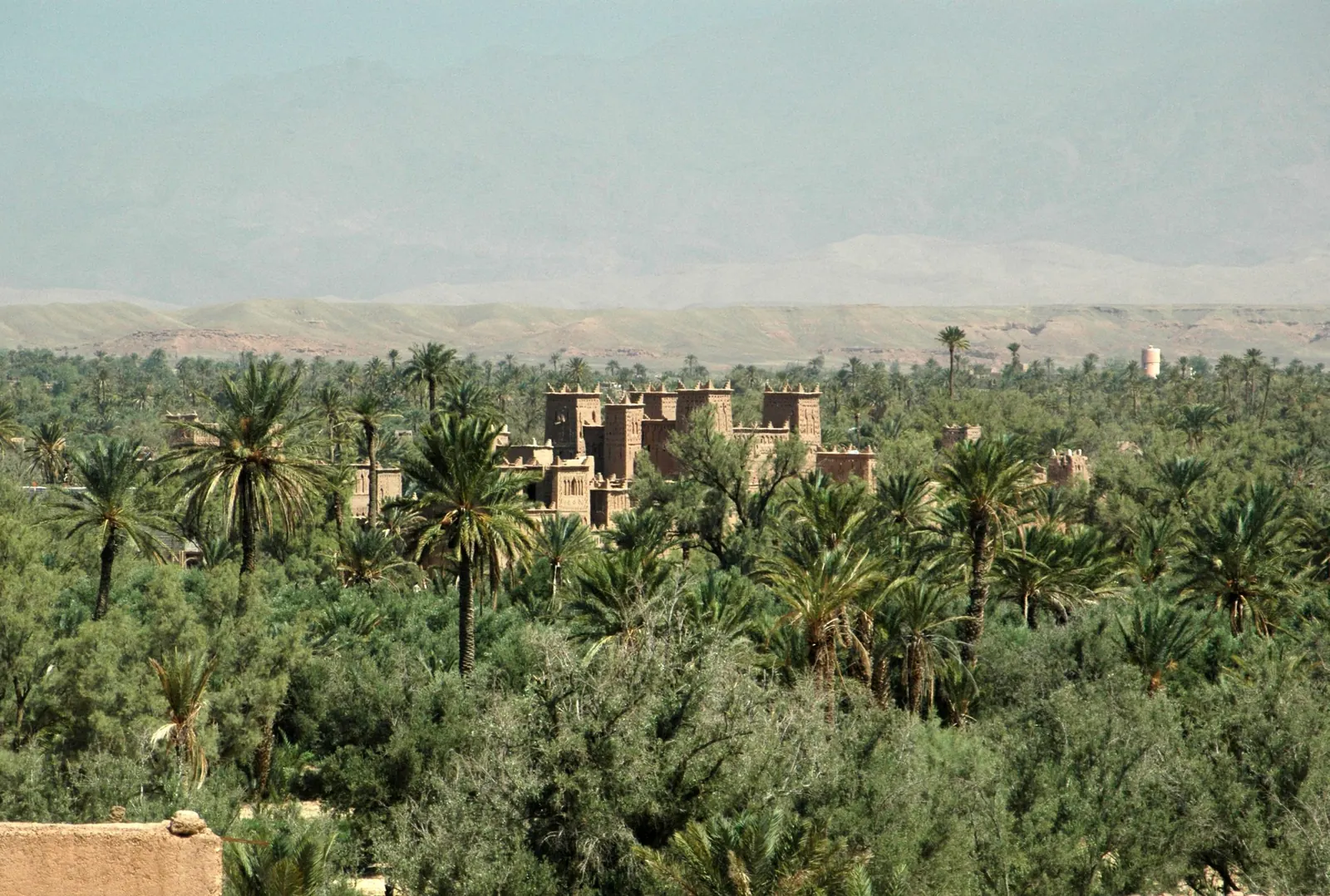
If you have time, walk the palm grove paths between earthen walls and small plots: you will pass other kasbahs, such as Kasbah Ait Abbou, and the odd family pottery workshop. Skoura is also a stop on the Road of a Thousand Kasbahs, which carries on to the Dades Valley and the Todra Gorge.
Getting to Kasbah Amridil and planning your visit
How to get there
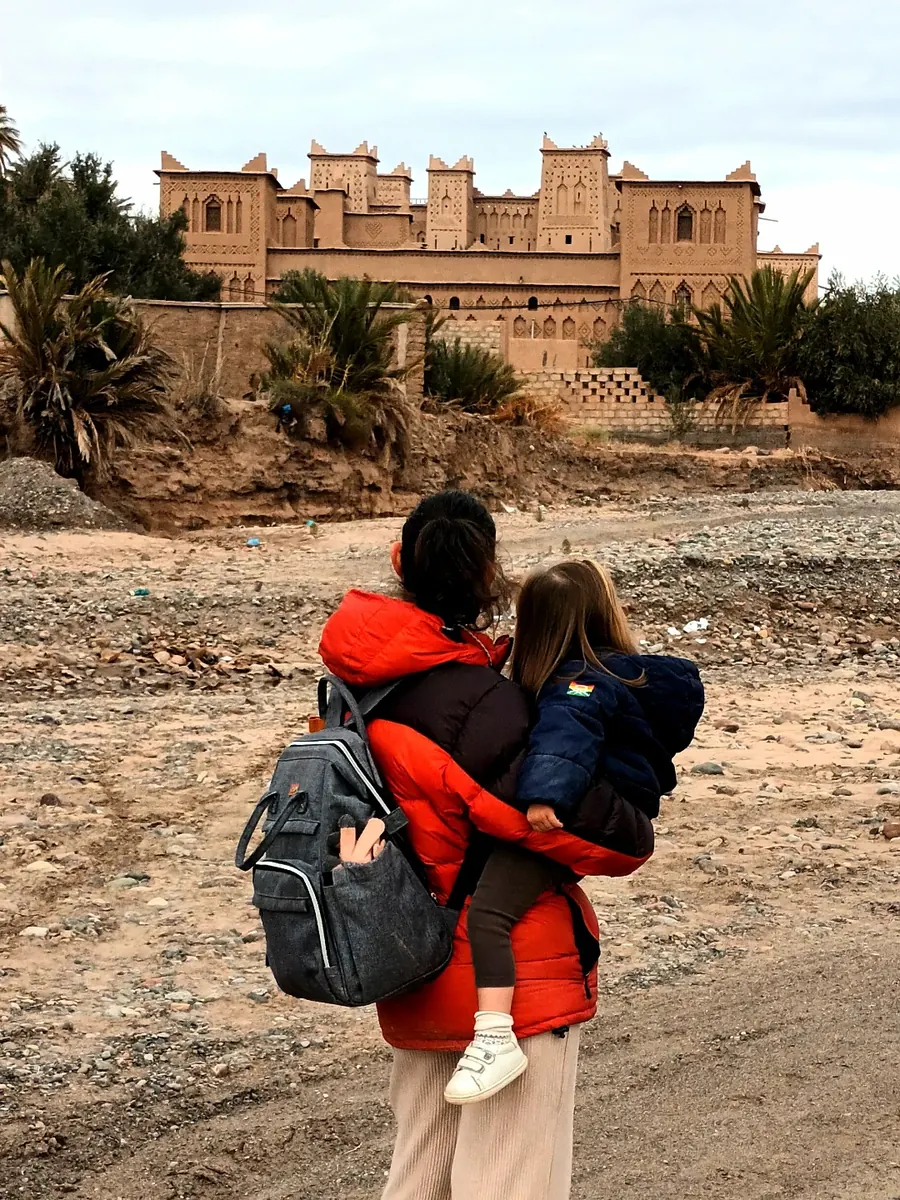
Skoura lies about 40 km east of Ouarzazate on the road to the Dades Valley and Tinghir. The kasbah sits on the western edge of the palm grove, beside the Hajjaj river: a signposted turn-off leads from the main road, and at the end you cross the riverbed, which is dry most of the year. After a storm in the Atlas it can carry water, so ask locally before crossing.
On our tours, the drive from Marrakech to the Dades Valley via Ait Ben Haddou, Ouarzazate and Skoura covers about 320 km (200 miles) and six hours on the road, not counting stops. That is why most people see Amridil as part of a multi-day trip to the desert, such as our 4-day Merzouga desert tour from Marrakech, which crosses the Skoura palm grove.
Entrance fee, opening hours and how long to stay
Entry is paid: around 40 dirhams per person (indicative price, subject to change). There are no official published opening hours, so check at the gate or with your guide. Allow at least an hour for the kasbah and another for a walk in the palm grove. Someone from the house usually shows you round and explains each room; if you also want to understand the oasis and the wider route, go with a licensed guide.
The ground floor and the outer courtyard are wheelchair accessible, but reaching the upper floors and the rooftop means steep stairs, uneven steps and narrow passages.
This is a family home. Stay out of closed areas and ask before photographing anyone you meet inside.
Photographing Kasbah Amridil: three reliable shots
- From the riverbed, mid-afternoon. Low sun picks out the relief on the towers and the dry river gives you a foreground.
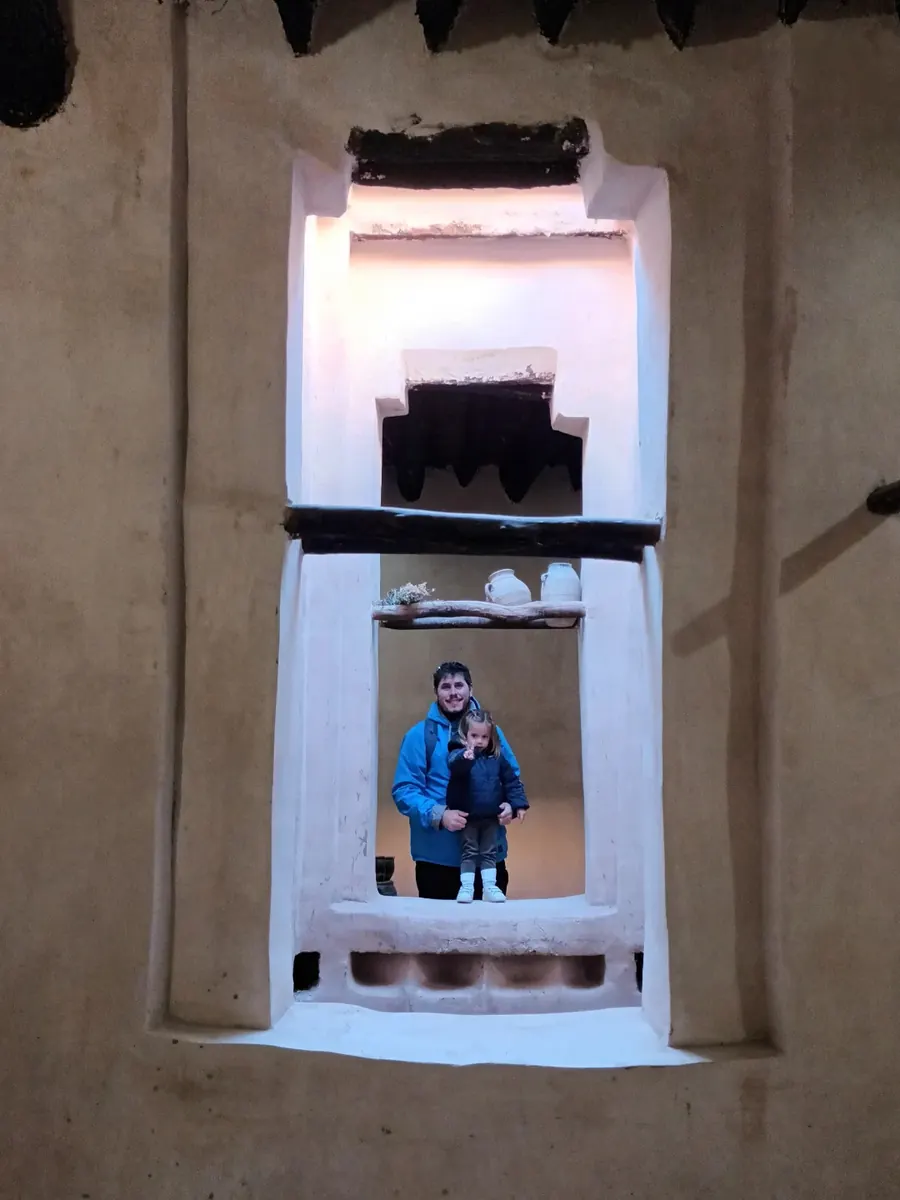
- The inner windows. They frame courtyards, passages and people. Shoot towards the light and let the earthen frame do the work.
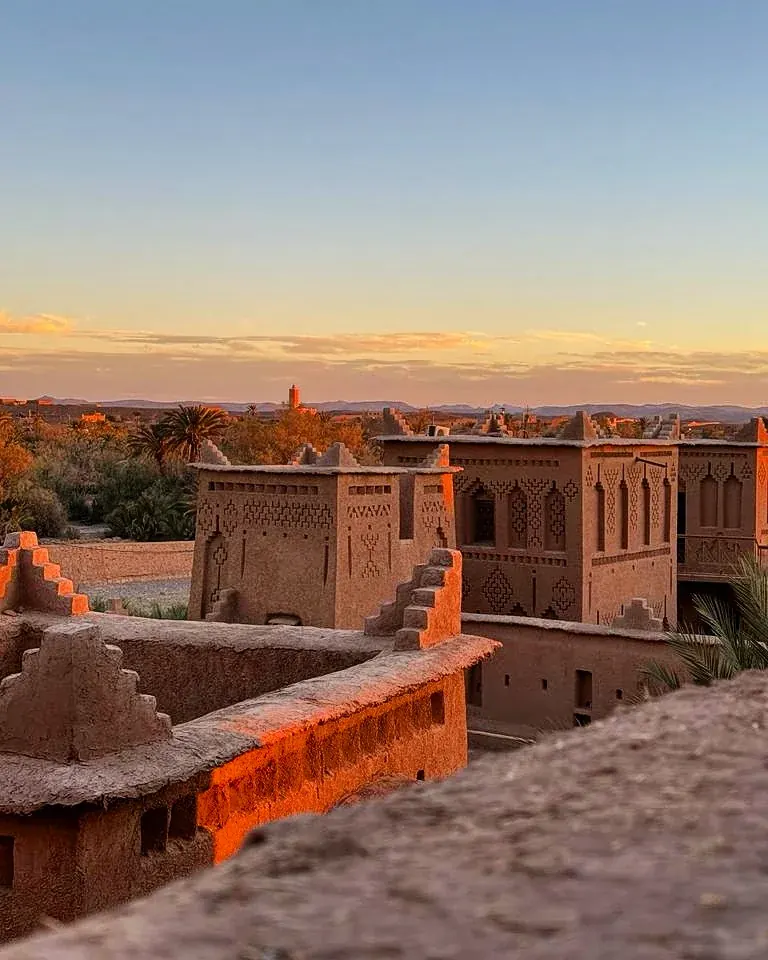
- The rooftop at sunset. The palm grove darkens, the towers turn orange and the Atlas stands out on the skyline.
Kasbah Amridil FAQ
Where is Kasbah Amridil?
In the Skoura oasis, Ouarzazate province, about 40 km east of the town of Ouarzazate. It stands on the western edge of the palm grove, beside the Hajjaj river.
What is the Kasbah Amridil entrance fee?
Around 40 dirhams per person, an indicative price that may change. Bring cash in dirhams.
Which banknote showed Kasbah Amridil?
The 50-dirham note of the 1987 series, with the portrait of Hassan II. Since 1 January 2026 it is no longer legal tender, and banks will exchange it until 31 December 2030.
Was Lawrence of Arabia filmed at Kasbah Amridil?
Many travel guides say so, but we have found no production record that confirms it. Nor is there any reliable source placing Game of Thrones here: in this area the series was filmed at Ait Ben Haddou.
How long do you need?
About an hour for the kasbah. Allow half a day if you want to walk in the Skoura palm grove.
Is Skoura worth visiting?
Yes, especially if you are driving from Ouarzazate to the Dades Valley: the detour is short, and Amridil is one of the few kasbahs you can explore inside, furnished and still lived in.
Can you stay overnight at Kasbah Amridil?
Part of the complex is used as accommodation, and there are several kasbahs and guesthouses in the palm grove.
Sources
- Bank Al-Maghrib: withdrawal of banknotes from circulation (decree 2.25.966 of 23 December 2025).
- UNESCO Man and the Biosphere Programme: Southern Moroccan Oases Biosphere Reserve.
- UNESCO World Heritage Centre (CERKAS, 2000): periodic report on the Ksar of Ait Ben Haddou, on tighremt houses and Skoura.
- Oumada, M. and Amara, L. (2018), University of Coimbra, digitAR no. 5: the kasbahs of Skoura Ahl El Oust.
- Asencio Juncal, J., López-Osorio, J. M. and Rosa Jiménez, C. J. (2020), ISPRS Archives: architecture in the High Atlas valleys.
- Mahdane, M., Lanau, S., Ruf, T. and Valony, M.-J., IRD: khettaras in the Skoura oasis.
- Naji, S. (2009), Art et architectures berbères du Maroc, Éditions La Croisée des Chemins.