


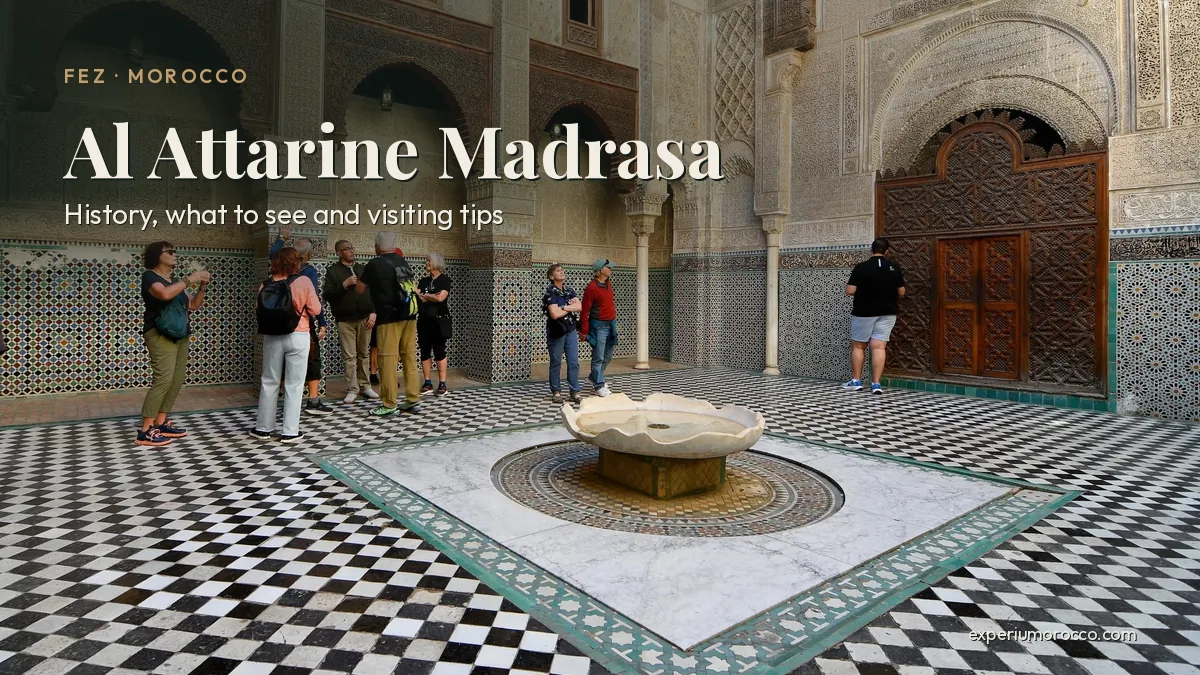
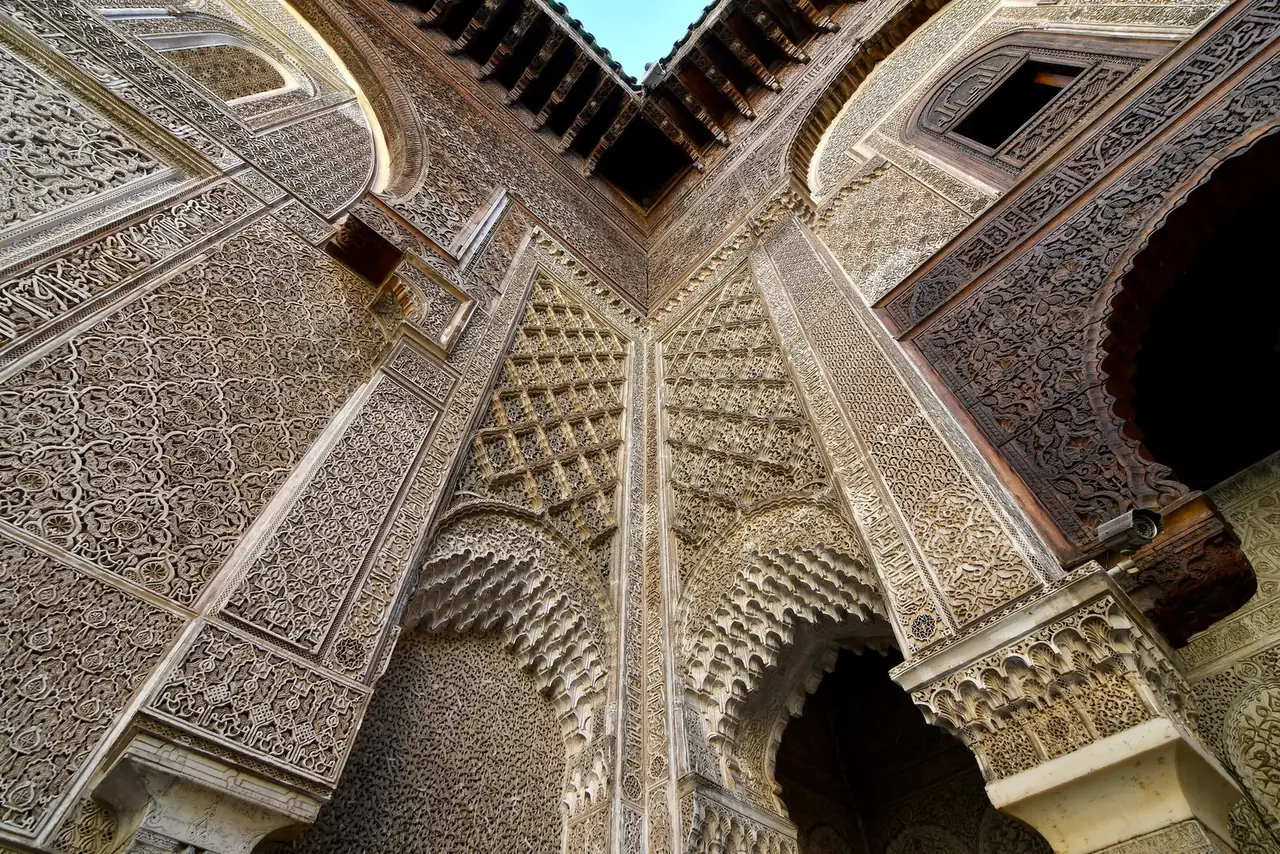
The Al Attarine Madrasa is small, but many people think it is the most beautiful building in Fez. The Marinid sultan Abu Sa’id Uthman II had it built between 1323 and 1325 at the bottom of Talaa Kebira, a few steps from the al-Qarawiyyin mosque and university, at the entrance to the perfume sellers’ souk that gave it its name. Barely an inch of wall is left plain: everything is covered in zellige, carved stucco or cedar.
Al Attarine Madrasa (also spelled Medersa el Attarine), Fez el-Bali: a Marinid student college and residence built in 1323 to 1325 next to al-Qarawiyyin. You can visit the courtyard with its fountain, the galleries and, depending on the time, the prayer hall with its original bronze chandelier. There is an entrance fee (treat any figure as indicative) and half an hour is enough to see it properly.
What is the Al Attarine Madrasa?
A madrasa was first and foremost a students’ residence. Young men who came to Fez to attend lessons at al-Qarawiyyin slept, prayed and studied there, and some classes were taught inside its walls too. The Marinids, the dynasty that ruled Morocco from the 13th to the 15th century and made Fez their capital, built several around the great mosque. They trained the scholars and officials the state needed, and left their mark in the heart of the city at the same time.
The name comes from Souk al-Attarine, the spice and perfume market (an attar is a perfume seller in Arabic), at whose entrance it stands. No students live here today. It is a monument open to visitors inside the medina of Fez, a UNESCO World Heritage Site since 1981. If you are planning your time in the city, the other highlights are in our guide to the best things to do in Fez.
History: Sultan Abu Sa’id’s madrasa
According to the Rawd al-Qirtas, a chronicle written in Fez in those very years, Sultan Abu Sa’id Uthman II, who reigned from 1310 to 1331, came in person to watch the foundations being laid, together with the city’s scholars. Sheikh Abu Muhammad Abdallah ibn Qasim al-Mizwar supervised the work, which was finished in 1325, the year 725 of the Hijra.
To keep the madrasa running on its own, the sultan endowed it with a habous, a religious trust whose income paid for the imam, the muezzins, the teachers and lodging for about sixty students. Over the centuries the madrasas of Fez emptied of boarders, and Al Attarine became one of the medina’s must-sees. It has been restored several times in keeping with the original work. One of these restorations was carried out by ADER-Fès, the public agency in charge of rehabilitating the medina, with funding from the Arab Fund for Economic and Social Development.
- 1323. Work begins on the orders of Abu Sa’id Uthman II.
- 1325 (725 AH). The madrasa is completed.
- 1350 to 1355. Sultan Abu Inan builds the Bou Inania, the other great Marinid madrasa you can visit in Fez.
- 1981. The medina of Fez is added to the UNESCO World Heritage List.
- Today. A monument open to visitors at the entrance to the spice souk.
The route through it, from souk to mihrab
The madrasa stands on a small plot right in the heart of the medina, and the building had to adapt to it. That explains its oddest feature: the mihrab, the niche that shows the direction of Mecca, is not at the end of the main axis, where you would expect it, but off to one side on the south wall of the prayer hall. The plan follows the path you will take, from the street to that mihrab.
- Street door. At the end of Talaa Kebira, beside the perfume sellers’ souk.
- Bent entrance. The passage turns at a right angle, so the street cannot see inside.
- Vestibule. Ablutions room on one side, stairs up to the 30 student rooms on the other.
- Courtyard and fountain. Galleries to the north and south, zellige underfoot, stucco and cedar on the walls.
- Prayer hall. East of the courtyard, with coloured glass windows and the Marinid bronze chandelier.
- Mihrab. On the south wall, off to one side under a cedar dome: the plot did not allow the usual layout.
Not to scale. Ground floor, north at the top, drawn from published descriptions of the madrasa. Original drawing by experiumorocco.com.
The courtyard: fountain, galleries and sky
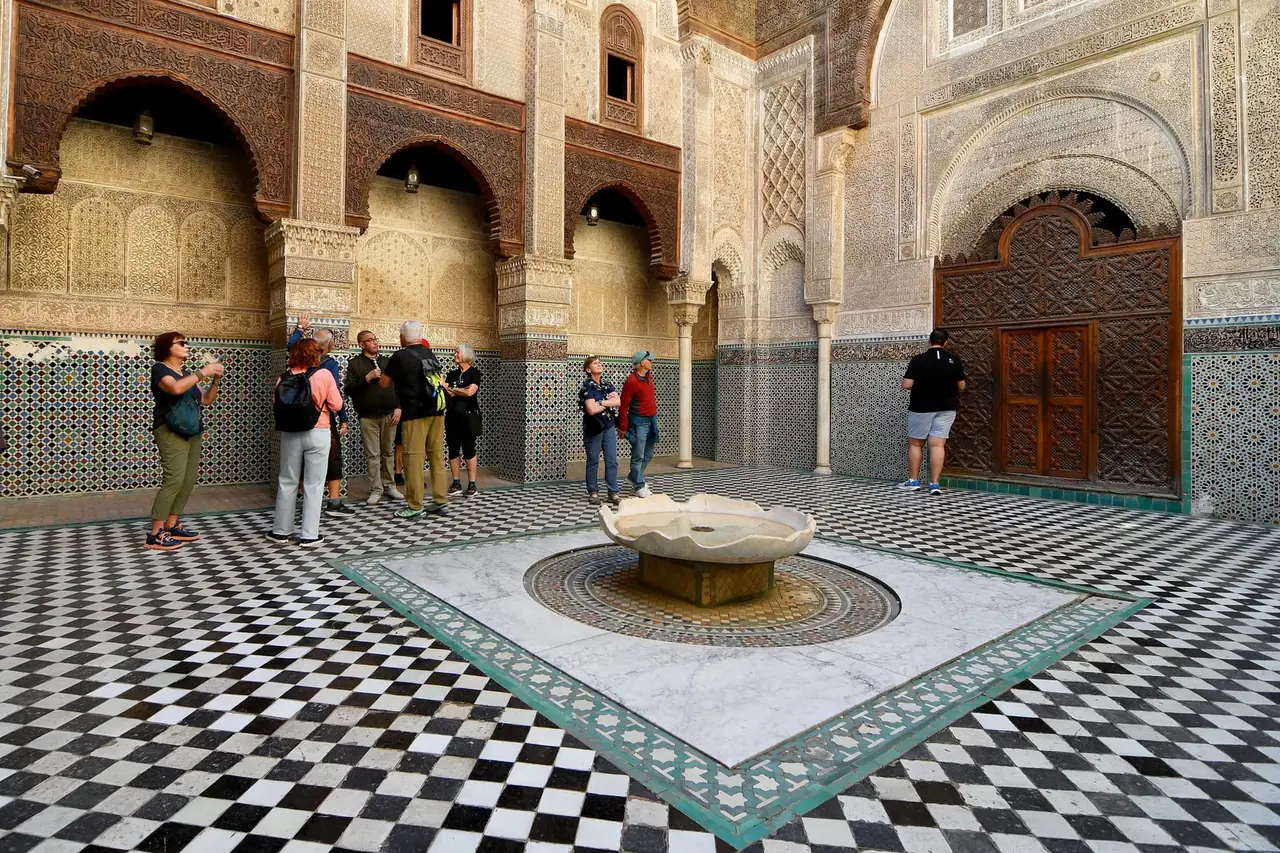
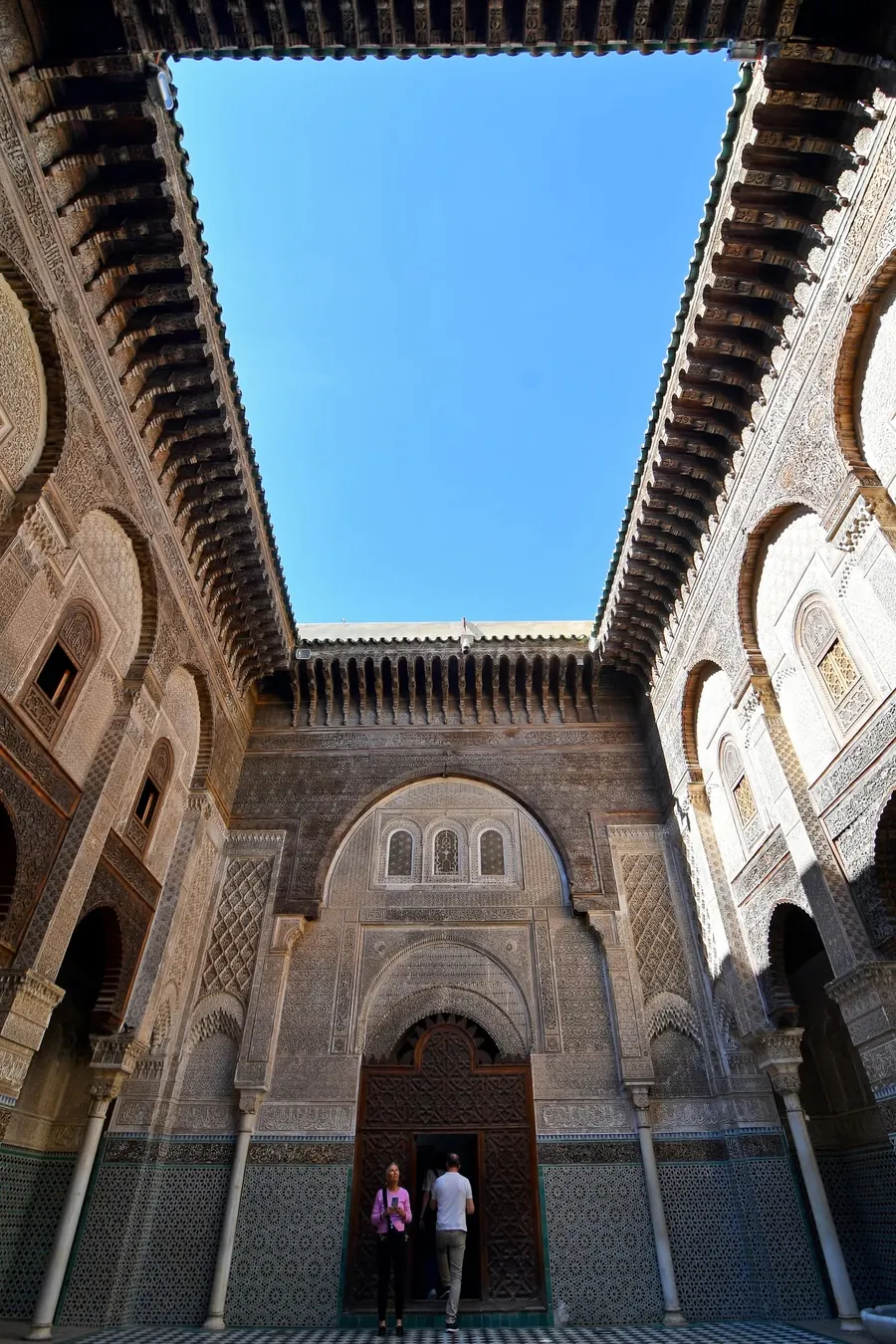
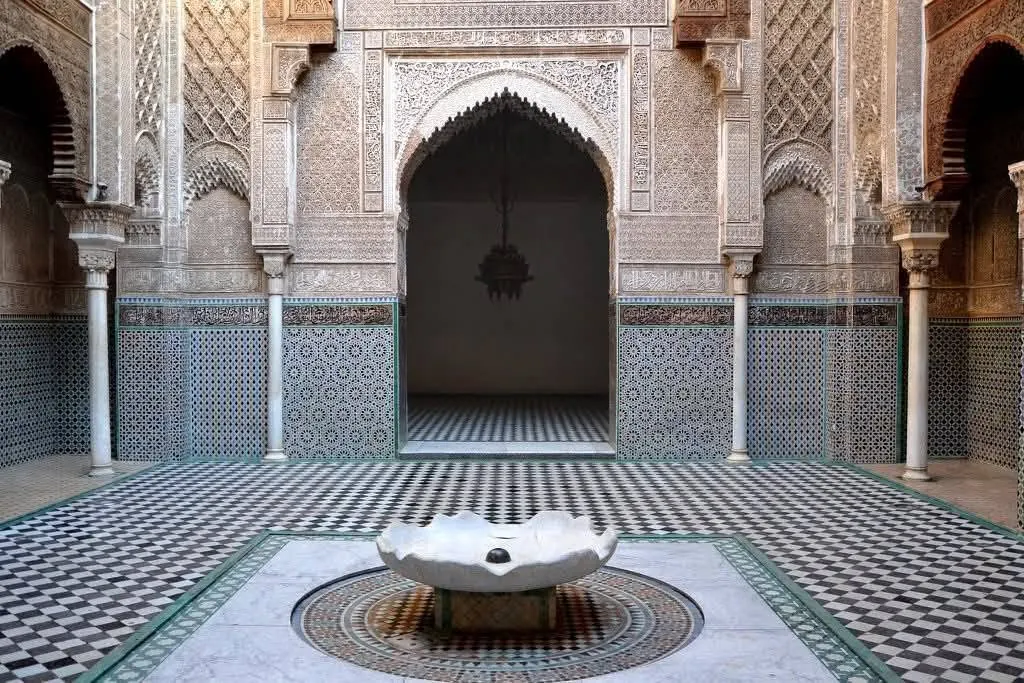
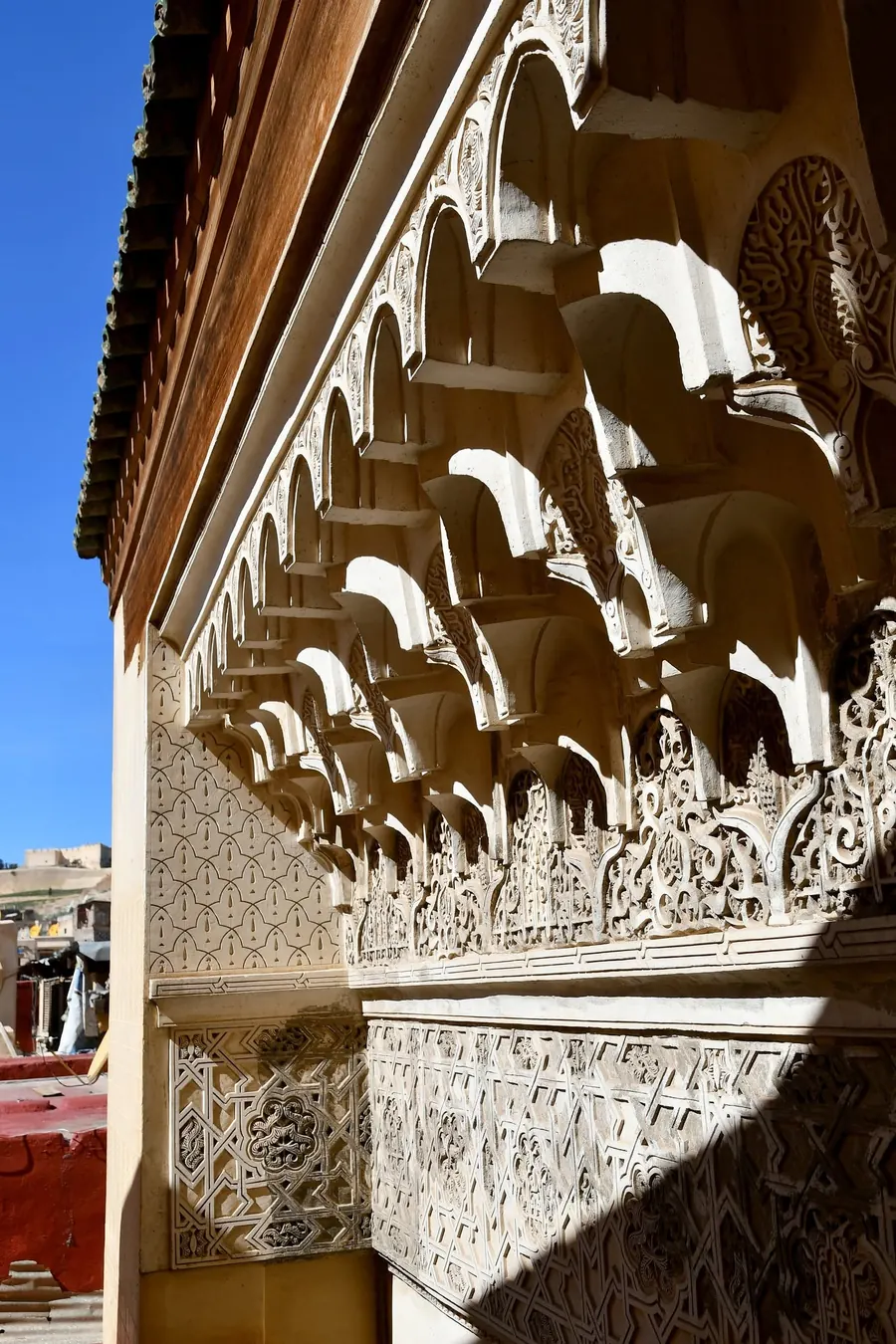
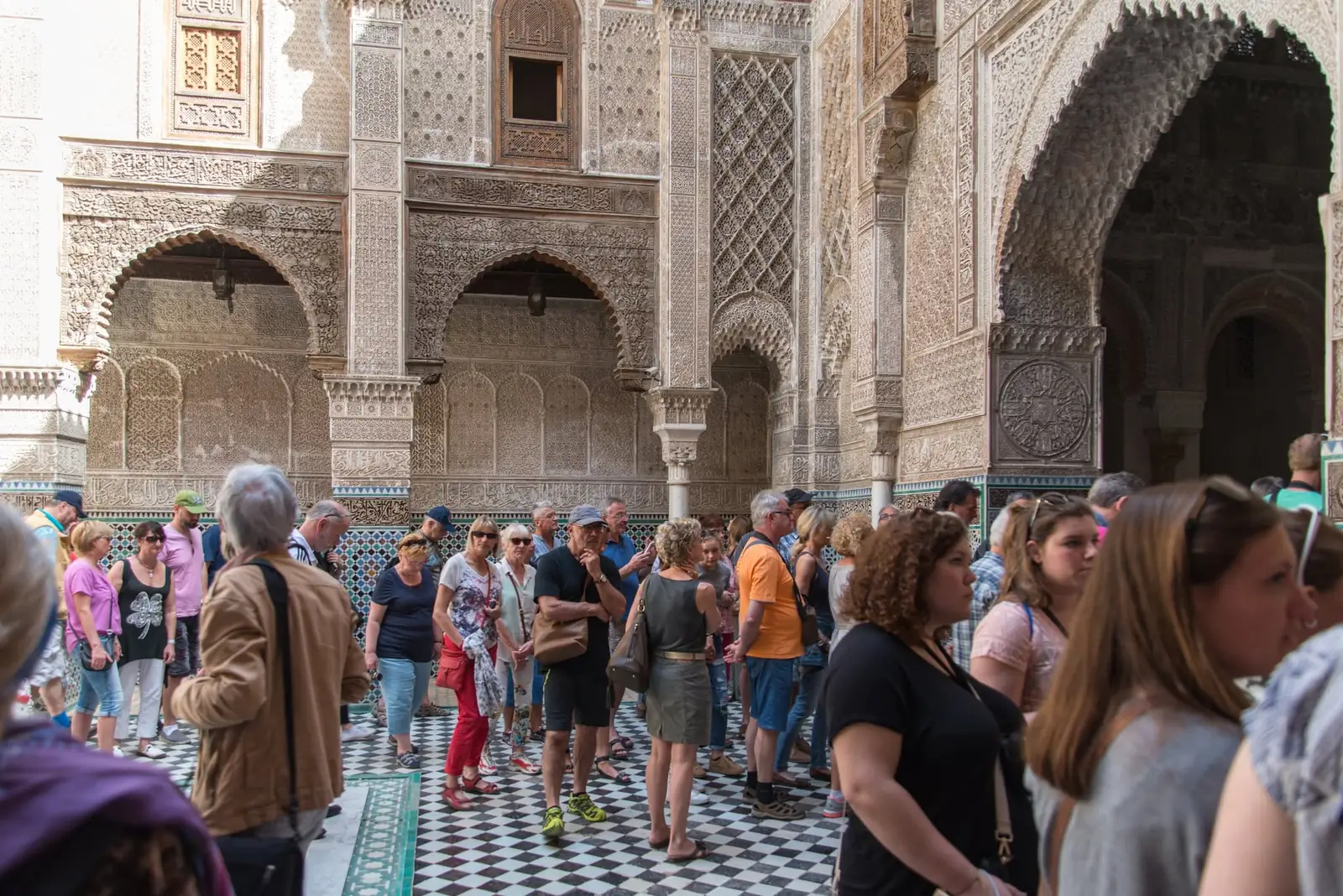
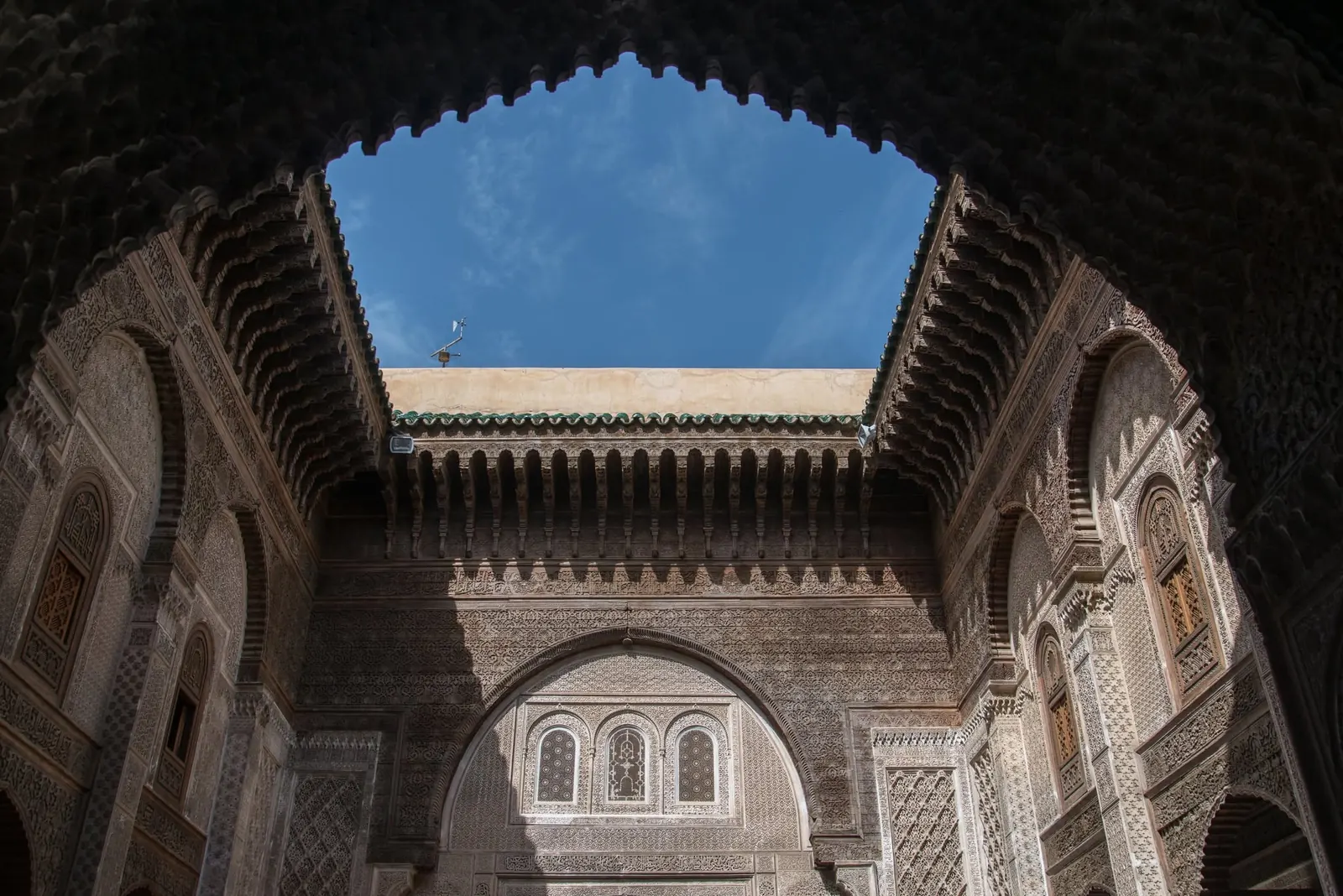
Step out of the vestibule and the light hits you all at once. The rectangular courtyard is open to the sky, its floor a black and white zellige chequerboard with green borders. In the middle stands a low fountain with a lobed white marble basin, like an open flower. Two galleries run along the north and south sides. Each rests on two square piers and two slimmer marble columns, which carry three central arches and, at the ends, two stucco muqarnas arches.
Above the galleries, on the upper floor, are the windows of the student rooms. Archnet, the Islamic architecture archive run by MIT and the Aga Khan Trust for Culture, sums up the contrast well: a sumptuous courtyard for life in common and spartan cells to sleep in.
Zellige, stucco and cedar: reading the decoration from the floor up
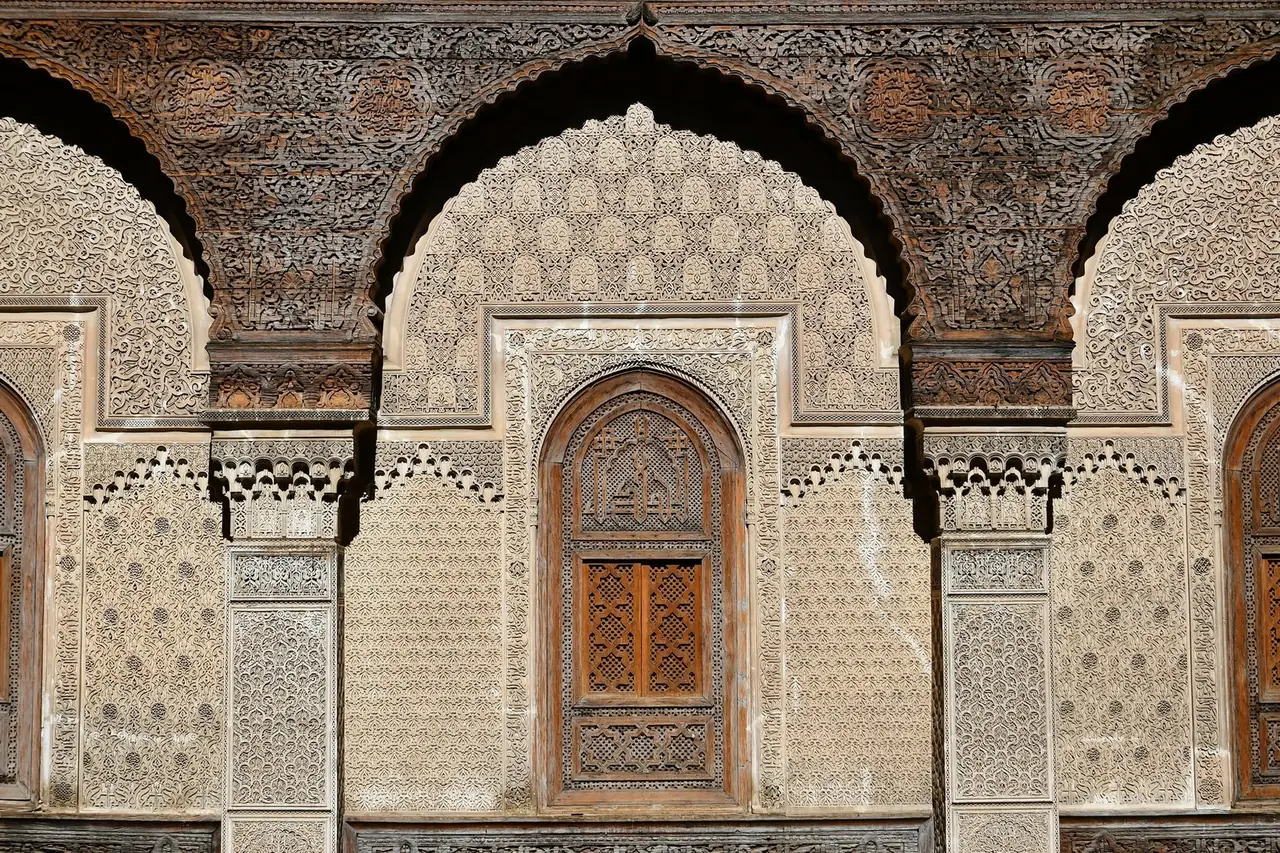
The decoration of Al Attarine works in layers, and each layer has its own material. Notice the order, because you will see it again in other madrasas in Morocco:
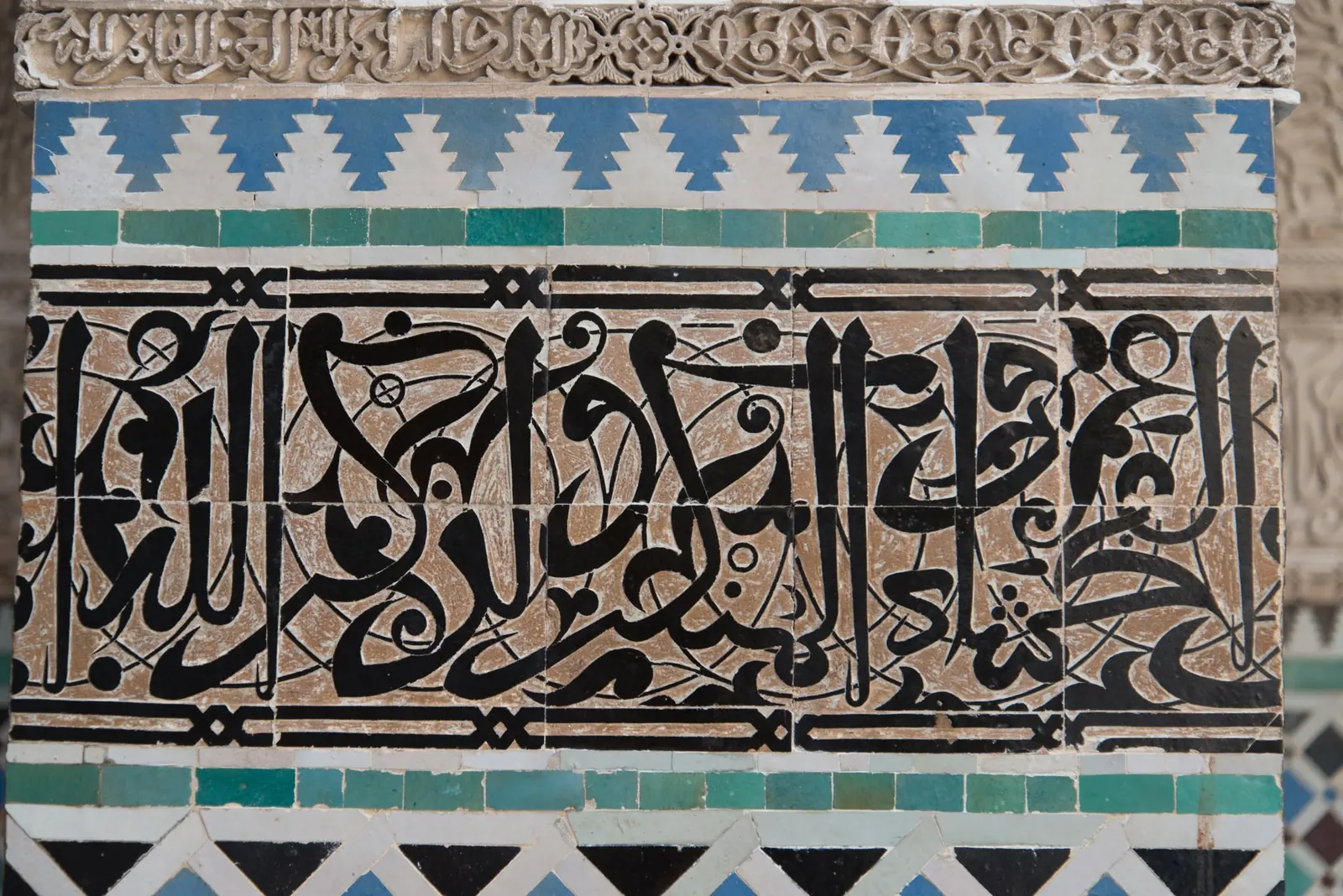
- At the bottom, zellige. The floor and the dados are covered in hand-cut glazed tile mosaic, with geometric stars and interlacing. At eye level runs a band of calligraphy: black letters on a light ground, cut out of the glazed tile itself.
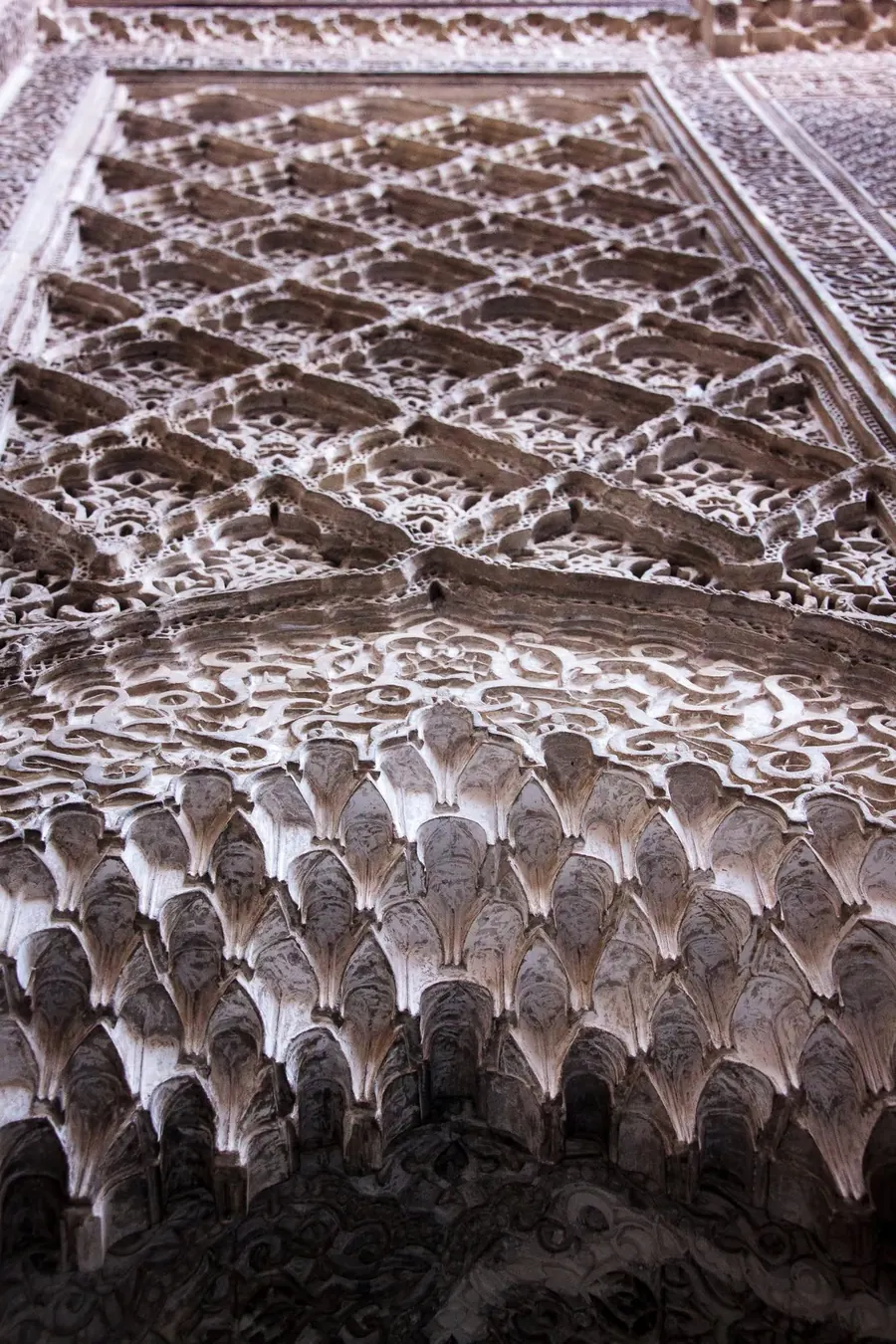
- In the middle, carved stucco. Above the dado come the stucco panels, with inscriptions, diamond lattices, plant motifs and honeycomb-like muqarnas niches.
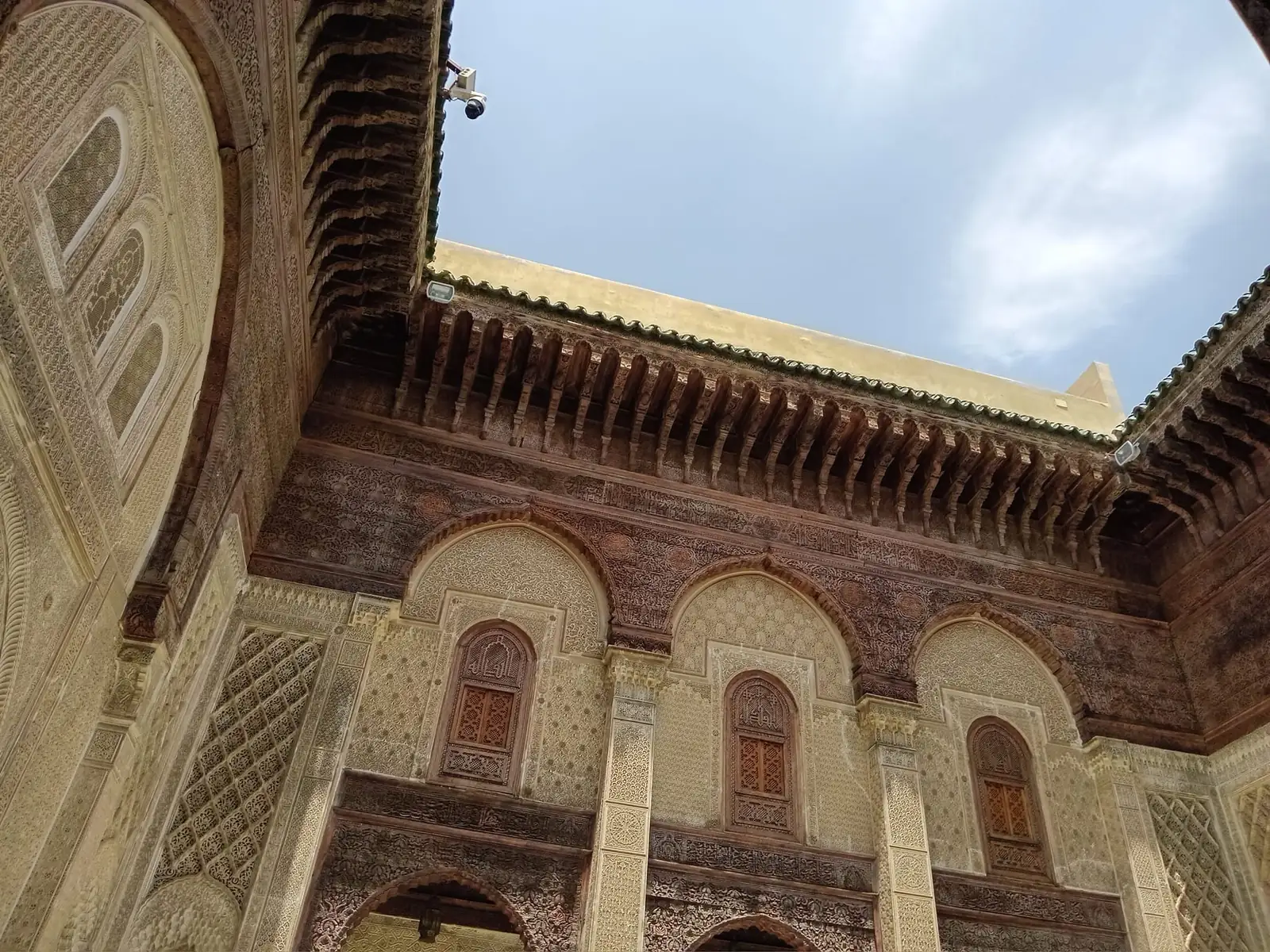
- At the top, cedar. The upper walls and the deep eave that crowns the courtyard are carved cedar wood, with brackets jutting out over the void.
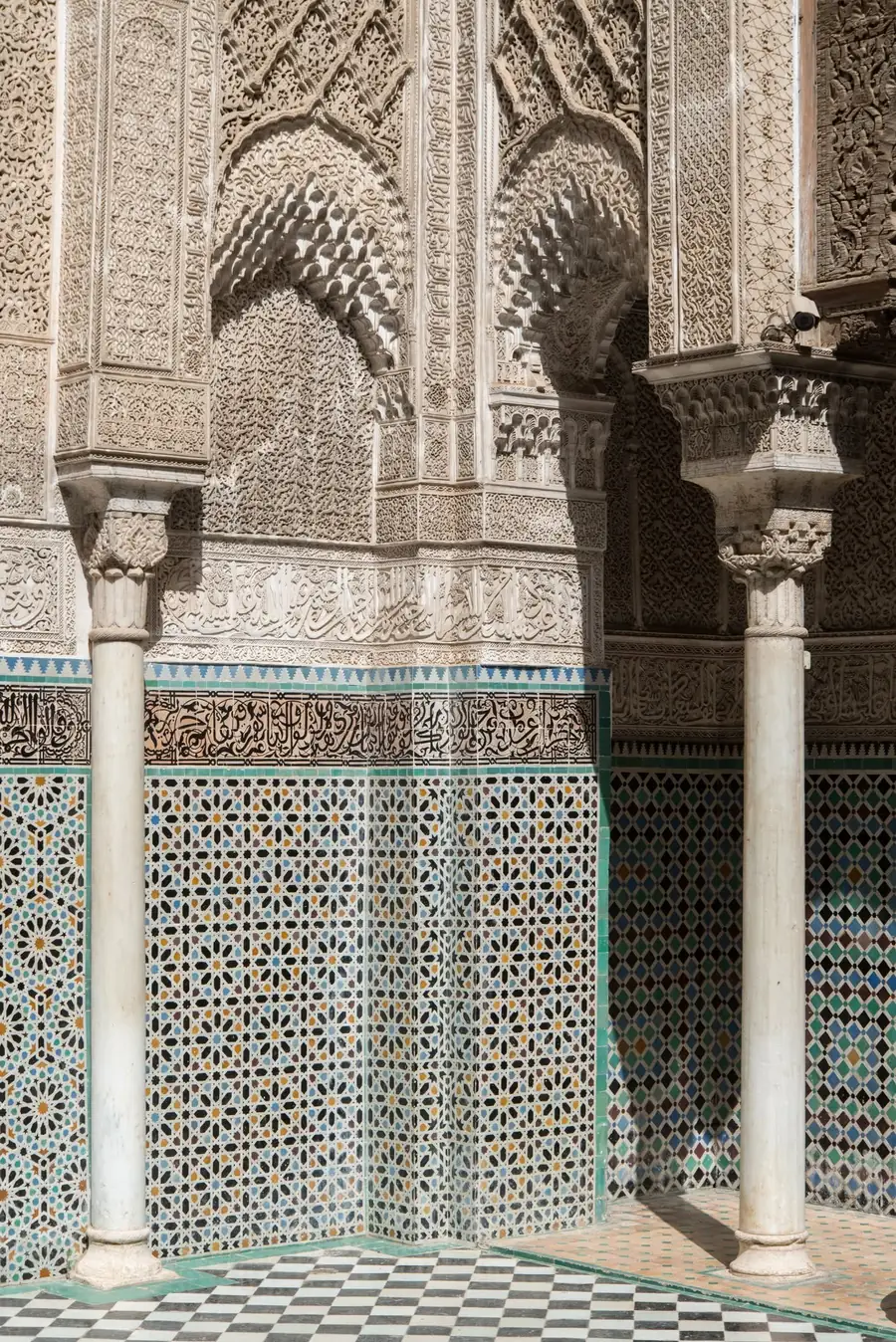
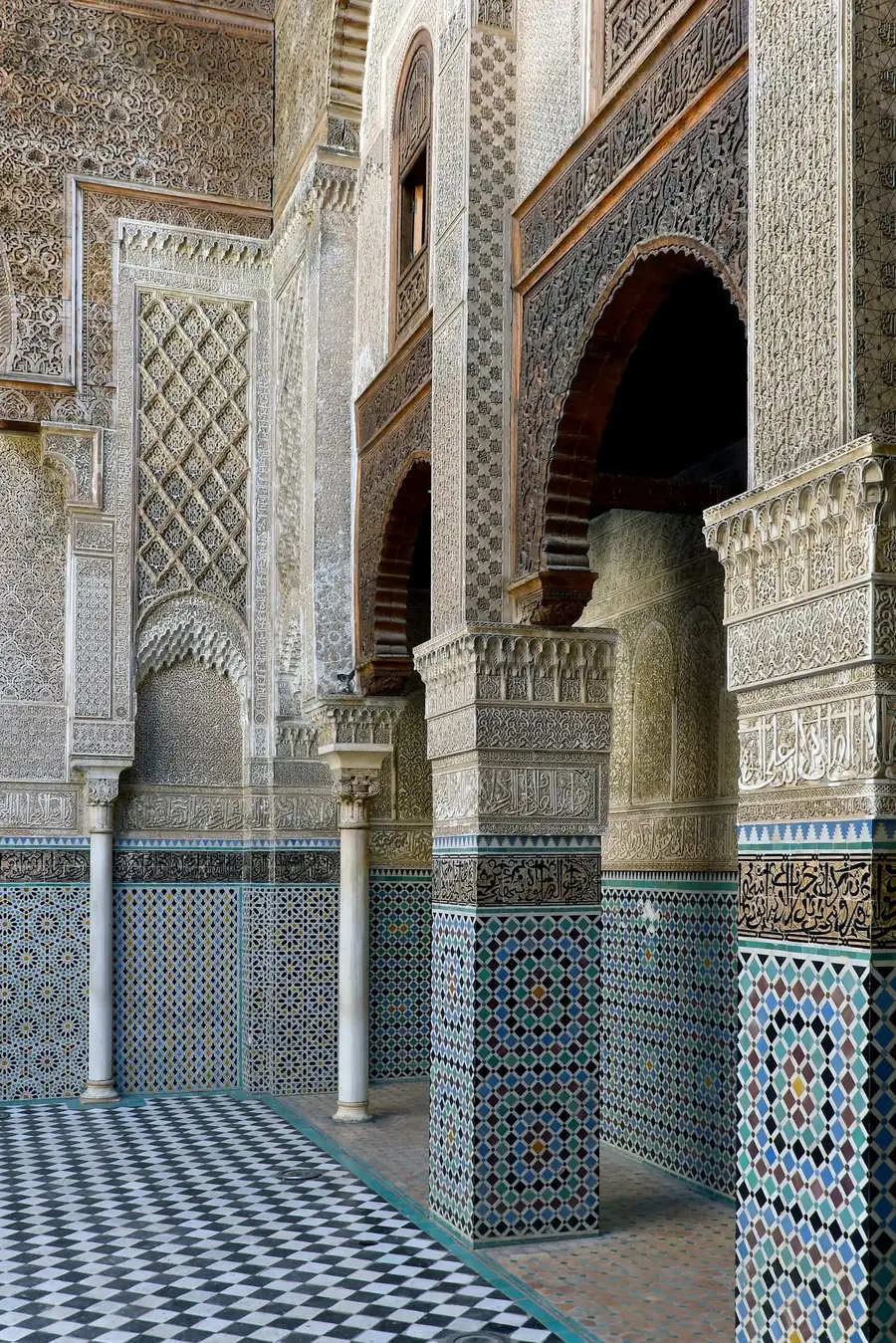
The marble columns have capitals carved with the same care as the walls. If you have been to the Alhambra, the language will feel familiar: Archnet notes that the stucco and tilework at Al Attarine clearly evoke the Nasrid palace in Granada, and that Marinid craftsmen tended towards an ever smaller scale of pattern. So get close. What looks like texture from a few metres away turns out to be a web of stars, leaves and letters.
The prayer hall and its bronze chandelier
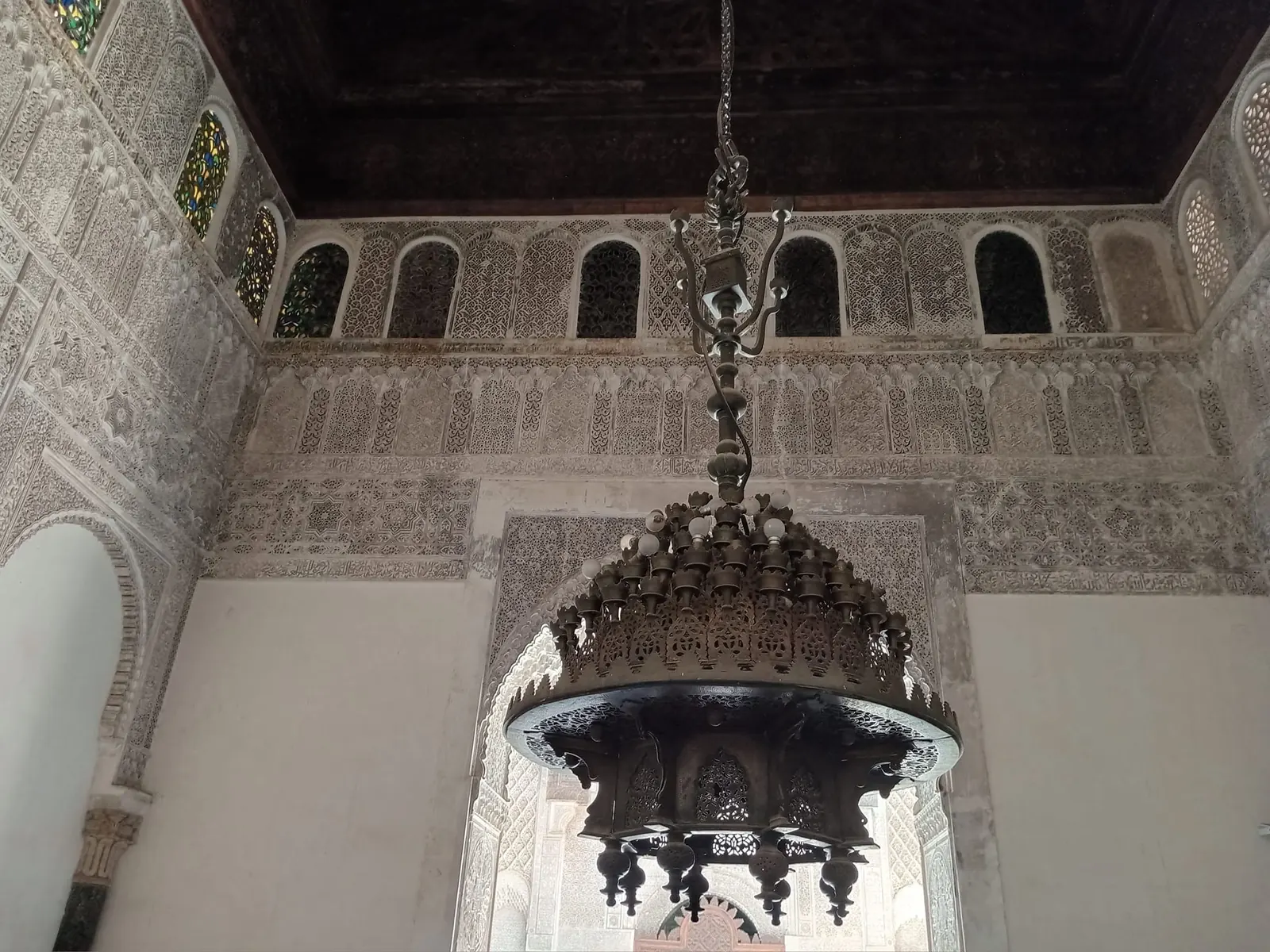
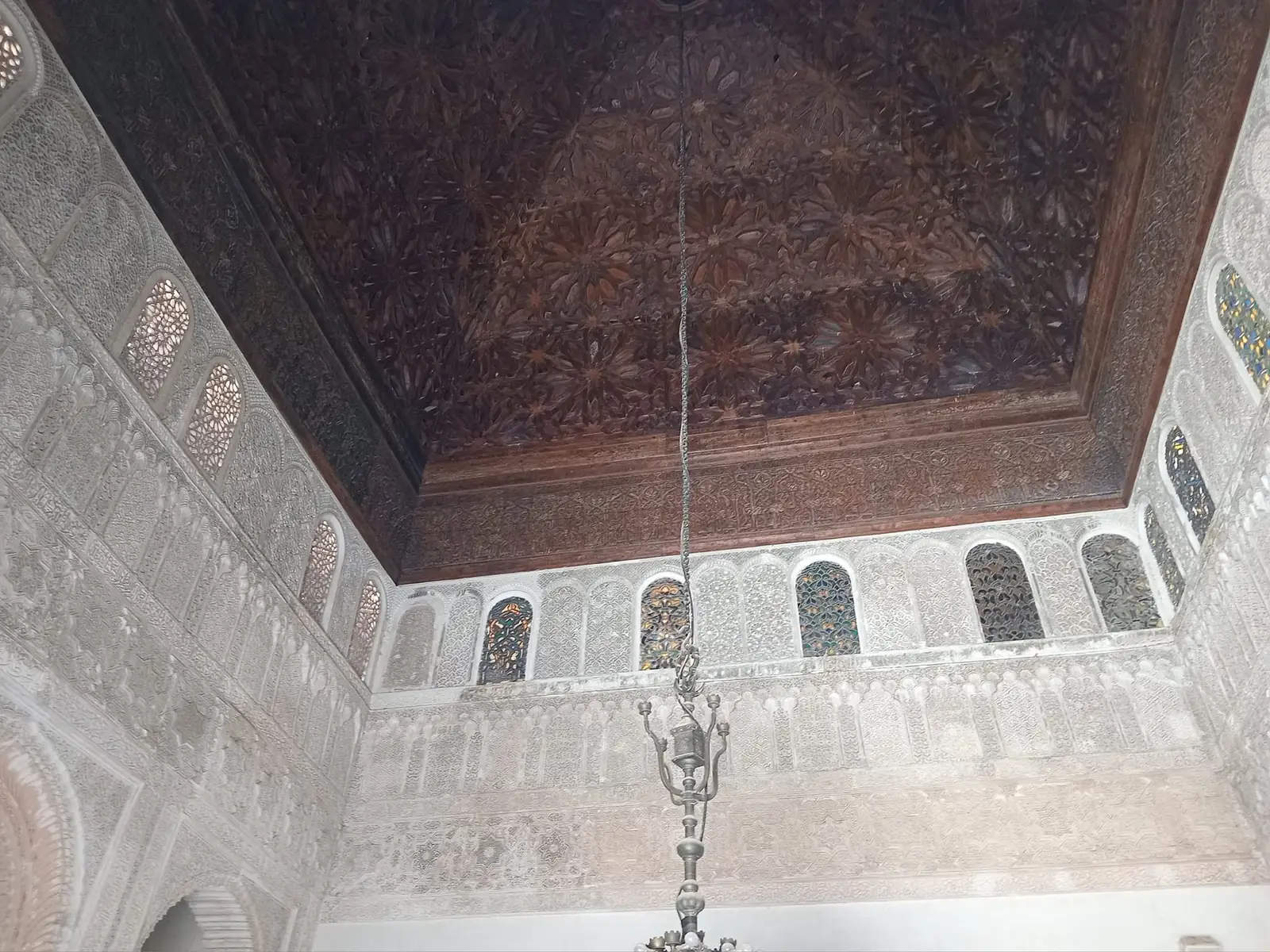
On the east side of the courtyard, a decorated archway leads into the prayer hall. It is rectangular and designed around light: high up on the walls, coloured glass is set into window grilles. In front of the mihrab, the ceiling rises into a square cedar dome carved with geometric stars.
The hall holds the most precious object in the building: the original Marinid bronze chandelier, with an inscription praising the founder. The mihrab, decorated with stucco and an engaged marble column, sits off to one side on the south wall. This is still a religious space, so ask at the entrance whether you can step inside or should look from the threshold, and never walk in front of someone praying.
Upstairs: the 30 student rooms
A staircase off the vestibule leads to the upper floor, where 30 rooms are arranged around the courtyard. They were small, plain cells with windows onto the courtyard. The stairs are not always open to visitors; if they are, go up, because from there you realise how small the building is and how much it holds.
For a comparison, the Cherratine Madrasa, built by the Alaouites in 1670 a few minutes away, is much larger and still has its inner courtyards of rooms. Seeing both on the same day is the best way to understand how the style changed over three and a half centuries.
How to visit the Al Attarine Madrasa
Getting there
The madrasa is in Fez el-Bali, the old medina, at the bottom of Talaa Kebira, the main street that runs down from the Bab Bou Jeloud gate. Cars cannot enter the medina, so you arrive on foot. The door opens right inside Souk al-Attarine, next to al-Qarawiyyin, and any shopkeeper in the area can point you to it.
Entrance fee, opening hours and how long to spend
There is an entrance fee and it is modest. We could not find an official price published online, so treat any figure as indicative, check it at the ticket desk and carry cash in dirhams.
According to the Fez Regional Tourism Council, it opens every day from 8:30am to 12pm and from 2:30pm to 6:30pm. These hours are indicative and can change, during Ramadan for example, so check before you go. Half an hour is enough to see the courtyard and the prayer hall without rushing.
Go as soon as it opens. The courtyard is small and fills up fast when tour groups arrive. First thing in the morning you may have it almost to yourself.
Etiquette and guides
Cover your shoulders and knees, keep your voice down and do not touch the stucco or the woodwork. Inside the medina, guided visits are the job of licensed city guides: ask to see their badge before you start. Al Attarine fits easily into one morning with the Bou Inania, the outside of al-Qarawiyyin, the Chouara tannery and the Cherratine.
If you are touring several cities, Fez is the centrepiece of Morocco’s imperial cities. On our 8-day imperial cities and desert tour, for instance, a full day is set aside for the Fez medina with a local guide before heading on to Merzouga.
Photographing the Al Attarine Madrasa: three ideas
- Look up. From the middle of the courtyard, the cedar eave frames a rectangle of sky. With a wide angle you can fit all four facades in.
- Use the arches as a frame. From the galleries, the muqarnas arches crop the courtyard and give the picture depth.
- Get close to the details. The ceramic calligraphy band is at eye level. A close-up tells as much as the wide view.
Al Attarine Madrasa: frequently asked questions
Where is the Al Attarine Madrasa?
In Fez el-Bali, the old medina of Fez, at the bottom of Talaa Kebira street, next to the al-Qarawiyyin mosque and university and at the entrance to the spice and perfume souk.
How much is the entrance fee?
There is a modest fee. No official price is published online, so any figure is only indicative. Bring cash in dirhams.
When was it built?
Between 1323 and 1325, on the orders of the Marinid sultan Abu Sa’id Uthman II.
What does Attarine mean?
It comes from attar, Arabic for a perfume or spice seller. The madrasa stands at the entrance to Souk al-Attarine, the perfume sellers’ market.
Can non-Muslims visit?
Yes. Like the Bou Inania and the Cherratine, it is a monument open to all visitors. In the prayer hall, follow the staff’s instructions.
How is it different from the Bou Inania Madrasa?
The Bou Inania (1350 to 1355) is larger, has a minaret and also served as a Friday mosque. Al Attarine is smaller and slightly older, and stands out for the finesse of its decoration.
How long does a visit take?
Half an hour to see it properly. If you combine it with the other madrasas, al-Qarawiyyin and the Chouara tannery, allow a morning.
Sources
- Archnet (MIT and Aga Khan Trust for Culture): Madrasa al-‘Attarin, Fes.
- UNESCO World Heritage Centre: Medina of Fez.
- Fez Regional Tourism Council: Médersa Attarine page (in French).
- Ibn Abi Zar, Rawd al-Qirtas, chronicle of the dynasties of Morocco (14th century).
- La Vie Éco: “La médersa Attarine fait une pause restauration”, on the ADER-Fès restoration.